FILTERS
Should Facial Oil Be Applied to Damp or Dry Skin?

Facial oil can be applied to slightly damp or dry skin, depending on your skin type and skincare routine. Applying it after moisturiser may help reduce moisture loss and maintain softness, while dry-skin application also works well. Use a few drops, massage gently, and choose suitable formulations such as Kumkumadi Tailam for additional facial nourishment.
Facial oils are a popular part of skincare routines, especially for people who want to maintain skin softness and enjoy the experience of gentle facial massage. However, one question often arises: should facial oil be applied to damp or dry skin?
The answer is that both methods can work. Slightly damp skin may make application feel smoother, while dry skin can be preferable when following specific product instructions.
Understanding the difference helps you avoid excessive greasiness and incorporate facial oil into a balanced skincare routine.
TL;DR – Should You Apply Facial Oil to Damp or Dry Skin?
- Both Methods Work: Facial oil can be applied to slightly damp or dry skin, depending on your skin type and product instructions.
- Moisturiser Before Facial Oil: Applying facial oil after moisturiser may help reduce moisture loss and maintain skin softness.
- Use a Few Drops: Start with two to three drops and adjust the amount according to your skin type and product recommendations.
- Choose Oil Based on Skin Type: Lightweight formulations may suit oily skin, while dry skin may benefit from facial oil after moisturiser.
- Kumkumadi Tailam for Traditional Skincare: This Ayurvedic facial oil contains ingredients such as Kashmiri saffron, licorice, red sandalwood, and sesame oil, traditionally associated with skin nourishment.
- Patch-Test Before Use: Test new facial oils on a small area of skin and discontinue use if irritation, redness, or breakouts develop.
Is It Better to Apply Facial Oil to Damp or Dry Skin?
Facial oil can be applied to either slightly damp or fully dry skin. The best approach depends on the formulation, your skin type, and the products used beforehand.
Why Apply Facial Oil to Damp Skin?
Applying facial oil when the skin is slightly damp may make it easier to spread a small amount evenly.
Facial oils contain emollient ingredients that soften the skin, while some oils also help reduce moisture evaporation.
However, oils do not directly provide the same hydration as water-based moisturisers.
Can Facial Oil Be Applied to Dry Skin?
Yes. Facial oil can also be applied after your skin has been gently towel-dried.
This method may work well when using an oil for facial massage or following the manufacturer's instructions.
For very dry skin, applying moisturiser before facial oil may provide additional comfort.
Should You Apply Facial Oil to Wet Skin?
Avoid applying oil when your face is dripping wet.
Excess surface water may make the oil difficult to distribute evenly.
Instead, gently pat your face with a clean towel before beginning your skincare routine.
How Should You Apply Facial Oil Correctly?
Using the right amount and application technique helps distribute facial oil comfortably.
Step 1: Cleanse Your Face Gently
Start with a mild cleanser suitable for your skin type.
Remove dirt, excess oil, sunscreen, and makeup without aggressive scrubbing.
Use lukewarm water, especially if your skin is dry or sensitive.
Step 2: Pat Your Skin Dry
Use a soft, clean towel and gently pat away excess water.
You may leave your skin slightly damp before applying moisturiser.
Avoid rubbing vigorously, as unnecessary friction can contribute to irritation.
Step 3: Apply a Suitable Moisturiser
Moisturiser helps maintain hydration and supports the skin's protective barrier.
Ingredients such as glycerin, hyaluronic acid, and ceramides are commonly used in moisturising formulations.
Applying moisturiser while the skin remains slightly damp helps retain moisture.
Step 4: Apply Facial Oil
Dispense the recommended amount into your palm.
Distribute it between your fingertips and gently press or massage it across your face.
Avoid applying excessive pressure or pulling the skin.
Step 5: Allow the Oil to Settle
Give the product time to settle before applying makeup or additional skincare.
If your face feels excessively greasy, consider reducing the amount during your next application.
Does Applying Facial Oil to Damp Skin Improve Absorption?
Applying oil to damp skin may improve spreadability, but evidence directly comparing absorption on damp versus dry facial skin is limited.
How Does Facial Oil Help Retain Moisture?
The outer skin barrier helps prevent excessive water loss.
Some facial oils contribute emollient and moisture-sealing properties, creating a smoother surface and reducing dryness.
This is why facial oil is often used after moisturiser.
Does Facial Oil Hydrate the Skin?
Facial oils primarily soften the skin and help reduce moisture loss.
Water-based products containing humectants are generally more suitable for increasing skin hydration.
Using moisturiser and facial oil together can provide complementary cosmetic benefits.
Is Damp-Skin Application Always Better?
Not necessarily.
Some people prefer applying oil to completely dry skin because it feels less slippery or works better with their skincare products.
There is no strong evidence that damp-skin application consistently produces better long-term results.
How Many Drops of Facial Oil Should You Use?
Most facial oils are used in small quantities. Approximately two to three drops can be a reasonable starting point, although manufacturer directions should always take priority.
|
Skin type |
Suggested starting amount |
|
Oily |
1–2 drops |
|
Combination |
2–3 drops |
|
Normal |
2–3 drops |
|
Dry |
3–5 drops |
|
Sensitive |
1 drop after patch-testing |
These amounts are general skincare suggestions rather than medically established doses.
How Much Oil Is Suitable for Oily Skin?
Oily skin may require only a small amount of facial oil, particularly around drier areas such as the cheeks.
Avoid unnecessary application to areas that already feel greasy.
How Much Oil Is Suitable for Dry Skin?
Dry skin may tolerate slightly more oil, particularly when applied after moisturiser.
However, increasing the amount does not automatically improve hydration.
Can Too Much Facial Oil Cause Problems?
Excess oil may leave a heavy finish or contribute to breakouts in susceptible individuals.
If your skin becomes uncomfortable, reduce the amount or discontinue the product.
Should Facial Oil Be Applied Before or After Moisturiser?
Facial oil is commonly applied after moisturiser, although the ideal order depends on individual formulations.
Why Apply Moisturiser First?
Moisturisers often contain water-binding ingredients that help maintain hydration.
Applying facial oil afterwards may provide additional softness and help limit moisture evaporation.
Can You Apply Facial Oil Before Moisturiser?
Some products are designed for application before moisturiser.
However, thicker oils may interfere with how comfortably water-based products spread.
Follow product directions rather than relying on one universal layering rule.
Can Facial Oil Replace Moisturiser?
Not always.
Facial oils can provide emollient benefits, but they may not contain the humectants and other ingredients found in moisturisers.
People with dry or dehydrated skin may benefit from using both products.
Read more : How Many Drops of Facial Oil Should You Use? A Skin-Type Guide →
How Should You Apply Facial Oil Based on Skin Type?
Different skin types respond differently to oils and moisturising formulations.
Facial Oil for Oily and Acne-Prone Skin
Choose an appropriate lightweight formulation and begin with a small amount.
Apply mainly to areas requiring extra softness.
Monitor for clogged pores, irritation, or new breakouts.
Facial Oil for Dry Skin
Dry skin may benefit from facial oil after a richer moisturiser.
During colder weather, this combination may help maintain skin comfort.
Avoid excessive cleansing, which can worsen dryness.
Facial Oil for Combination Skin
Combination skin often has oily and dry areas.
Apply facial oil selectively rather than distributing the same amount across your entire face.
Facial Oil for Sensitive Skin
Sensitive skin requires careful product selection.
Choose formulations without known irritants and patch-test before full-face application.
Botanical oils and fragrances may cause reactions even when described as natural.
What Is Kumkumadi Tailam in Ayurvedic Skincare?
Kumkumadi Tailam is a traditional Ayurvedic facial oil associated with skin nourishment, complexion care, and facial massage.
Its name comes from Kumkuma, the Sanskrit term for saffron, a prominent ingredient in classical formulations.
Which Ingredients Are Traditionally Used?
Kumkumadi formulations commonly include saffron and other botanicals infused into an oil base.
Ingredients may include sandalwood, licorice, and sesame oil.
Exact formulations vary between manufacturers.
What Are the Traditional Benefits of Kumkumadi Tailam?
Kumkumadi Tailam is traditionally valued for skin softness and a radiant-looking complexion.
Its oil-based texture also makes it suitable for gentle facial massage.
However, reliable clinical evidence that it treats acne, pigmentation disorders, or damaged skin barriers remains limited.
Why Choose Maharishi Ayurveda Kumkumadi Tailam?
Maharishi Ayurveda Kumkumadi Tailam is a traditional Ayurvedic facial oil available through Maharishi Ayurveda India.
The 10 ml formulation is positioned for cosmetic skin nourishment and a radiant-looking complexion.
What Are Its Highlighted Ingredients?
According to the official product page, Maharishi Ayurveda Kumkumadi Tailam contains ingredients including:
- Pure Kashmiri Saffron: Traditionally associated with complexion care and radiance.
- Licorice Root Extract: Included in botanical skincare formulations.
- Red Sandalwood: Traditionally used in Ayurvedic beauty preparations.
- Sesame Oil Base: Provides emollient properties that help soften the skin.
These ingredients contribute to the formulation's traditional Ayurvedic character.
How Many Drops Should You Apply?
Maharishi Ayurveda India recommends 3–4 drops per application.
The official directions advise taking the oil into your palm and gently massaging it over the face using your fingertips until absorbed.
Should You Apply Kumkumadi Tailam to Damp or Dry Skin?
Maharishi Ayurveda recommends cleansing the face before application.
You can gently towel-dry your skin and apply the oil as directed.
If you use a moisturiser, Kumkumadi Tailam may be incorporated as an optional facial-oil step.
There is insufficient evidence to conclude that applying Kumkumadi Tailam specifically to damp skin produces superior results.
Can Kumkumadi Tailam Be Used at Night?
Yes. Kumkumadi Tailam may be incorporated into an evening beauty routine when tolerated.
Nighttime application offers an opportunity for gentle facial massage and allows the product to remain on the skin without immediately applying makeup.
However, overnight use is not necessary for everyone.
Discover traditional Ayurvedic facial care with Maharishi Ayurveda Kumkumadi Tailam – Radiant Skin & Glow.
Kumkumadi Tailam: Ayurvedic Oil for Radiant Skin
A traditional Ayurvedic facial oil crafted to support nourished, glowing, and healthy-looking skin.
Buy Now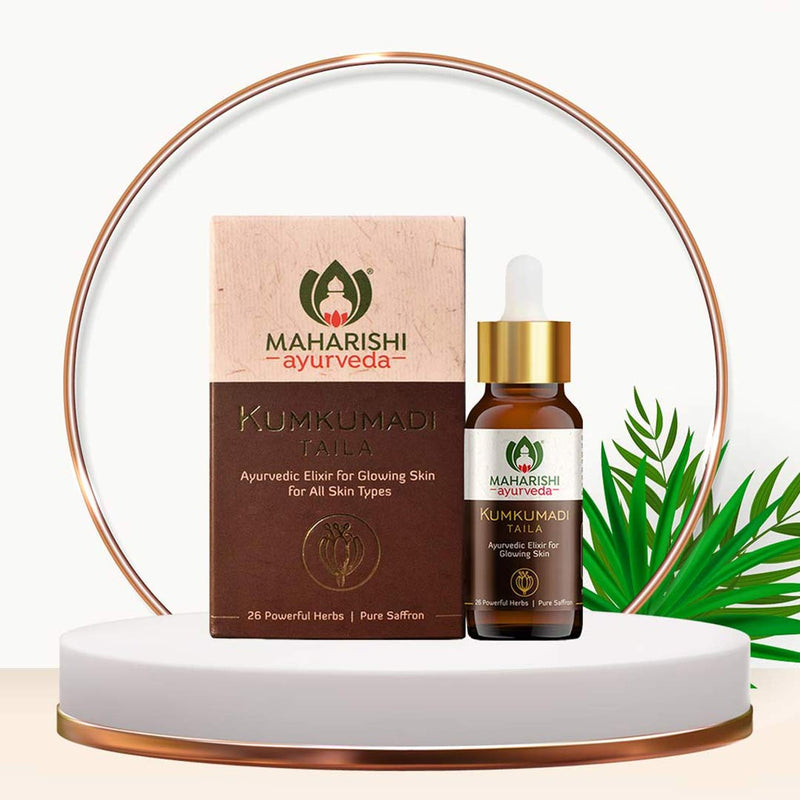
How Can You Patch-Test Facial Oil Before Use?
Patch-testing helps identify possible sensitivity before applying a new product extensively.
What Is a Suitable Patch-Testing Method?
The American Academy of Dermatology recommends testing a new skincare product on a small area twice daily for seven to ten days.
Apply it as directed and monitor for redness, itching, swelling, or irritation.
What If Your Skin Reacts?
Discontinue the product and gently wash it off.
Avoid applying additional potentially irritating products until your skin is comfortable.
Seek dermatological advice if symptoms are severe or persistent.
Can Facial Oils Cause Breakouts?
Some formulations may contribute to clogged pores or breakouts in susceptible individuals.
The likelihood depends on the complete formulation and individual skin response.
A product described as natural is not automatically suitable for acne-prone skin.
What Are Common Mistakes When Applying Facial Oil?
Avoiding a few common mistakes can make your skincare routine more comfortable.
Applying Too Much Oil
Using excessive oil may leave a greasy surface without improving skin comfort.
Start with the manufacturer's recommended amount.
Skipping Hydrating Products
Facial oils do not necessarily replace water-based moisturisers.
If your skin feels dehydrated, consider adding an appropriate moisturiser.
Rubbing Too Aggressively
Gentle pressing or light massage is sufficient.
Avoid pulling or rubbing irritated skin.
Mixing Multiple New Products
Introducing several products simultaneously makes it difficult to identify the cause of irritation.
Add new products gradually.
Ignoring Skin Reactions
Persistent redness, stinging, itching, or breakouts are reasons to stop using a product.
Do not assume that discomfort is a normal adjustment period.
How Can You Check Whether Kumkumadi Tailam Is Authentic?
Purchase through the official brand website or authorised retailers.
Check that the packaging has a readable ingredient label, batch information, expiry date, and intact seal.
Maharishi Ayurveda India provides product information and application instructions through its official online store.
Conclusion
Facial oil can be applied to slightly damp or dry skin, depending on personal preference, skin type, and product instructions.
The most important factors are using a suitable formulation, applying a small amount, and maintaining a balanced skincare routine with gentle cleansing and appropriate moisturising.
Traditional Ayurvedic facial oils may provide an enjoyable additional step for people interested in botanical beauty care.
Maharishi Ayurveda Kumkumadi Tailam offers a traditional facial-oil option associated with nourishment, softness, and a radiant appearance.
For comfortable skincare, focus on consistency, gentle application, and observing how your skin responds.
Popular Posts

How to Patch Test a Facial Oil Before Adding It to Your Skincare Routine
19 Nov, 2026To patch test a facial oil, apply a small amount to clean, healthy skin on your inner arm or elb...
Read more
Can Facial Oils Replace Moisturisers? Understanding Oil and Water in Skincare
19 Nov, 2026Facial oils can sometimes provide enough softness and moisture retention for skin that is alread...
Read more
What Causes Skincare Pilling? How to Layer Facial Oils Without Buildup
19 Nov, 2026Skincare pilling happens when products form small flakes or balls on the skin's surface, often b...
Read moreRecommended Products