Read Time: 7 Minutes
 FILTERS
Best Ayurvedic Toothpaste for Sensitive Teeth: A Holistic Approach

Tooth sensitivity isn’t just a fleeting issue—it’s a persistent battle for many people. The sharp, sudden pain that strikes while enjoying a hot beverage or indulging in cold treats can make eating and drinking a dreaded experience. While modern toothpaste solutions temporarily numb the discomfort, Ayurveda, the ancient holistic healing science, targets the root cause: Imbalanced Saliva. When sugary or starchy foods linger in the mouth, bacteria like S. mutans (Streptococcus mutans) feed on them, producing acid that erodes enamel and exposes dentin.
Ancient herbs like Mulethi (liquorice root) and Majuphal (oak gall) have been revered in Ayurveda for their ability to neutralise acidic saliva, remineralise enamel, and soothe exposed nerves. When combined with anti-inflammatory powerhouses like Neem and Khadir, these ingredients create a holistic defense against sensitivity. In this blog, we’ll explore how these time-tested ingredients work in harmony to transform oral care—and why choosing a formulation that harnesses their full potential could be the best decision for your dental health.
TL;DR – Ayurvedic Solution for Tooth Sensitivity
- Root Cause: Ayurveda links tooth sensitivity (Dantaharsha) to a Vata-Pitta imbalance and acidic saliva that erodes enamel.
- Herbal Support: Ingredients like Mulethi, Majuphal, Neem, and Khadir neutralize saliva, remineralize enamel, and soothe nerves.
- Ayurdent Toothpaste: A holistic blend that cleanses, protects against bacterial acids, and heals gum inflammation naturally.
- Traditional Practices: Oil pulling (Gandusha), herbal gargles (Kavala), and Dhoomrapaan support long-term relief.
- Lifestyle Tips: Avoid acidic/sugary foods, brush gently with a soft brush, and rinse after meals to prevent further erosion.
Understanding Tooth Sensitivity and Ayurveda's Approach
Tooth sensitivity, or Dantaharsha in Ayurveda, is a sudden, shooting pain triggered by hot, cold, sweet, or sour stimuli. Modern science attributes this to exposed dentin (the main layer of your tooth)—the layer beneath the enamel.
Tooth roots, which are not covered by hard enamel, contain thousands of tiny channels called dentinal tubules that lead to the center of the tooth, known as the pulp. These tubules allow stimuli—such as hot, cold, or sweet foods—to reach the nerve inside the tooth, resulting in the pain you experience.
Acharya Sushruta explains:
“Sheetamushnam cha Dashanahsahantesparshanamna cha|
Yasya Tam Dantaharshamtuvyadhimvidyatsamiranam||”
(S. Ni. 16/30)
(If teeth cannot tolerate cold, heat, or touch, it is Dantaharsha caused by Vata imbalance).
Poor diet, harsh oral habits, and lifestyle choices often fuel this imbalance. For instance:
Poor Diet: Excessive intake of acidic foods (citrus, sodas), sugary snacks, or Vata-aggravating items like cold beverages, raw vegetables, and spicy foods. These dry out oral tissues, destabilize saliva pH, and accelerate enamel erosion.
Lifestyle Choices: Smoking (reduces blood flow to gums), alcohol consumption (dries oral tissues), irregular sleep, or chronic stress disturbs gut health leading to problems like GERD, which damages the enamel causing teeth sensitivity. These habits aggravate Vata-Pitta, worsening sensitivity.
What Causes Tooth Sensitivity?
According to Acharya Sushruta, the inability to tolerate cold, heat, or touch in the teeth signifies Dantaharsha caused by a Vata imbalance. The root causes include:
- Poor Diet: Excessive intake of acidic, sugary, or Vata-aggravating foods.
- Lifestyle Choices: Smoking, alcohol consumption, or stress-related habits that contribute to enamel erosion.
- Improper Hygiene: Irregular brushing or skipping herbal gargles.
Acharya Vagabhatta Explains:
Dantaharshopravatamlasheetabhakshaakhshmadwijah
Bavantyaamlaashanaanevasarujaschaeva|
(A.H.Ut.21/12)
“In Dantaharsha, teeth become incapable of tolerating breeze, sour, or cold items, causing pain as though shaking.”
Ayurvedic Toothpaste for Sensitive Teeth: Why Choose It?

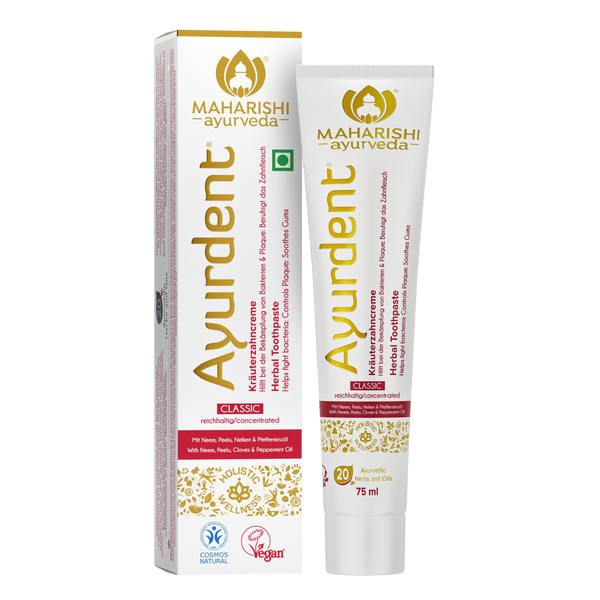
Conventional toothpaste often desensitizes nerve endings with chemicals like potassium nitrate, offering temporary relief without addressing acidic saliva or enamel erosion. But Ayurvedic toothpaste like Maharishi Ayurveda Ayurdent works holistically. Let’s break down how Ayurdent works:
-
Cleansing Action: Miswak and Vajradanti remove plaque, preventing bacterial acid buildup.
-
Neutralizing Acidity: Mulethi balances saliva pH, halting enamel erosion.
-
Remineralization: Majuphal restores minerals to tooth enamel, reducing sensitivity.
-
Anti-Inflammatory Protection: Neem and Khadir soothe gums and reduce inflammation, preventing gum recession.
Holistic Ayurvedic Treatment for Sensitive Teeth
While Ayurvedic toothpaste like Ayurdent addresses sensitivity at its source, pairing it with these practices amplifies results:
1. Gandusha (Oil Pulling):
Swish lukewarm Dashmool Siddha Tailam (oil infused with Vata-pacifying herbs) for 5 to 10 mins or per individual s capacity. This coats tooth reduces inflammation, and calms nerve irritation.
2. Kavala (Herbal Gargles):
Use a warm decoction of Panchavalkal (five bark herbs) to soothe sensitivity and heal gums.
3. Dhoomrapaan (Medicated Smoking):
Inhale smoke from Vata-balancing herbs like turmeric or neem to strengthen oral tissues.
4. Dietary Adjustments:
Favour: Warm, unctuous foods like khichadi, milk, and ghee to pacify Vata.
Avoid: Sour fruits, cold water, dry snacks, and hard-to-chew foods.
How to Prevent Sensitivity?

-
Harsh brushing wears enamel Opt for a neem twig or soft brush with Ayurvedic toothpaste.
- Rinse your mouth with warm water after meals to flush out food particles trapped between teeth, which feed acid-producing bacteria.
- Frequent consumption of citrus, sodas, or sugary snacks creates a cycle of acid erosion: as enamel wears down, sensitivity increases, making teeth even more vulnerable to further damage.
Conclusion
Tooth sensitivity is a sign of a deeper imbalance, and Ayurveda offers a holistic approach to heal and prevent it. Choosing the best Ayurvedic toothpaste for sensitive teeth, like Ayurdent, nourishes your teeth with herbal wisdom and works to prevent discomfort caused by tooth sensitivity. Regular use of Ayurvedic toothpaste ensures long-term oral health by soothing nerves, neutralizing acids, and strengthening enamel. With time-tested remedies, Ayurveda offers you a natural and effective solution for a pain-free smile.
From pacifying Vata to healing gums, this best toothpaste for sensitive teeth and gums offers a holistic path to pain-free smiles. Ready to transform your oral care? The answer lies in nature’s pharmacy.
Read this blog: 9 Simple Steps to Remove Hard Plaque from Teeth!
Popular Posts

Low AMH: What It Means for Fertility
14 Oct, 2026A calm, clear guide for women who have just seen that number on a report. Meera was 32 when the l...
Read more
Varicose Veins Symptoms: Causes, Early Signs and Ayurvedic Management
05 Oct, 2026Varicose veins are enlarged, twisted veins that commonly appear on the legs, feet, and ankles, o...
Read more
Himalayan Pink Salt Benefits: Uses, Nutrition and What to Know
29 Sep, 2026A pinch of salt seems simple, yet Ayurveda has always looked closely at simple things: their tas...
Read more