FILTERS
Can Virgin Coconut Oil Be Used for Oil Pulling?

Yes, virgin coconut oil can be used for oil pulling, especially for people who prefer a cooling and gentle oil. In Ayurveda, coconut oil may suit Pitta-type oral concerns, heat, sensitivity, and dry mouth. It should be used in the morning after tongue scraping and brushing, and the oil should never be swallowed.
Read our complete guide on virgin coconut oil--->
TL;DR – Virgin Coconut Oil for Oil Pulling
- Virgin Coconut Oil Can Be Used: It is a cooling, gentle option for oil pulling, especially for Pitta-type oral concerns, sensitivity, heat, and dry mouth.
- Use It in the Morning Routine: Ayurveda recommends oil pulling on an empty stomach after tongue scraping and brushing, before breakfast.
- Supports Oral Hygiene: Gentle swishing may help maintain fresh breath, gum cleanliness, oral comfort, and a cleaner morning mouthfeel.
- Kavala Is Best for Daily Use: Most modern oil pulling is closer to Kavala, where a small amount of oil is gently swished rather than held in a full mouth.
- Never Swallow the Oil: Swish gently, spit it into the trash, rinse with warm water, and continue regular brushing, flossing, dental checkups, and professional care.
What Is Oil Pulling in Ayurveda?
Oil pulling in Ayurveda refers to holding or moving oil in the mouth to support oral cleanliness, gum health, taste perception, speech clarity, and daily oral hygiene. The two classical practices are Gandusha and Kavala.
In Ayurveda, the mouth is considered an important gateway to the body. Morning oral care is part of Dinacharya, or daily routine, because the mouth can accumulate coating, heaviness, Kapha, and oral impurities overnight.
Oil pulling is traditionally practised after tongue scraping and brushing. It is used to support oral tissues, cleanse the mouth, and maintain healthy teeth and gums.
Why Use Virgin Coconut Oil for Oil Pulling?
Virgin coconut oil is cooling, mild, and easy to use, which makes it a practical choice for daily oil pulling. It is especially useful for people who find sesame oil too strong, warming, or heavy.
In Ayurveda, coconut oil is considered cooling in nature. This makes it more suitable for people who experience oral heat, sensitivity, burning sensation, or Pitta imbalance.
Virgin coconut oil is usually preferred over refined coconut oil because it is less processed and retains more of its natural aroma and qualities.
Virgin Coconut Oil: Traditional Support for Hair, Skin & Wellness
A pure, nourishing oil traditionally used to support healthy-looking skin, stronger hair, and everyday wellness routines
Buy Now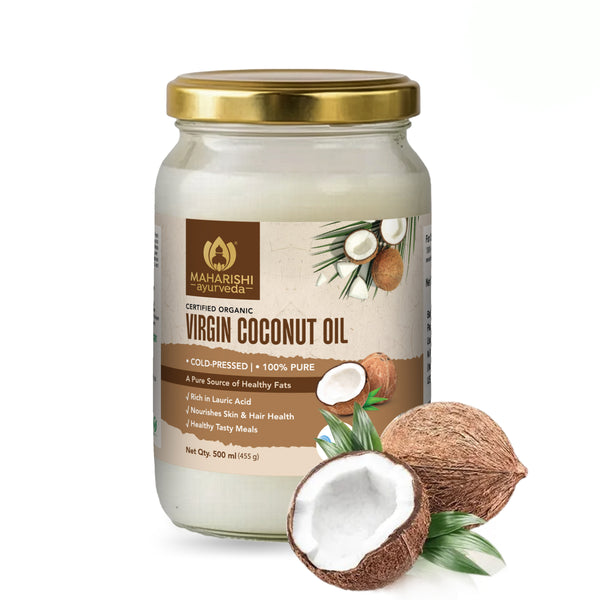
What Are the Benefits of Oil Pulling With Virgin Coconut Oil?
Oil pulling with virgin coconut oil may support oral hygiene, fresh breath, healthy gums, and a cleaner morning routine. It should be used as a supportive oral care practice, not as a replacement for brushing, flossing, or dental care.
Supports Oral Hygiene
Swishing virgin coconut oil may help cleanse the mouth and support daily oral hygiene. It works best when combined with tongue scraping and brushing.
Helps Maintain Fresh Breath
Oil pulling may help reduce morning heaviness, coating, and unpleasant breath. If bad breath continues, it may be linked to digestion, gum disease, cavities, dehydration, or tongue coating.
Supports Healthy Gums
Gentle swishing may help massage the gums and support gum cleanliness. Avoid aggressive swishing, especially if your gums are sensitive.
Helps Soothe Oral Heat
Because coconut oil is cooling, it may suit people with heat, sensitivity, or Pitta-type oral discomfort. If you have mouth ulcers, bleeding gums, severe pain, or infection, consult a dentist.
How Do You Do Oil Pulling With Virgin Coconut Oil?
To do oil pulling with virgin coconut oil, take a small amount of oil, swish gently, spit it out, and rinse with warm water. Do it in the morning on an empty stomach after tongue scraping and brushing.
Step-by-Step Method
- Wake up and clean your tongue with a tongue scraper.
- Brush your teeth gently.
- Take 1 to 2 teaspoons of virgin coconut oil.
- Swish gently in the mouth for 3 to 5 minutes if you are a beginner.
- Gradually increase the time if comfortable.
- Spit the oil into the trash.
- Rinse your mouth with warm water.
Do not swallow the oil. Do not spit it into the sink because coconut oil can solidify and clog drains.
When Is the Best Time to Do Oil Pulling?
The best time to do oil pulling is in the morning on an empty stomach, after tongue scraping and brushing, and before breakfast.
Morning is preferred in Ayurveda because the mouth may accumulate coating and Kapha overnight. Oil pulling helps make the mouth feel cleaner before eating.
Oil pulling can be done at night as a secondary option, but morning remains the better Ayurvedic choice.
Check out Oil Pulling, Tooth Pain Remedies & Ayurvedic toothpaste--->
What Is the Difference Between Gandusha and Kavala?
In Ayurveda, oil pulling is connected with two oral care practices: Gandusha and Kavala. Most modern oil pulling is closer to Kavala because it involves gentle swishing.
|
Aspect |
Gandusha |
Kavala |
|
Quantity |
Mouth is filled completely |
Small quantity is used |
|
Action |
Oil is held without movement |
Oil is gently swished |
|
Use |
More therapeutic |
Better for daily routine |
|
Difficulty |
More difficult |
Easier |
|
Modern oil pulling |
Less common |
Most common |
For daily use at home, Kavala is usually more practical.
Who Can Use Virgin Coconut Oil for Oil Pulling?
Virgin coconut oil oil pulling may suit people who want a gentle, cooling, and Ayurvedic oral care practice.
It may be useful for:
- People with sensitive mouths
- People with oral heat or burning sensation
- People who prefer cooling oral care
- People following an Ayurvedic morning routine
- People with pitta dominant body type finds sesame to be warming in their body
- People looking for a natural oral hygiene habit
If you have dental pain, gum disease, bleeding gums, ulcers, infection, braces, crowns, implants, or recent dental work, consult your dentist before starting.
Who Should Avoid or Modify Oil Pulling?
Avoid or modify oil pulling if you have acute fever, severe indigestion, vomiting tendency, severe throat infection, difficulty swishing, or if you have just eaten.
Use caution in:
- Children
- Older adults
- People who may swallow the oil
- People with jaw pain
- People with dental procedures or restorations
- People with severe gum or throat issues
- Oil pulling should feel comfortable. If it causes nausea, jaw tiredness, dryness, irritation, or discomfort, stop or reduce the duration.
What Precautions Should You Follow?
The most important precaution is to never swallow the oil. Use good-quality cold-pressed virgin coconut oil, swish gently, and keep the duration comfortable.
Follow these precautions:
- Use cold-pressed virgin coconut oil.
- Start with a small amount.
- Do not swallow the oil.
- Do not swish aggressively.
- Do not do it immediately after meals.
- Spit into the trash, not the sink.
- Rinse with warm water afterward.
- Continue brushing and dental checkups.
- Oil pulling is supportive. It does not cure cavities, gum disease, infections, or dental pain.
Can Refined Coconut Oil Be Used for Oil Pulling?
Virgin coconut oil is preferred for oil pulling because it is less processed. Refined coconut oil may be more neutral in taste, but it is not the first choice for Ayurvedic oral care.
If possible, choose cold-pressed virgin coconut oil from a trusted source.
Does Coconut Oil Need to Be Melted First?
No, coconut oil does not need to be strongly heated. If it is solid, take a small amount and let it melt naturally in your mouth.
Do not overheat the oil. Use it at a comfortable temperature.
Can Beginners Do Oil Pulling?
Yes, beginners can do oil pulling with virgin coconut oil. Start with 1 teaspoon for 2 to 3 minutes. Increase slowly only if it feels comfortable.
You do not need to force 15 or 20 minutes in the beginning. A short, consistent routine is better than aggressive swishing.
Can Oil Pulling Be Done With Braces, Crowns or Fillings?
If you have braces, crowns, fillings, implants, bridges, or recent dental work, ask your dentist before oil pulling. Gentle swishing may be suitable for some people, but aggressive swishing should be avoided.
Stop if you feel pain, pressure, gum irritation, or dental sensitivity.
Can You Reuse Coconut Oil After Oil Pulling?
No, coconut oil used for oil pulling should never be reused. It contains saliva and oral debris after swishing. Spit it out and dispose of it properly.
What Is the Final Takeaway?
Virgin coconut oil can be used for oil pulling, especially if you want a cooling, gentle, and Ayurvedic oral care practice. It may suit Pitta-type oral concerns, sensitivity, and hot climates.
Use it in the morning after tongue scraping and brushing. Swish gently, spit it out, rinse with warm water, and never swallow the oil.
Oil pulling can support oral hygiene and fresh breath, but it does not replace brushing, flossing, dental checkups, or professional treatment.
Virgin Coconut Oil: Traditional Support for Hair, Skin & Wellness
A pure, nourishing oil traditionally used to support healthy-looking skin, stronger hair, and everyday wellness routines
Buy Now
Popular Posts

Types of Headaches: Types, Causes, Symptoms and Relief Options
22 Oct, 2026You might consider a headache at the end of a long day when fatigue is felt. However, if pain com...
Read more
Home Remedies for Migraine: Simple Remedies and When to See a Doctor
16 Oct, 2026Migraine is more than an ordinary headache that strikes at the worst time. People are eager to fi...
Read more
What Is Metabolic Health and Why Does It Matter for Weight Management?
15 Oct, 2026Metabolic health refers to how effectively the body manages blood sugar, blood pressure, blood fa...
Read more