FILTERS
Why Is Neem Commonly Used in Ayurvedic Oral Care? Benefits, Traditional Uses and Daily Hygiene

Neem is widely used in Ayurvedic oral care because of its long history in traditional tooth-cleaning practices. Neem leaves, twigs and extracts contain compounds studied for antimicrobial activity. While preliminary research suggests potential benefits for plaque management, neem is not a proven replacement for fluoride toothpaste or professional dental treatment. It can be included in a balanced daily oral hygiene routine.
Neem has been a familiar part of traditional Indian personal-care practices for generations. From herbal preparations to neem twigs used for cleaning teeth, the plant holds a significant place in Ayurvedic oral hygiene. Even today, neem remains a popular ingredient in many herbal toothpastes.
But why is neem commonly used in Ayurvedic oral care?
The answer lies in its traditional association with oral cleanliness, its naturally occurring plant compounds and its long history in Indian daily hygiene practices. Modern research has also explored neem's potential effects on oral bacteria and dental plaque. However, it is important to distinguish traditional uses from scientifically established dental benefits.
In this guide, we explore the role of neem in Ayurveda, its possible benefits for teeth and gums, what research suggests, and how neem-containing products such as Maharishi Ayurveda Ayurdent Classic can fit into your oral-care routine.
What Is Neem, and Why Is It Important in Ayurveda?
Neem, scientifically known as Azadirachta indica, is a tree native to the Indian subcontinent. Its leaves, bark, seeds and twigs have been used in various traditional practices. In Ayurveda, neem is commonly associated with cleansing and personal hygiene.
Neem in Traditional Indian Oral Care
Historically, neem twigs were used as natural chewing sticks, commonly called datun. People softened one end of a twig by chewing it and then used the fibres to clean their teeth. This practice combined a mechanical cleaning action with exposure to the plant's natural compounds.
What Makes Neem Different From Other Herbs?
Neem contains several naturally occurring phytochemicals, including compounds studied for antimicrobial activity. However, the effects of a neem extract depend on its preparation, concentration and intended use.
A laboratory finding does not automatically establish the clinical effectiveness of every neem-containing toothpaste.
Why Is Neem Used for Teeth and Gums?
Neem is traditionally associated with oral cleanliness and gum-care practices. Its continued use in Ayurvedic products reflects both cultural familiarity and interest in botanical ingredients.
1. Traditional Cleansing
Neem-based preparations have historically been used for cleaning teeth and maintaining oral hygiene. Modern neem toothpaste combines botanical ingredients with a conventional brushing routine.
2. Interest in Plaque Management
Certain neem extracts have demonstrated antimicrobial activity in laboratory studies. Researchers have investigated whether these properties may help with dental plaque control. However, results vary between formulations and studies.
3. Traditional Gum Care
Neem appears in traditional preparations associated with caring for the gums. The strongest everyday protection for gums still comes from regular plaque removal, interdental cleaning and appropriate dental care.
4. Oral Freshness
Neem is frequently included in herbal toothpastes intended to maintain a clean-mouth sensation. Freshness also depends on other ingredients, brushing technique, saliva flow and underlying oral health.
How Does Neem Work in Oral-Care Products?
The potential effects of neem are associated with its naturally occurring plant compounds.
Antimicrobial Activity
Some laboratory studies have found that neem extracts can inhibit the growth of selected microorganisms. This has encouraged research into neem-containing toothpastes and mouth rinses.
However, findings from laboratory experiments cannot be directly translated into guaranteed results in the mouth.
Plaque and Biofilm
Dental plaque is a structured film of microorganisms that forms on tooth surfaces. Mechanical brushing remains essential for disrupting and removing it.
Botanical ingredients may be investigated as complementary formulation components, but they cannot replace effective brushing.
Formulation Matters
The presence of neem on an ingredient list does not establish how much neem is present or how the final product performs.
The complete formulation, including cleaning agents, botanical ingredients and other components, determines the finished toothpaste's properties.
What Does Ayurveda Say About Neem for Oral Hygiene?
Ayurveda places importance on daily personal-care practices, often discussed under the concept of Dinacharya. Oral hygiene forms an important part of these routines.
Dant Dhavana: Traditional Tooth Cleaning
Dant Dhavana refers to tooth-cleaning practices in Ayurveda. Traditional approaches have included the use of selected herbal twigs and other cleansing preparations. Neem is among the plants associated with these practices.
Neem and Ayurvedic Doshas
Ayurveda describes health through concepts involving Vata, Pitta and Kapha. Neem is traditionally discussed in relation to balancing certain qualities within this framework.
These concepts belong to the Ayurvedic medical tradition and should not be interpreted as clinically validated explanations of dental disease.
Traditional Use vs Modern Evidence
Neem's history explains why it remains a familiar Ayurvedic oral-care ingredient. However, longstanding use alone does not prove that it prevents cavities, cures gum disease or treats infections.
Can Neem Help Reduce Dental Plaque?
Neem has been investigated for its potential role in managing plaque and gum inflammation.
What Does Research Suggest?
Some small clinical trials involving neem-containing oral-care products have reported improvements in plaque or gingival measurements.
However, results depend on product formulations, study design, duration and comparison treatments. The findings do not demonstrate that every neem toothpaste produces the same benefits.
Can Neem Toothpaste Replace Brushing?
No. Brushing physically removes plaque from accessible tooth surfaces. Neem is an ingredient within some toothpaste formulations, not a substitute for the mechanical action of brushing.
What About Cleaning Between Teeth?
Toothbrush bristles cannot reliably clean every tight space between adjacent teeth. Floss or suitable interdental brushes should therefore remain part of daily oral hygiene.
Is Neem Useful for Gum Health?
Healthy gums depend on controlling plaque and receiving appropriate dental care. Neem-containing products may be included in a general oral-hygiene routine, but they are not established treatments for periodontal disease.
Ayurdent Toothpaste & Neem Soap Combo: Oral Care & Skin Care
A convenient Ayurvedic combination featuring herbal toothpaste for everyday oral hygiene and neem soap for gentle cleansing, helping care for your teeth, gums and skin.
Buy Now
What Causes Bleeding Gums?
Bleeding may occur because of plaque-related inflammation, aggressive brushing or other conditions.
Persistent bleeding should not be treated as a problem that can be solved by changing toothpaste alone.
Can Neem Cure Gingivitis?
There is insufficient evidence to claim that neem toothpaste reliably cures gingivitis. Professional diagnosis, effective brushing and interdental cleaning remain important.
When Should You Visit a Dentist?
Seek advice if you notice persistent bleeding, swollen gums, gum recession, loose teeth or pain while chewing. Early assessment can help identify conditions requiring treatment.
Can Neem Help With Bad Breath?
Bad breath can develop when oral bacteria produce odour-related compounds. Tongue coating, gum disease, dry mouth and certain foods may contribute.
Does Neem Eliminate Bad Breath?
Some neem-containing preparations have been studied for antimicrobial effects. However, there is insufficient evidence that neem toothpaste consistently treats chronic bad breath.
Why Does Brushing Matter More?
Regular brushing removes plaque and food debris that may contribute to oral odours. Tongue cleaning may also temporarily reduce surface coating.
What if Bad Breath Persists?
Persistent bad breath may require a dental examination to identify its cause. Herbal toothpaste should not delay professional assessment.
Neem Toothpaste vs Regular Toothpaste: What Is the Difference?
The distinction depends on the ingredients and formulation rather than whether a product is labelled herbal or conventional.
|
Feature |
Neem-based herbal toothpaste |
Conventional fluoride toothpaste |
|
Main focus |
Botanical ingredients and everyday cleaning |
Cleaning and fluoride-based cavity prevention |
|
Neem content |
May contain neem extracts or preparations |
Usually not a defining ingredient |
|
Fluoride |
Depends on product |
Contains fluoride |
|
SLS |
May be present or absent |
Depends on product |
|
Cavity prevention |
Depends on formulation; evidence varies |
Strong clinical evidence for fluoride |
|
Daily hygiene |
Used with regular brushing |
Used with regular brushing |
Neem toothpaste and fluoride toothpaste are not necessarily mutually exclusive categories; some formulations may contain both. Always check the ingredient label.
Read more: Ingredients to Avoid in Regular Toothpaste and Why Ayurdent Is Different →
Why Is Fluoride Important for Oral Health?
Fluoride is one of the most extensively studied ingredients in preventive dentistry. It helps protect tooth enamel from acids and supports remineralisation.
Can Neem Replace Fluoride?
Current evidence does not establish neem as an equivalent substitute for fluoride in cavity prevention.
The Indian Dental Association and American Dental Association recommend appropriate fluoride toothpaste as part of everyday oral care.
Who Should Pay Particular Attention to Fluoride?
People with frequent cavities, exposed root surfaces, dry mouth or orthodontic appliances may have increased decay risk. They should discuss suitable fluoride protection with their dentist.
What Is SLS-Free Toothpaste?
Sodium lauryl sulfate, commonly called SLS, is a surfactant used in some toothpastes to create foam.
Why Do Some People Prefer SLS-Free Formulations?
Certain individuals may experience irritation or recurrent mouth ulcers associated with SLS-containing products.
An SLS-free option may be preferable for people who find conventional foaming toothpaste uncomfortable.
Does More Foam Mean Better Cleaning?
No. Foaming does not automatically indicate superior plaque removal. Effective brushing technique and the product's overall formulation matter more.
Why Choose Maharishi Ayurveda Ayurdent Classic Toothpaste?
Maharishi Ayurveda Ayurdent Classic Toothpaste brings together traditional botanical ingredients in a contemporary oral-care formulation.
The manufacturer describes it as a blend of 20 Ayurvedic herbs and ingredients developed for everyday oral hygiene.
What Are Its Key Features?
According to Maharishi Ayurveda India, Ayurdent Classic is:
- Formulated with 20 Ayurvedic herbs and ingredients
- Fluoride-free
- SLS-free
- Non-foaming
- Designed for routine oral care
- Available in a 75 ml tube
These characteristics describe the product's formulation. They do not establish that it treats cavities, reverses gum disease or provides the same cavity-prevention benefit as fluoride toothpaste.
Which Ayurvedic Ingredients Are Used in Ayurdent Classic?
Neem is one of several botanical ingredients highlighted in the product.
Neem and Meswak
The manufacturer associates Neem and Meswak with traditional cleansing practices. Meswak, also called Miswak, has a long history of use in oral hygiene.
Triphala
Triphala combines Amalaki, Bibhitaki and Haritaki. It is a classical Ayurvedic formulation used in various traditional preparations.
Ginger and Mulethi
Ginger and Mulethi, also known as licorice, are familiar Ayurvedic ingredients. They are included as part of the product's botanical blend.
Peppermint Oil
Peppermint oil provides a refreshing flavour and aroma. The presence of these ingredients should not be interpreted as proof of treatment for any particular dental condition.
How Can You Use Ayurdent Classic in Your Oral-Care Routine?
Ayurdent Classic can be considered by adults who prefer botanical toothpaste formulations.
Brush Gently
Use a soft-bristle toothbrush and follow the product's directions. Clean all accessible tooth surfaces with gentle movements.
Understand Its Fluoride-Free Formulation
Ayurdent Classic does not contain fluoride. Consult your dentist about your cavity-prevention needs before using it as your only toothpaste, particularly if you have a history of tooth decay.
Combine It With Complete Oral Hygiene
Toothpaste cannot replace flossing, professional cleaning or dental examinations. Continue cleaning between your teeth daily.
Explore Ayurdent Classic
If you are interested in neem and other traditional Ayurvedic oral-care ingredients, explore the complete product formulation.
Discover Maharishi Ayurveda Ayurdent Classic Toothpaste for its ingredients, directions and available packs.
Ayurdent Classic: Ayurvedic Herbal Toothpaste
A herbal toothpaste formulated with traditional Ayurvedic ingredients to support everyday oral hygiene and leave your mouth feeling clean and refreshed.
Buy Now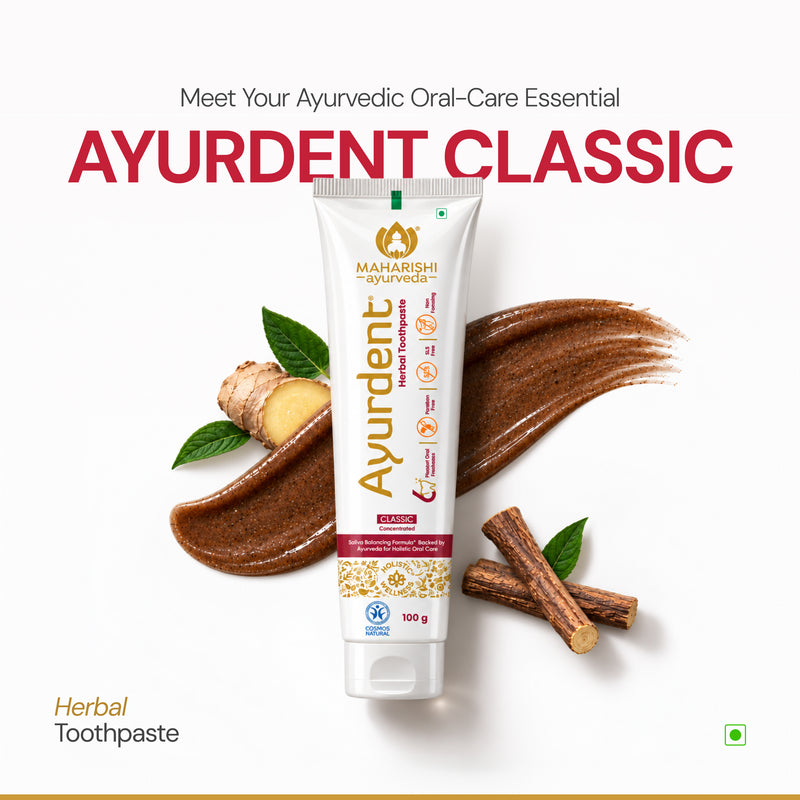
How to Build a Daily Oral Hygiene Routine With Ayurvedic Practices
An effective routine can combine personal preferences for herbal care with established dental recommendations.
Morning: Brush thoroughly for two minutes with an appropriate toothpaste. Use gentle movements and pay attention to the gumline. Tongue cleaning may be included as an optional complementary step.
During the Day: Drink water regularly and limit frequent consumption of sugary drinks and snacks. After acidic foods or drinks, rinse with water and allow time before brushing.
Evening: Brush again before bedtime. Clean between your teeth using floss or an appropriate interdental cleaner.
Follow your dentist's advice regarding fluoride toothpaste and other preventive products.
Is Neem Toothpaste Safe for Everyone?
Commercial herbal toothpastes may be suitable for many adults when used according to their labels. However, suitability depends on the full ingredient list and individual circumstances.
Allergies and Sensitivities
Botanical ingredients can cause irritation or allergic reactions. Stop using a product if you develop burning, swelling, persistent soreness or a rash.
Children
Children need age-appropriate toothpaste and appropriate fluoride exposure. Parents should seek paediatric dental guidance before introducing unfamiliar herbal formulations.
Pregnancy and Breastfeeding
People who are pregnant or breastfeeding should discuss concerns about unfamiliar herbal oral-care products with their dentist or healthcare professional.
How to Choose a Neem-Based Ayurvedic Toothpaste
Before buying, consider more than the presence of a single herbal ingredient.
Read the Ingredient List
Check for Neem and other botanical components. Review any ingredients that may cause personal sensitivities.
Check Fluoride and SLS Information
These characteristics may be relevant to your dental needs and preferences. Do not assume every Ayurvedic toothpaste is fluoride-free or SLS-free.
Review Manufacturer Information
Look for clearly stated product directions, packaging details and manufacturer information.
Avoid Exaggerated Claims
Be cautious of products promising to permanently cure cavities, reverse gum recession or treat advanced gum disease without appropriate clinical evidence.
Conclusion
Neem continues to hold an important place in Ayurvedic oral care because of its longstanding use in traditional tooth-cleaning practices. Its naturally occurring compounds have attracted scientific interest, particularly in relation to antimicrobial activity and plaque management.
However, traditional use and preliminary research should not be mistaken for proof that neem can prevent every dental problem or replace fluoride.
For people interested in herbal oral-care formulations, Maharishi Ayurveda Ayurdent Classic Toothpaste brings together Neem, Meswak, Triphala and other Ayurvedic ingredients in a fluoride-free, SLS-free formulation.
The best oral hygiene routine combines consistent brushing, daily interdental cleaning, appropriate fluoride protection and regular dental checkups.
Popular Posts

Why Do You Feel Exhausted After Social Gatherings or Busy Events?
25 Nov, 2026Feeling exhausted after social gatherings can result from prolonged conversations, emotional eff...
Read more
Perimenopause vs Menopause: What Are the Early Signs and Key Differences?
25 Nov, 2026Many women in their mid-40s notice changes they can't quite explain: cycles that suddenly turn u...
Read more
Why Do Energy Levels Fluctuate Throughout the Day?
25 Nov, 2026You clear your morning tasks, enjoy lunch and sit down to finish one more thing. Suddenly, you a...
Read moreRecommended Products


Helps maintain healthy skin, Purifies blood naturally, Supports healthy and glowing skin, Promotes healthy gums, Keeps mouth fresh