FILTERS
Tongue Cleaning Before or After Brushing? Ayurveda Guide

In Ayurveda, oral care is not limited to brushing the teeth. The mouth is considered the first gateway to digestion, taste, freshness and overall wellness. This is why tongue cleaning, also known as Jihva Nirlekhana or Jihwa Prakshalana, has been described as an important part of Dinacharya, the daily Ayurvedic routine.
A coated tongue, bad breath or dull taste may indicate the presence of Ama, poor oral hygiene or Kapha accumulation in the mouth. Regular use of a tongue cleaner or tongue scraper helps remove this coating and supports a cleaner, fresher start to the day.
As Ayurveda reminds us:
सर्वे रोगाः मन्देऽग्नौ
Sarve Rogāḥ Mande’gnau
“All diseases arise due to weakened Agni.”
Ayurvedically, the tongue is cleaned every day, as digestion starts in the mouth with chewing, saliva and taste sensations.
TL;DR – Tongue Cleaning, Oral Hygiene & Ayurveda
- Clean Your Tongue Before Brushing: Ayurveda recommends tongue scraping first in the morning to remove overnight coating before brushing the teeth.
- Tongue Coating May Reflect Ama: A white or coated tongue may indicate oral build-up, Kapha accumulation, poor hygiene, or weak digestion.
- Supports Fresher Breath: Tongue scraping helps remove bacteria, residue, and coating that may contribute to bad breath and dull taste.
- Use a Metal Tongue Scraper: Copper, stainless steel, or silver tongue cleaners are preferred over plastic because they are durable, smooth, and easier to clean.
- Be Gentle and Consistent: Scrape from back to front 5–7 times daily, rinse well, avoid force, and seek advice if coating is painful, thick, bleeding, or persistent.
Should You Clean Your Tongue Before or After Brushing?
In the morning, use a tongue brush to brush your tongue before brushing your teeth. Avoiding the overnight film on the tongue and cleaning the tongue with brush, rinsing and other oral care/dental care is the first step as per Ayurveda.
The tongue might be white or yellowish upon getting up. There might be bacteria, food particles, toxins and Kapha heaviness in this coating. Scrape with a tongue scraper before brushing to take this layer off first which will help with the other steps in oral hygiene.
What does Ayurveda recommend?
Jihva Nirlekhana is a part of daily oral care as recommended by Ayurveda. The tongue is also seen as a reflection in Ayurveda of digestion and internal balance. Disorder in Ama and/or Agni is indicated by coated tongue.
So, it's not just about having a nice breath that you want to clean your tongue. It is also connected with digestive wellness, taste of foods and taking proactive care of self.
What do dentists recommend?
Modern good oral hygiene involves cleaning the teeth, gums, tongue and mouth. Brushing will clean the teeth and gum line, and tongue scraping will remove coating on the tongue surface. Toothbrush and tongue cleaner can then be used in tandem for improved oral hygiene.
Does the order matter?
Yes. In the Ayurvedic regime, the first step in the morning regimen is to scrape the tongue before brushing. Brushing after removing the coating of the tongue will be effective.
Ideal morning oral care routine
- Wake up and rinse the mouth.
- Use a tongue cleaner gently from back to front.
- Brush the teeth with a soft brush or suitable herbal toothpaste.
- Rinse the mouth thoroughly.
- Practise oil pulling, if suitable.
- Use a herbal mouth rinse, if advised.
Why Is Tongue Cleaning Important in Ayurveda?
The tongue is an important organ in Ayurveda as it is linked to Agni, Ama, taste, saliva, digestion. The tongue is not only an organ of taste but is also regarded as a reflection of the internal condition.
What is Jihva Nirlekhana?
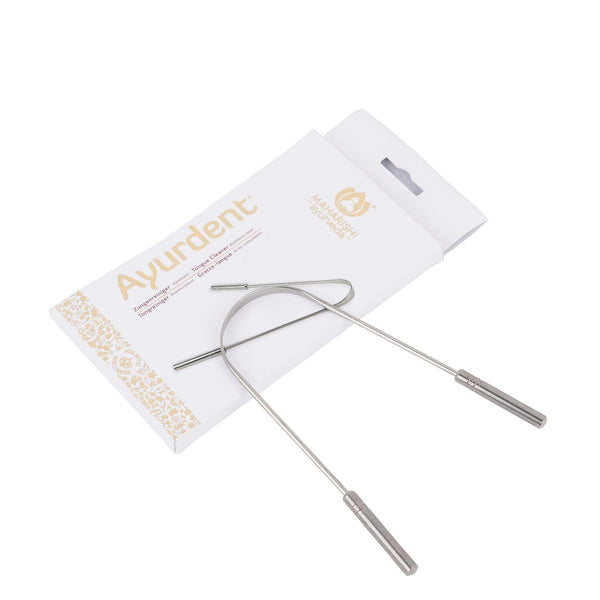
Jihva Nirlekhana- Cleansing and scraping the tongue. It's performed with a tongue scraper, which is normally of copper, stainless steel or silver. Coating is gently scraped off the back of the tongue using the scraper to the front of the tongue.
To eliminate the thick slim coating which may occur on the tongue at night which aids in the cleaning of the mouth.
What is Ama and why does it matter?
Ama is undigested toxins/metabolic wastes. In the oral cavity, Ama can manifest itself as a glossy tongue, halitosis, decreased taste or a feeling of heavy mouth.
If the tongue has a coating, it could indicate that the digestive fire or Agni in the body requires some support. Daily tongue brushing can get rid of this visible coating and assist in daily cleansing.
How does tongue cleaning support Agni?
Agni is the fire of digestion. Firstly digestion takes place in the mouth due to the taste of the food, the saliva and correct chew. If tongues are coated, they may not be able to taste very well. The cleaning of the tongue provides the first step in digestion, and may make it easier to taste the food and give a fresher feeling to the mouth.
Why is tongue scraping part of Dinacharya?
Dinacharya includes simple daily habits that help prevent imbalance. Tongue scraping is one such habit. It removes oral coating, supports fresh breath and helps maintain a clean mouth every morning.
Ayurveda says:
“संक्षेपतः क्रियायोगो निदान परिवर्जनम्”
The essence of treatment is avoiding the root cause.
Daily tongue cleaning is one way to avoid the build-up of oral toxins, coating and bad breath.
What Are the Benefits of Tongue Cleaning?
The main tongue cleaner benefits include fresher breath, reduced tongue coating, improved oral hygiene and support for Ayurvedic wellness.
|
Benefit |
How it helps |
|
Reduces bad breath |
Removes coating that may hold bacteria and toxins |
|
Removes tongue coating |
Clears Ama-like build-up from the tongue |
|
Supports oral hygiene |
Complements brushing and rinsing |
|
May improve taste |
Helps keep taste buds cleaner |
|
Supports Agni |
Assists the first stage of digestion |
|
Balances oral Kapha |
Reduces heaviness and stickiness in the mouth |
Helps reduce bad breath
Bad breath can be caused from coating on the tongue, plaque, bacteria, food particles or indigestion. A poor breath tongue scraper routine will assist you get rid of any film that can trigger unpleasant mouth odor.
Removes tongue coating
This sticky, heavy and unpleasant sensation of a coated tongue can be distressing. This layer can be gently removed through regular scraping, which will make the tongue cleaner.
Supports oral hygiene
Tongue scraping is not meant to be a substitute for brushing. It should be used in conjunction with brushing and rinsing and other oral hygiene practices. Brushing is used to clean the teeth and scraping is used to clean the surface of the tongue.
May improve taste perception
When the tongue is coated, the taste may become dull. Cleaning the tongue may help improve taste clarity and make the mouth feel fresher.
Supports overall wellness according to Ayurveda
In Ayurveda, oral care is linked with digestion, Agni, Ama and daily cleansing. A clean tongue supports a cleaner mouth and forms an important part of holistic oral care.
Also check out our blog on Ayurvedic Toothpaste & Oral Care Myths--->
How Do You Clean Your Tongue Properly?
Properly clean your tongue with a clean tongue scraper metal made, gently scraping it from back to front. Do not apply force.
Step-by-step guide
- Choose a copper, stainless steel or silver tongue scraper.
- Stand before a mirror and extend your tongue.
- Place the scraper gently towards the back of the tongue.
- Pull it forward in one smooth motion.
- Rinse the scraper after each stroke.
- Repeat 5–7 times, or until the tongue feels clean.
- Rinse your mouth well.
- Wash and dry the scraper after use.
How many times should you scrape?
Usually, 5–7 gentle strokes are enough. Avoid aggressive scraping, as it may irritate the tongue.
Should you clean your tongue every day?
Yes, daily tongue scraping is recommended in the morning as part of Dinacharya.
Common mistakes to avoid
|
Mistake |
Why to avoid it |
|
Scraping too hard |
May irritate the tongue |
|
Using a dirty scraper |
Can affect oral hygiene |
|
Scraping too many times |
May cause soreness |
|
Using a damaged scraper |
May scratch the tongue |
|
Skipping brushing |
Tongue cleaning should complement brushing |
Which Tongue Cleaner Is Best?
The best tongue cleaner is one that is safe, smooth, easy to clean and durable. Ayurveda generally prefers metal tongue scrapers over plastic tongue cleaners.
Copper tongue scraper
A copper tongue scraper is traditionally preferred in Ayurvedic oral care. It is durable, easy to use and suitable for daily scraping.
Stainless steel tongue scraper
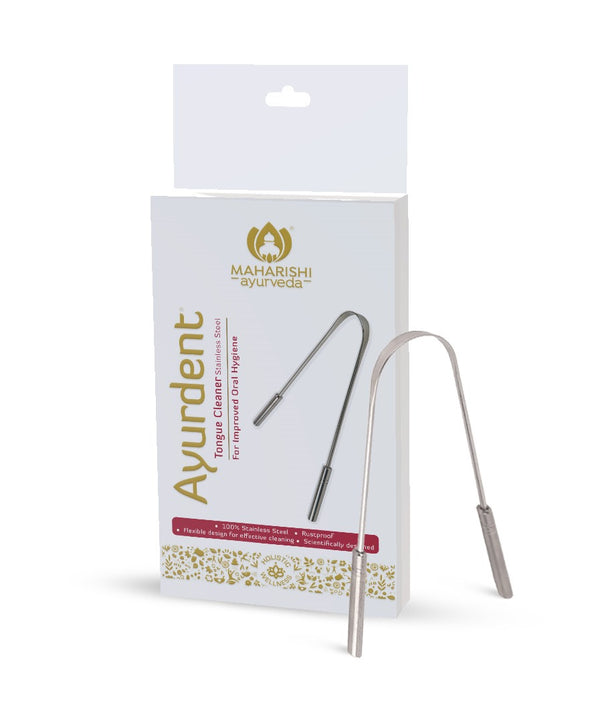
A stainless steel tongue scraper is practical, long-lasting and easy to clean. It is a good everyday option.
Silver tongue scraper
A silver tongue scraper is also mentioned in Ayurvedic oral care practices and is considered a premium traditional choice.
Comparison table
|
Type |
Hygiene |
Durability |
Ayurvedic preference |
Best for |
|
Copper tongue scraper |
Good |
Durable |
High |
Daily Ayurvedic oral care |
|
Stainless steel tongue scraper |
Good |
Very durable |
Good |
Regular use |
|
Silver tongue scraper |
Good |
Durable |
High |
Premium routine |
|
Plastic tongue cleaner |
Moderate |
Lower |
Low |
Temporary use |
|
Electric tongue cleaner |
Varies |
Moderate |
Low |
Modern convenience |
Is a Tongue Scraper Better Than a Toothbrush?
Yes, a tongue scraper is better than a toothbrush for cleaning the tongue because it is designed specifically to remove tongue coating. A toothbrush is mainly designed for teeth and gums.
Tongue scraper vs toothbrush
|
Tool |
Purpose |
|
Tongue scraper |
Removes coating from the tongue |
|
Toothbrush |
Cleans teeth and gums |
|
Both together |
Supports complete oral hygiene |
Can you use both?
Yes. Use the tongue scraper first, then brush your teeth. This gives a more complete morning oral cleaning routine.
Can Tongue Cleaning Help Reduce Bad Breath?
Yes. Tongue cleaning can help reduce bad breath by removing the coating that may hold bacteria, toxins and residue.
Why does bad breath happen?
Bad breath may happen due to poor oral hygiene, tongue coating, plaque, food particles or disturbed digestion.
How does tongue coating contribute?
The tongue coating can trap bacteria and residue. If it is not removed, it may contribute to unpleasant breath.
Can tongue scraping improve breath freshness?
Yes. Daily tongue scraping, along with brushing and rinsing, can support fresher breath naturally.
How Should You Clean a White-Coated Tongue?
To clean a white-coated tongue, use a gentle metal tongue scraper every morning. Scrape softly and rinse well.
What causes a white tongue?
In Ayurveda, a white or coated tongue may be linked with Ama, Kapha accumulation, poor digestion or poor oral hygiene.
Daily cleaning tips
Use a metal tongue scraper, scrape gently from back to front, rinse after each stroke and brush afterwards. Also rinse the mouth after meals, especially after sweet, sticky or heavy foods.
When should you see a healthcare professional?
Seek professional advice if the white coating is painful, very thick, persistent, bleeding, associated with ulcers or does not improve despite regular cleaning.
What Is the Ideal Ayurvedic Morning Oral Care Routine?
|
Order |
Practice |
Purpose |
|
1 |
Wake up |
Begin the day mindfully |
|
2 |
Warm water, if suitable |
Supports morning cleansing |
|
3 |
Tongue scraping |
Removes coating |
|
4 |
Oil pulling, optional |
Supports oral cleansing |
|
5 |
Brushing |
Cleans teeth and gums |
|
6 |
Herbal rinse, optional |
Supports freshness |
This simple routine supports oral hygiene, fresh breath and Ayurvedic self-care.
What Is the Best Daily Tongue Cleaning Routine?
|
Step |
Recommendation |
|
Timing |
Before brushing |
|
Frequency |
Once daily |
|
Tool |
Metal tongue scraper |
|
Pressure |
Gentle |
|
Direction |
Back to front |
|
Cleaning |
Wash after each use |
|
Replacement |
Replace if worn or damaged |
Conclusion
Tongue cleaning is a small practice with deep Ayurvedic value. It helps remove coating, supports fresh breath, complements brushing and forms an important part of Dinacharya.
For the best routine, clean your tongue before brushing every morning using a gentle metal tongue scraper. A copper, stainless steel or silver tongue cleaner is a good choice. Done daily, this simple habit can support oral hygiene, taste, freshness and Ayurvedic wellness.
Popular Posts

Himalayan Pink Salt Benefits: Uses, Nutrition and What to Know
29 Sep, 2026A pinch of salt seems simple, yet Ayurveda has always looked closely at simple things: their tas...
Read more
Plaque vs Tartar: What Is the Difference and How Does Ayurveda Approach Them?
28 Sep, 2026Plaque is a soft, sticky film of bacteria that forms on teeth, while tartar is hardened or calci...
Read more
Can Tea Cause Acidity? What to Know Before Drinking It
25 Sep, 2026Tea is one of the world's most beloved beverages a comforting ritual that millions of us turn to ...
Read moreRecommended Products


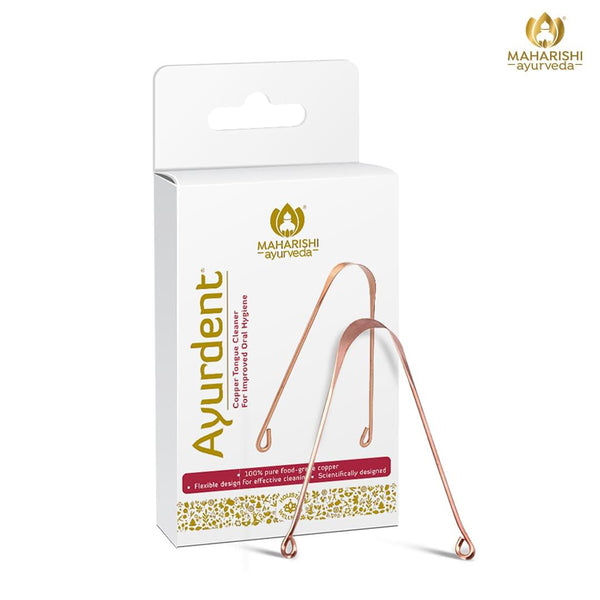
Premium quality Coppper, Durable And Ergonomically Designed, Endorsed By The American Dental Association



Premium quality Silverl, Durable And Ergonomically Designed, Endorsed By The American Dental Association