FILTERS
Fatty Liver vs. High Cholesterol: How Are These Two Silent Conditions Connected?

Fatty liver and Cholesterol these are health conditions which we are always concerned about?
Patient go for regular check ups, often in my OPD peoplecome to me if I suggest them with some diet or check with pulse if they are suffering from any of these conditions?
So lets deep dive into both these conditions and understand the two conditions and connections both from medical and Ayurvedic lens.
When a routine blood test flags high cholesterol or an ultrasound detects a fatty liver, it is easy to view them as two unrelated health issues—one concerning your heart, the other your digestion. In reality, both are driven by the exact same underlying metabolic imbalance.
Your liver is the body’s central fat-processing hub. It manufactures essential cholesterol for hormones and cell membranes, packages fats for energy, and clears excess low-density lipoprotein (LDL) from your bloodstream. When the liver becomes overloaded, fat gets trapped inside liver cells while excess lipids spill over into your blood.
TL;DR – Fatty Liver vs. High Cholesterol: What Should You Know?
- Shared Metabolic Causes: Fatty liver and high cholesterol are often linked through insulin resistance, excess calorie intake, and impaired fat metabolism.
- Different but Connected Conditions: Fatty liver involves fat accumulation in liver cells, while high cholesterol refers to excess lipids circulating in the bloodstream.
- Both Can Be Silent: These conditions often have no noticeable symptoms and may only be detected through blood tests or liver imaging.
- Diet Supports Metabolic Health: Limit refined sugars, trans fats, fried foods, and ultra-processed meals while choosing fresh vegetables, whole grains, and healthy fats in moderation.
- Exercise Helps Improve Metabolism: Regular walking, strength training, and yoga can improve insulin sensitivity and support healthy liver fat and cholesterol levels.
- Ayurvedic Support Requires Guidance: Herbs such as Kutki, Bhumi Amla, Triphala, and Guggulu are traditionally used for liver and metabolic wellness, but require medical supervision and are not replacements for prescribed treatment.
At a Glance: Fatty Liver vs. High Cholesterol
|
Feature |
Fatty Liver |
High Cholesterol (Dyslipidemia) |
|
Where It Happens |
Excess fat stored inside liver cells. |
Excess lipids (LDL, triglycerides) circulating in blood vessels. |
|
Core Mechanism |
Fat accumulation in the liver outpaces export and breakdown. |
The liver overproduces lipid particles and clears LDL too slowly. |
|
Warning Signs |
Usually silent; later stages may cause fatigue, dull upper-right abdominal discomfort, or jaundice. |
Completely silent—detectable only through routine blood tests. |
|
Long-Term Risk |
Liver inflammation (MASH), scarring (fibrosis), and cirrhosis. |
Arterial plaque buildup, heart attack, and stroke. |
The Biological Loop: How One Fuels the Other
High cholesterol does not simply cause fatty liver in isolation, nor does fatty liver act alone. Instead, shared metabolic drivers—primarily insulin resistance and high calorie intake—create a self-reinforcing cycle:
- Surplus Fuel Turns to Liver Fat: When you regularly consume excess sugar, refined carbohydrates, and unhealthy fats, the liver converts that surplus energy into triglycerides. When insulin resistance slows down fat export, these triglycerides accumulate inside liver cells, leading to Metabolic Dysfunction-Associated Steatotic Liver Disease (MASLD)—formerly known as NAFLD.
- Reduced Clearance Raises Blood Cholesterol: As fat builds up, the liver’s metabolic efficiency drops and low-grade inflammation sets in. An inflamed, congested liver clears "bad" LDL cholesterol from the blood less effectively while releasing more triglyceride-rich particles—causing blood cholesterol and triglyceride levels to climb.
- Circulating Lipids Worsen Liver Stress: Elevated lipids in the bloodstream continuously circulate back to the liver, triggering immune responses that can drive liver inflammation (MASH) and later progressive scarring (fibrosis).
Risk Factors -
Because both conditions stem from the same metabolic bottlenecks, they share common risk factors:
- Diets high in refined sugars, saturated fats, trans fats, and ultra-processed foods
- Insulin resistance, type 2 diabetes, or metabolic syndrome
- Excess body weight
- Sedentary daily routine
- Heavy or long-term alcohol consumption
- Genetic predisposition
The Ayurvedic Perspective: Yakrit, the 13 Agnis, and Meda Dhatu
Modern medicine tracks this connection through insulin and lipoproteins; Ayurveda maps the same physiology through digestive fire (Agni), metabolic toxins (Ama), and fat tissue (Meda Dhatu). In classical Ayurvedic texts, both conditions fall under Santarpanajanya Vyadhi—disorders rooted in over-nourishment, heavy foods, and sluggish metabolism.
1. Yakrit (Liver) as the Body’s Metabolic Gatekeeper-
In Ayurveda, the liver (Yakrit) is the primary seat of Ranjaka Pitta and plays a central role in systemic metabolism. Digestion unfolds across three sequential stages governed by 13 Agnis:
- Jatharagni (in the stomach and duodenum) breaks down ingested food.
- Five Bhutagnis (elemental fires operating at the liver) refine digested nutrients so they become compatible with human tissue (dhatus).
- Seven Dhatu-Agnis transform those refined nutrients into the body’s seven tissues (dhatus) in sequence—from nutritive fluid (Rasa) and blood (Rakta) to muscle (Mamsa) and fat tissue (Meda Dhatu).
2. How Ama Compromises Lipid Quality
When improper diet, overeating, or weak digestive fire (Agnimandya) overwhelms this cascade, improperly processed metabolic waste called Ama forms. In contemporary Ayurvedic practice, consumption of trans fats, reheating of vegetable oils, and environmental pollutants (Garavisha) is understood to further burden the liver’s transforming capacity.
If Ama accumulates in early tissues (Rasa, Rakta, or Mamsa) or impairs Meda Dhatvagni, the body produces Ama-yukta Meda—heavy, sticky, poorly metabolized fat tissue. Because cholesterol is an integral lipid component, this qualitative imbalance disrupts healthy lipid balance, leading to Srotorodha (obstruction of micro-channels) in blood vessels alongside Kapha-Meda congestion in the liver
Steps to Support -
Because fatty liver and high cholesterol share the same root causes, addressing your daily digestion and metabolism supports both organs simultaneously:
- Focus on Lipid Quality, Not Total Fat Elimination: Your body needs healthy fats to build cell membranes and hormones. Instead of cutting out all fats, avoid trans fats, packaged snacks, and overheated polyunsaturated oils.
- Choose modest amounts of unrefined, easy-to-digest fats such as soaked nuts, seeds, or small amounts of traditional A2 ghee suited to your digestive strength (Agni).
- Favor Light, Bitter, and Freshly Cooked Meals: Emphasize whole grains, legumes, seasonal vegetables, and bitter (Tikta) foods like leafy greens, bitter gourd (Karela), fenugreek (Methi), and turmeric, which naturally stimulate bile flow and clear excess Kapha.
- Cut Back on Refined Sugars: Reducing sweets, sweetened beverages, and refined flour directly lowers triglyceride synthesis in the liver.
- Exercise Daily (Vyayama): At least 30 to 45 minutes of brisk walking or strength exercise, Yoga daily improves insulin sensitivity, clears Kapha stagnation, and helps burn stored liver fat.
- Herbal support under Medical Supervision:
- Kutki (Picrorhiza kurroa), Bhumi Amla (Phyllanthus niruri), Triphala, and Guggulu formulations have long been used to support Yakrit and Meda Dhatvagni. Always consult a qualified Ayurvedic physician before starting herbal supplements, especially if you take cholesterol or diabetes medications.
Livomap Syrup: Ayurvedic Support for Liver Health
An Ayurvedic herbal formulation designed to support liver health and everyday digestive wellness.
Buy Now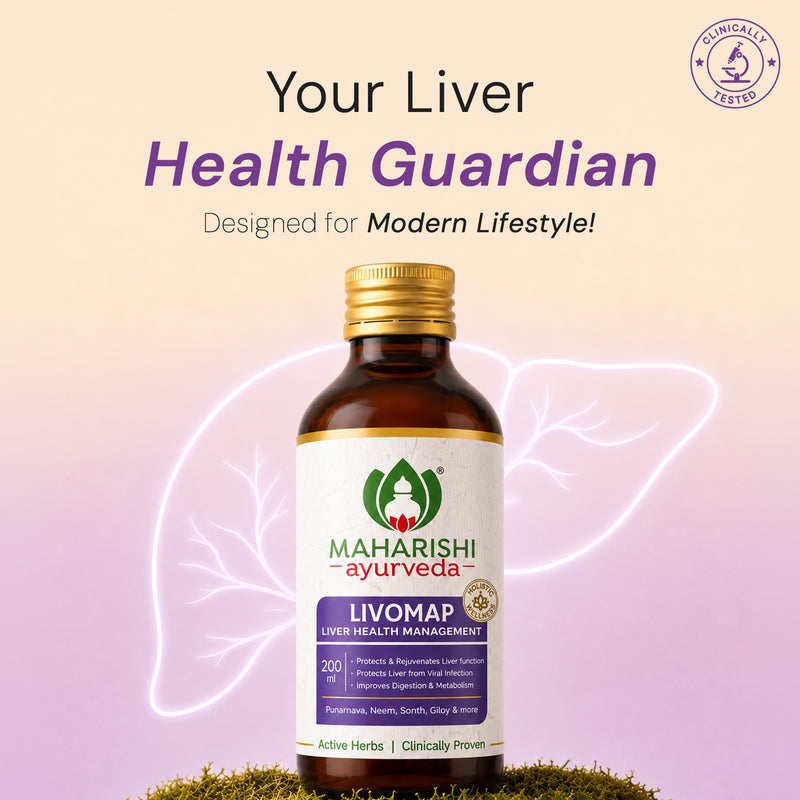
Formulations-
Livomap Syrup/Tablet is a blend of 14 herbs that supports liver health, improves Agni, and aids detoxification. Key herbs include:
- Punarnava (Boerhaavia diffusa): Sweet and bitter; balances Tridosha; anti-inflammatory, Deepan–Lekhan, and Anulomana (eases bowel movement by normalizing the downward flow of Vata).
- Neem (Melia azadirachta): Bitter and astringent; stimulates the liver, purifies blood, improves taste (Rochan), and removes worms.
- Patol Patra (Trichosanthes cucumerina): Bitter; Tridoshashamak, Rochan, Deepan–Pachan, Anulomana, Rechan, and Krimighna; purifies blood, removes toxins, anti-inflammatory and anti-pyretic.
- Sunthi (Zingiber officinale): Balances vitiated Kapha; Deepan–Pachan, stimulates appetite, relieves constipation, gas, and indigestion; effective in Ajeerna and Agnimandya (low Agni).
- Kutki (Picrorrhiza kurroa): Pittavirechak; increases Pitta secretion and, by its scraping effect, removes accumulated Ama. Prevents Yakrit Vikara (liver infections); Deepana, Pachana, Rochana, and Kupachan (prevents bloating and indigestion).
- Guduchi (Tinospora cordifolia): Tridoshashamak, Deepan–Pachan, corrects Agni, and purifies blood.
- Devadaru (Cedrus deodara): Bitter; Raktaprasadan (purifies blood), Deepan–Pachan, removes Ama, and scrapes fat.
- Hareetaki (Terminalia chebula): Tridoshahar, Rasayana, Deepan–Pachan, hepato-stimulant, mild laxative, and Krimighna; relieves abdominal pain and distention (carminative); beneficial in Agnimandya and hepato-splenic disorders.
- Varuna (Crataeva religiosa): Pittala (increases Pitta), Bhedi (piercing), and Deepana (improves digestive strength).
- Shigru (Moringa oleifera).
- Daruharidra (Berberis aristata): Lekhaniya (scraping), anti-inflammatory, Deepan, hepato-stimulant, and anti-microbial.
- Bhumamalaki (Phyllanthus niruri): Bitter, astringent, and sweet; balances Kapha and Pitta; Deepan–Pachan, hepato-stimulant, and purifies blood.
Read more: Grade 1 Fatty Liver: What Does It Mean and What Should You Do Next? →
Livomap Tablets: Ayurvedic Support for Liver Health & Detox
An Ayurvedic herbal formulation crafted to support liver function, natural detoxification, and overall wellness.
Buy Now
Popular Posts

Why Is Neem Commonly Used in Ayurvedic Oral Care? Benefits, Traditional Uses and Daily Hygiene
26 Nov, 2026Neem is widely used in Ayurvedic oral care because of its long history in traditional tooth-clea...
Read more
Why Do You Feel Exhausted After Social Gatherings or Busy Events?
25 Nov, 2026Feeling exhausted after social gatherings can result from prolonged conversations, emotional eff...
Read more
Perimenopause vs Menopause: What Are the Early Signs and Key Differences?
25 Nov, 2026Many women in their mid-40s notice changes they can't quite explain: cycles that suddenly turn u...
Read moreRecommended Products


Improves liver functioning, Improves digestion & metabolism, Detoxifies and protects the liver, Prevents the formation of gallstones