FILTERS
A2 Bilona Ghee vs Regular Ghee: Understanding Source, Preparation and Everyday Uses

The main difference between A2 Bilona ghee and regular ghee lies in milk sourcing and preparation. A2 Bilona ghee is made from milk associated with the A2 beta-casein variant using a traditional curd-churning method. Regular ghee may be prepared through other clarification processes. Both are concentrated dairy fats, and neither has proven universal health advantages.
Ghee has been an essential part of Indian food traditions for generations. From freshly prepared rotis and dal tadka to khichdi and festive sweets, it brings a distinctive flavour to everyday meals.
Today, shoppers can choose from several varieties, including A2 Gir cow Bilona ghee, regular cow ghee, buffalo ghee and organic cow ghee.
Among these options, A2 Bilona ghee has gained attention because of its connection with indigenous Indian cattle and traditional preparation methods.
But what makes it different from regular ghee?
Is the difference mainly in taste, milk sourcing or processing? Does Bilona preparation change its nutritional composition? And how does organic cow ghee fit into the comparison?
TL;DR – A2 Bilona Ghee vs Regular Ghee: Key Differences
- Different Milk Sources: A2 Bilona ghee is prepared from milk associated with the A2 beta-casein variant, while regular ghee may come from cow, buffalo or other declared dairy sources.
- Traditional Bilona Preparation: Bilona involves culturing milk into curd, churning it to separate butter and gently heating the butter to obtain ghee.
- Similar Nutritional Composition: Both types are concentrated dairy fats, providing approximately 9 calories per gram and containing saturated and unsaturated fatty acids.
- Taste and Texture May Vary: A2 Bilona ghee may have a rich dairy aroma and naturally grainy, or danedaar, texture depending on sourcing and preparation.
- Quality Depends on Transparency: Check milk sourcing, cattle breed, ingredient declarations, manufacturer details and available traceability records.
- Choose According to Your Preferences: A2 Bilona and regular ghee offer different sourcing and preparation options, but neither has established universal health advantages. Consume both in moderation.
What Is A2 Bilona Ghee?
A2 Bilona ghee is clarified butter prepared from milk associated with the A2 beta-casein protein variant using the traditional Bilona method.
The term combines two separate characteristics: the source milk and the preparation process.
What Does Bilona Mean?
Bilona refers to a traditional dairy preparation method involving curd churning.Milk is cultured into curd, churned to separate butter, and then clarified through gentle heating.
What Is Regular Ghee?
Regular ghee is clarified dairy fat made by removing most water and milk solids from butter.It can be produced from cow milk, buffalo milk or another appropriately declared dairy source.
How Is Regular Ghee Prepared?
Commercial manufacturers may use cream separation, butter production and controlled clarification processes.These methods allow consistent production at different scales.
A2 Bilona Ghee vs Regular Ghee: Key Differences
|
Feature |
A2 Bilona ghee |
Regular ghee |
|
Milk source |
A2-designated cow milk |
Cow, buffalo or another declared dairy source |
|
Preparation |
Traditional curd-churning Bilona process |
Various clarification methods |
|
Aroma |
Varies with milk and preparation |
Varies with milk and preparation |
|
Texture |
May have a naturally grainy finish |
May be smooth or grainy |
|
Nutrition |
Predominantly milk fat |
Predominantly milk fat |
|
Calories |
Approximately 9 kcal per gram |
Approximately 9 kcal per gram |
|
Price |
Often premium-positioned |
Available across price ranges |
|
Proven health advantage |
Not established |
Not inherently inferior |
The clearest differences relate to sourcing, production and culinary preferences.
How Is A2 Bilona Ghee Prepared?
The traditional Bilona process begins with milk rather than directly clarifying commercially separated cream.
Step 1: Milk Is Heated and Cultured
Fresh milk is heated and cooled before being set into curd using a suitable culture.
The curd-setting stage forms an important part of the traditional preparation.
Step 2: Curd Is Churned
The curd is churned to separate butter from the remaining liquid.
Traditional equipment may include a wooden churn, although practices vary between producers.
Step 3: Butter Is Collected
The separated butter is carefully collected for clarification.
Step 4: Butter Is Gently Heated
Butter is heated until moisture evaporates and milk solids separate.
The clarified fat is then collected as ghee.
Does Bilona Preparation Improve Nutrition?
Traditional preparation can influence aroma and texture.
However, there is insufficient clinical evidence that Bilona ghee consistently provides superior nutritional or medical benefits compared with properly manufactured regular ghee.
Does A2 Bilona Ghee Taste Different From Regular Ghee?
Taste is one of the main reasons people explore different ghee varieties.
Aroma and Flavour
A2 Bilona ghee is often described as aromatic, with a rich cooked-butter fragrance.However, flavour depends on the milk, animal diet, heating process and product freshness.
Texture and Graininess
Traditionally prepared ghee may develop a grainy texture, often described as danehdaar.This occurs when milk fats crystallise during cooling.e.
Why Choose Maharishi Ayurveda A2 Gir Cow Bilona Ghee?
Maharishi Ayurveda A2 Gir Cow Bilona Ghee combines the heritage of indigenous Gir cows with traditional dairy preparation.
According to Maharishi Ayurveda India, the product is made from A2 cow milk using the Bilona process.
A2 Gir Cow Bilona Ghee: Traditional Ayurvedic Goodness
Experience the rich taste and traditional goodness of A2 Gir Cow Bilona Ghee in your daily meals.
Buy Now
What Makes It Distinctive?
The manufacturer highlights:
- Milk sourced from indigenous Gir cows
- Traditional curd-churning preparation
- Rich dairy aroma
- Authentic flavour
- Naturally grainy, or danedaar, texture
The company describes a process in which milk is set into curd, churned into butter and gently clarified.
These features reflect traditional sourcing and culinary craftsmanship rather than clinically proven health advantages.
How Can You Identify Authentic A2 Bilona Ghee?
Choose products supported by transparent information rather than broad marketing promises.
Check the Milk Source
Look for clear descriptions of cow milk sourcing and the declared breed.
Read the Ingredient List
Pure ghee should not contain undisclosed vegetable oils or substituted fats.
Review Manufacturing Details
Check the manufacturer, batch number, packaging date and best-before information.
Understand the A2 Claim
A2 authenticity is best supported through source-milk records and appropriate traceability.Colour, aroma and grainy texture cannot independently prove A2 status.
How Much Ghee Should You Consume Daily?
There is no universal quantity suitable for everyone.One teaspoon of ghee, approximately five grams, provides around 45 calories.Because ghee contains substantial saturated fat, consider your total daily dietary intake.
Use ghee in moderation alongside appropriate sources of unsaturated fats, vegetables, whole grains and pulses.People with high LDL cholesterol or cardiovascular conditions should seek personalised dietary guidance.
Read more : Ghee vs Butter: Which Is Better for Your Health? →
Conclusion
A2 Bilona ghee and regular ghee differ primarily in milk sourcing, preparation methods and culinary positioning.
The traditional Bilona process reflects India's dairy heritage, while conventional ghee production offers other established manufacturing approaches.
Both products remain concentrated dairy fats and should be consumed in moderation.
For those interested in traditional Gir cow milk-based preparation, Maharishi Ayurveda A2 Gir Cow Bilona Ghee offers a distinctive choice.
Consumers interested in organically fed cow milk sourcing can also explore Maharishi Ayurveda Organic Cow Ghee.
Organic Ghee: Pure Goodness for Everyday Wellness
Organic Ghee adds rich taste and traditional goodness to your daily cooking and Ayurvedic lifestyle.
Buy Now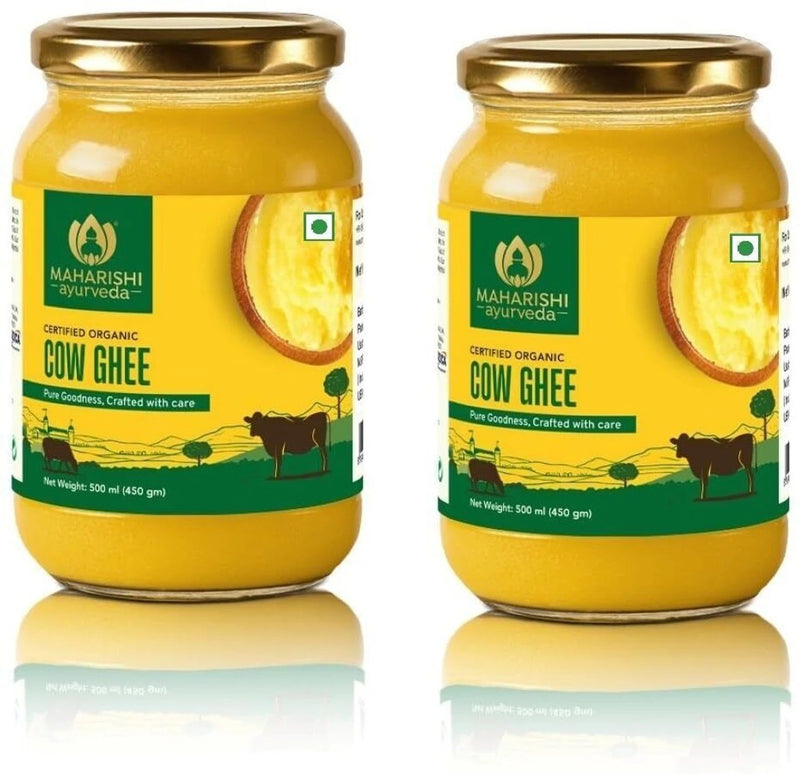
Popular Posts

A2 Cow Ghee and Cholesterol: What Does Scientific Research Say?
20 Nov, 2026A2 cow ghee contains substantial saturated fat and dietary cholesterol, much like other traditio...
Read more
A2 Cow Ghee Nutrition: Calories, Fat Composition and Daily Serving Sizes
20 Nov, 2026A2 cow ghee is a concentrated dairy fat that provides approximately 45 calories in a five gram s...
Read more
Is Cow Ghee Easier to Digest? Understanding Lactose, Casein and Dairy Sensitivity
20 Nov, 2026Cow ghee may be easier to tolerate than milk for some people with lactose intolerance because ma...
Read more