FILTERS
A2 Cow Ghee vs Regular Ghee: What Are the Key Differences?

The main difference between A2 cow ghee and regular ghee lies in the source milk. A2 ghee is prepared from milk associated with the A2 beta-casein protein variant, while regular ghee may come from different dairy sources. Both are concentrated milk fats with similar nutritional characteristics. Taste, preparation methods, sourcing and quality transparency are important when choosing between them.
Ghee has been an important part of Indian kitchens for generations. From freshly prepared rotis to aromatic dal tadka, it adds richness and a familiar flavour to everyday meals.
Today, consumers can choose from several varieties, including A2 cow ghee, regular cow ghee, buffalo ghee and organic cow ghee.Among these options, A2 cow ghee has gained attention because of its association with indigenous Indian cattle breeds and traditional preparation methods such as Bilona.However, is A2 ghee really different from regular ghee? Does it offer better nutrition? Is organic cow ghee the same as A2 ghee?
Understanding these distinctions can help you select a product that suits your cooking preferences, budget and dietary requirements.
TL;DR – A2 Cow Ghee vs Regular Ghee: Key Differences
- Different Milk Sources: A2 cow ghee comes from milk associated with the A2 beta-casein variant, while regular ghee may come from different declared dairy sources.
- Preparation Methods Can Vary: Both types can be prepared using traditional or conventional clarification methods. Bilona involves curd-churning before butter clarification.
- Similar Nutritional Composition: Both are concentrated dairy fats containing saturated and unsaturated fatty acids, with broadly similar calorie content.
- Taste and Texture Depend on Processing: Aroma, flavour and grainy or danedaar texture vary with milk sourcing, preparation and cooling.
- A2 and Organic Are Different: A2 refers to source-milk protein characteristics, while organic describes production practices. Neither automatically guarantees superior health benefits.
- Choose Based on Quality and Preferences: Check milk sourcing, breed information, ingredient lists and manufacturer details. Consume ghee in moderation as part of a balanced diet.
What Is A2 Cow Ghee?
A2 cow ghee is clarified butter prepared from milk associated with the A2 variant of beta-casein, a protein naturally found in milk.Cow milk may contain different beta-casein variants, including A1 and A2.
The A2 designation refers to the original milk's protein characteristics rather than a unique type of dietary fat.
Which Cows Produce A2 Milk?
Indigenous Indian cattle breeds such as Gir, Sahiwal and Red Sindhi are commonly associated with A2 beta-casein.
However, the breed name alone does not establish the genetic status of every individual animal.Reliable milk-source records provide greater confidence when evaluating A2 claims.
What Is Regular Ghee?
Regular ghee is clarified dairy butterfat produced by heating butter and separating most of its water and milk solids.
Depending on the product, it may be prepared from cow milk, buffalo milk or other declared dairy sources.
How Is Regular Ghee Prepared?
Butter is heated until moisture evaporates and the remaining milk solids separate.The clarified fat is then collected and filtered.
Different manufacturers may use cream-based butter, cultured butter or other suitable production methods.
Is Regular Ghee Always Lower Quality?
No.Regular ghee can be produced using high-quality milk and appropriate manufacturing standards.
Its quality depends on sourcing, composition, processing, hygiene and storage rather than the absence of an A2 label.
A2 Cow Ghee vs Regular Ghee: Comparison Table
|
Feature |
A2 cow ghee |
Regular ghee |
|
Milk source |
Milk associated with A2 beta-casein |
Cow, buffalo or another declared dairy source |
|
A2 claim |
Source-milk characteristic |
May not specify beta-casein type |
|
Preparation |
Traditional or conventional methods |
Traditional or conventional methods |
|
Nutrition |
Predominantly milk fat |
Predominantly milk fat |
|
Taste |
Depends on milk and preparation |
Depends on milk and preparation |
|
Lactose content |
Generally very low |
Generally very low |
|
Price |
Often positioned as premium |
Varies widely |
|
Health advantage |
Not clinically established |
Not inherently inferior |
The most meaningful differences concern sourcing, preparation and individual taste preferences.
What Is the Difference in Taste and Texture?
Consumers often describe cow ghee as aromatic and relatively delicate, while buffalo ghee may have a richer mouthfeel.
Does A2 Ghee Have a Better Aroma?
A2 cow ghee may have a distinctive cooked-butter fragrance.Its aroma depends on factors such as the animal's diet, milk composition and clarification process.The A2 label alone cannot predict flavour.
Is A2 Ghee More Grainy?
Some traditionally prepared ghees develop a grainy texture known as danehdaar.This happens when milk fats crystallise during cooling.
Graininess may be desirable, but it does not independently prove A2 authenticity or superior nutritional quality.
A2 Ghee vs Regular Ghee: Nutritional Differences
Both types are concentrated dairy fats and provide similar amounts of energy.Ghee contains saturated, monounsaturated and smaller quantities of polyunsaturated fatty acids.
How Many Calories Does Ghee Contain?
One teaspoon, weighing approximately five grams, typically provides around 45 calories.A tablespoon, weighing approximately 14 grams, provides around 125 calories.
Exact nutritional values depend on the product and serving weight.
Does A2 Ghee Contain Less Saturated Fat?
There is insufficient evidence that A2-labelled ghee consistently contains less saturated fat than conventional ghee.Fatty-acid composition can vary with animal diet and processing.
For accurate comparisons, check the nutrition label or a product-specific laboratory report.
How Does the Preparation Method Affect Ghee?
Processing can influence flavour, aroma, texture and the amount of residual milk solids.
What Is Bilona Ghee?
Bilona is a traditional method in which milk is first converted into curd.The curd is churned to separate butter, which is then gently heated to prepare ghee.
This method is associated with India's traditional dairy practices.
Is Bilona Ghee Always A2?
No.Bilona describes the preparation method, while A2 describes a source-milk protein characteristic.
A product can be Bilona-prepared without necessarily meeting a particular A2 sourcing claim.
Read more : Ghee vs Butter: Which Is Better for Your Health? →
Is Organic Cow Ghee the Same as A2 Cow Ghee?
No. Organic and A2 refer to different product characteristics.A2 ghee is associated with the beta-casein characteristics of its source milk.
Organic cow ghee refers to dairy sourcing and production practices associated with applicable organic standards.
A product may be both organic and A2, but neither designation automatically establishes the other.
What Should You Check Before Buying?
Review the ingredient declaration, sourcing information, relevant certifications and manufacturing details.
Avoid assuming that words such as natural, pure, organic, desi and A2 have identical meanings.
Why Choose Maharishi Ayurveda A2 Gir Cow Bilona Ghee?
For people who appreciate indigenous Indian cattle sourcing and traditional preparation, Maharishi Ayurveda A2 Gir Cow Bilona Ghee offers a distinctive option.
What Makes This Product Distinctive?
The manufacturer highlights:
- Milk sourced from indigenous Gir cows
- Traditional curd-churning Bilona preparation
- Rich dairy aroma
- Authentic flavour
- Naturally grainy, or danedaar, texture
The preparation begins by setting milk into curd, traditionally churning it to obtain butter, and gently heating the butter into ghee.
These qualities reflect its traditional sourcing and culinary character rather than established medical benefits.
How Can You Use It?
Add a measured quantity to freshly prepared dal, rice, khichdi or warm rotis.Its characteristic aroma can also complement traditional Indian sweets.
Explore Maharishi Ayurveda A2 Gir Cow Bilona Ghee to learn more about its sourcing, preparation and available sizes.
A2 Gir Cow Bilona Ghee: Traditional Ayurvedic Goodness
Experience the rich taste and traditional goodness of A2 Gir Cow Bilona Ghee in your daily meals.
Buy Now
Why Consider Maharishi Ayurveda Organic Cow Ghee?
Maharishi Ayurveda India also offers a separate product, Organic Cow Ghee, for consumers interested in its described milk-sourcing practices.
According to the manufacturer, this ghee is prepared from milk sourced from organically fed cows.
What Are Its Product Highlights?
Maharishi Ayurveda describes its Organic Cow Ghee as having:
- Milk sourced from organically fed cows
- Natural dairy aroma and flavour
- No added colour or flavour
- Versatility for everyday cooking
- Traditional Ayurvedic culinary positioning
How Is It Different From the A2 Bilona Product?
Maharishi Ayurveda's A2 Gir Cow Bilona Ghee specifically emphasises Gir cow milk and traditional curd-churning preparation.Its Organic Cow Ghee highlights its organically fed milk source and everyday culinary qualities.Both products offer options for consumers with different sourcing and preparation preferences.
Discover Maharishi Ayurveda Organic Cow Ghee to explore its product information and cooking applications.
Organic Ghee: Pure Goodness for Everyday Wellness
Organic Ghee adds rich taste and traditional goodness to your daily cooking and Ayurvedic lifestyle.
Buy Now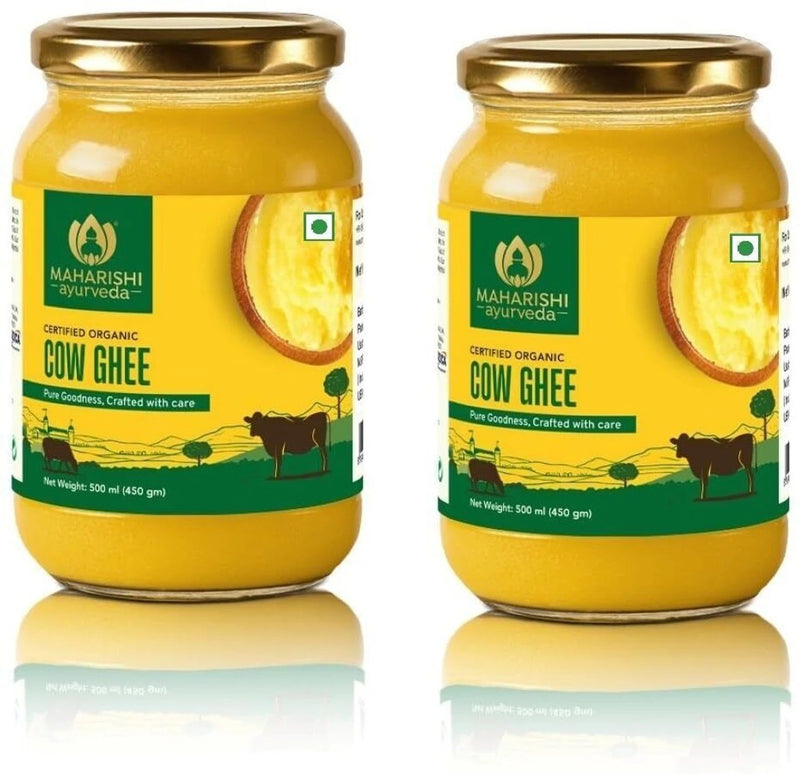
Which Ghee Is Better for Everyday Cooking?
Both A2 cow ghee and regular ghee can be used in familiar Indian recipes.
The better choice depends mainly on taste, sourcing preferences and the intended dish.
Ghee for Dal Tadka
Heat a small quantity of ghee and add cumin, garlic or your preferred spices.
Pour the aromatic tempering over cooked dal.
Ghee for Rotis and Parathas
A little ghee can be spread over freshly prepared rotis.Use measured quantities when preparing parathas to avoid excessive added fat.
Ghee for Khichdi
A small finishing spoon can add a smooth texture and rich aroma to warm moong dal khichdi.
Ghee for Traditional Sweets
Ghee is commonly used in halwa, laddoo and other festive recipes.Consider the overall sugar and calorie content of these dishes.
How Can You Identify Authentic A2 Cow Ghee?
Transparent sourcing information is more useful than relying on appearance alone.
Check for:
- Clearly declared milk source
- Identified cattle breed, where applicable
- Simple ingredient list
- Manufacturer and batch details
- Best-before date
How Much Ghee Should You Consume Daily?
There is no universal recommended amount suitable for every individual.Ghee is an energy-dense food containing substantial saturated fat.
The World Health Organization recommends keeping saturated fat to no more than 10% of total dietary energy.
Use measured quantities and consider other dietary fats, including nuts, seeds and suitable vegetable oils.People with high LDL cholesterol or cardiovascular conditions should seek personalised dietary guidance.
How Should You Store Cow Ghee?
- Store ghee in a tightly closed container in a cool, dry place away from direct sunlight.
- Use a clean, dry spoon to prevent introducing moisture or food particles.
- Follow the storage instructions and best-before date printed on the packaging.
- Discard ghee if it develops a rancid smell, unusual taste or visible contamination.
Conclusion
The main difference between A2 cow ghee and regular ghee lies in their source-milk characteristics, while preparation and sourcing practices may also vary.Both are concentrated dairy fats with similar broad nutritional properties.
Rather than assuming one is universally healthier, consider taste, cooking requirements, transparent sourcing and individual dietary needs.
For traditional Gir cow milk-based ghee, explore Maharishi Ayurveda A2 Gir Cow Bilona Ghee.
If you prefer a product highlighting organically fed cow milk, consider Maharishi Ayurveda Organic Cow Ghee.
Both can bring a familiar Indian culinary touch to everyday meals when enjoyed in moderation.
Popular Posts

A2 Cow Ghee and Cholesterol: What Does Scientific Research Say?
20 Nov, 2026A2 cow ghee contains substantial saturated fat and dietary cholesterol, much like other traditio...
Read more
A2 Cow Ghee Nutrition: Calories, Fat Composition and Daily Serving Sizes
20 Nov, 2026A2 cow ghee is a concentrated dairy fat that provides approximately 45 calories in a five gram s...
Read more
Is Cow Ghee Easier to Digest? Understanding Lactose, Casein and Dairy Sensitivity
20 Nov, 2026Cow ghee may be easier to tolerate than milk for some people with lactose intolerance because ma...
Read more