FILTERS
What Is A2 Cow Ghee? Benefits, Nutrition, Preparation and Everyday Uses

A2 cow ghee is clarified butter prepared from milk associated with the A2 beta-casein protein variant. It is traditionally used in Indian cooking and Ayurveda for its rich flavour, aroma and versatility. Like other ghees, it contains concentrated milk fat, including saturated fats. Its nutritional value, preparation method and daily consumption should be considered when choosing ghee.
Ghee has been a familiar ingredient in Indian households for generations. From warm rotis and dal tadka to khichdi and traditional sweets, it adds a distinctive aroma and flavour to everyday meals.
Among the varieties available today, A2 cow ghee has attracted attention because of its association with indigenous Indian cattle breeds and traditional dairy preparation methods.
However, many consumers wonder what makes A2 ghee different from regular or organic cow ghee.
Does A2 ghee offer unique nutritional benefits? How is Bilona ghee prepared? And how can you use it in your daily diet?
This guide explains A2 cow ghee, its composition, traditional significance, culinary uses and important considerations when buying it.
TL;DR – A2 Cow Ghee: What Should You Know?
- A2 Cow Ghee Comes From A2 Milk: It is clarified butter prepared from cow milk associated with the A2 beta-casein protein variant.
- Bilona Is a Traditional Preparation Method: Milk is cultured into curd, churned to separate butter and gently heated to produce ghee.
- Rich in Dietary Fats: Ghee provides concentrated energy and contains saturated and unsaturated fatty acids.
- Traditional Ayurvedic Ingredient: Known as Ghrita, ghee has a long history of use in Ayurvedic food preparations and traditional wellness practices.
- A2 and Organic Are Different: A2 refers to milk protein characteristics, while organic describes production practices. Neither automatically guarantees superior health benefits.
- Choose Quality and Consume in Moderation: Check milk sourcing, preparation details, product labelling and storage instructions while keeping saturated fat intake in mind.
What Is A2 Cow Ghee?
A2 cow ghee is clarified butter made from milk associated with the A2 variant of beta-casein.
Beta-casein is one of the major proteins naturally present in cow milk.
Two commonly discussed variants are A1 and A2, which differ slightly in their protein structure.
Which Cows Are Associated With A2 Milk?
Indigenous Indian cattle breeds, including Gir, Sahiwal and Red Sindhi, are commonly associated with A2 beta-casein.
However, breed identification alone cannot establish the genetic status of every animal.
Reliable sourcing information helps consumers understand the origin of the milk used.
How Is A2 Cow Ghee Prepared?
A2 cow ghee can be produced through different clarification methods.
The traditional Bilona method is particularly associated with Indian dairy heritage.
What Is the Bilona Method?
Bilona is a traditional curd-churning process used to prepare butter before clarification.
The general steps include:
- Fresh milk is heated and allowed to cool.
- The milk is cultured to prepare curd.
- Curd is churned to separate butter.
- The butter is gently heated.
- Water evaporates, milk solids separate and the clarified ghee is collected.
What Is the Nutritional Value of A2 Cow Ghee?
A2 cow ghee consists almost entirely of fat, with negligible protein and carbohydrate content after clarification.
It provides energy and contains a mixture of saturated and unsaturated fatty acids.
Calories and Fat Content
Approximate values for plain ghee are:
|
Serving |
Calories |
Total fat |
|
½ teaspoon (2.5 g) |
23 kcal |
2.5 g |
|
1 teaspoon (5 g) |
45 kcal |
5 g |
|
2 teaspoons (10 g) |
90 kcal |
10 g |
|
1 tablespoon (14 g) |
126 kcal |
14 g |
These estimates are not brand-specific laboratory figures. Refer to the product label for exact nutritional information.
What Types of Fats Does Ghee Contain?
Ghee contains saturated fatty acids, monounsaturated fatty acids and smaller amounts of polyunsaturated fatty acids.
It also contains naturally occurring short-chain fatty acids, including butyric acid.
The presence of these compounds does not independently prove special therapeutic benefits.
What Are the Traditional Benefits of A2 Cow Ghee?
A2 cow ghee is often discussed in relation to nourishment, digestion and Ayurvedic wellness.
However, it is important to distinguish traditional uses from clinically demonstrated benefits.
A Source of Dietary Energy
Ghee provides concentrated energy because it is almost entirely fat.
Dietary fats also contribute to normal physiological functions and help the body absorb fat-soluble vitamins.
However, ghee should be consumed alongside diverse food sources rather than treated as a complete nutritional supplement.
Traditional Ayurvedic Nourishment
In Ayurveda, ghee is known as Ghrita and is traditionally valued as a nourishing dietary ingredient.
It has been included in classical food preparations and selected herbal formulations.
These historical applications reflect Ayurvedic knowledge and do not establish that A2 ghee treats specific medical conditions.
Culinary Aroma and Flavour
One of ghee's clearest practical benefits is its contribution to cooking.
A measured quantity can enhance the flavour of dal, vegetables, rice and traditional sweets.
Its aroma is particularly noticeable when added shortly before serving.
Is A2 Cow Ghee Easier to Digest?
Ghee generally contains much less lactose and milk protein than milk because clarification removes most milk solids.
Some people with lactose intolerance may therefore tolerate ghee more comfortably than other dairy products.
However, there is insufficient evidence that A2-labelled ghee consistently digests more easily than conventional ghee.
Does A2 Ghee Contain Lactose?
Properly clarified ghee typically contains very little lactose.
Residual amounts can vary according to processing and filtration.
Can People With Milk Allergy Consume It?
People with diagnosed milk-protein allergies should generally avoid ghee unless an allergy specialist advises otherwise.
Even small amounts of residual milk proteins may cause reactions.
A2 status does not make ghee automatically safe for milk allergies.
A2 Cow Ghee vs Organic Cow Ghee: What Is the Difference?.
Is Organic Cow Ghee Always A2?
No. Organic sourcing does not automatically confirm the milk's beta-casein variant.
Is A2 Cow Ghee Always Organic?
No. A2 milk sourcing does not establish organic certification.
Consumers should check each claim separately rather than treating the terms as interchangeable.
A2 Cow Ghee vs Regular Cow and Buffalo Ghee
Different ghees may vary in colour, aroma, texture and source milk.
|
Type |
Key distinction |
Common culinary characteristic |
|
A2 cow ghee |
A2-labelled source milk |
Characteristic cow ghee aroma |
|
Regular cow ghee |
Cow milk without a specific A2 claim |
Versatile everyday cooking fat |
|
Buffalo ghee |
Buffalo milk source |
Often paler with a richer mouthfeel |
|
Organic cow ghee |
Organic production practices |
Flavour varies by source and processing |
There is no reliable evidence that one type universally provides better health outcomes.
Choose based on sourcing preferences, flavour, quality information and dietary requirements.
Read more : Organic Cow Ghee vs Regular Ghee: Which One Truly Nourishes You? →
How Can You Use A2 Cow Ghee in Everyday Cooking?
A2 ghee works in many familiar Indian preparations.
1. Dal Tadka
Heat a measured quantity of ghee and add cumin, garlic or other preferred spices.
Pour the aromatic tempering over cooked dal.
2. Khichdi and Rice
Add a small spoonful to warm khichdi or rice before serving.
This provides a smooth texture and characteristic dairy aroma.
3. Rotis and Parathas
Lightly brush ghee over freshly prepared rotis.
For parathas, use measured amounts during cooking.
4. Traditional Sweets
Ghee is commonly used in halwa, laddoo and other Indian sweets.
Remember that these recipes may also contain substantial sugar and calories.
How Much A2 Cow Ghee Should You Consume Daily?
There is no universal quantity appropriate for everyone.
Individual needs depend on age, energy requirements, other dietary fats and medical conditions.
Because ghee is rich in saturated fat, moderation is important.
The World Health Organization recommends that saturated fat should contribute no more than 10% of total dietary energy.
Use measured quantities rather than adding ghee freely to every meal.
For people managing high LDL cholesterol or cardiovascular conditions, individual dietary advice is especially important.
Why Choose Maharishi Ayurveda A2 Gir Cow Bilona Ghee?
Maharishi Ayurveda A2 Gir Cow Bilona Ghee brings together indigenous Gir cow milk sourcing and traditional Bilona preparation.
According to Maharishi Ayurveda India, the milk is set into curd, churned to obtain butter and gently heated to prepare ghee.
What Makes It Distinctive?
The manufacturer highlights:
- Milk sourced from indigenous Gir cows
- Traditional Bilona curd-churning process
- Rich aroma and authentic flavour
- Naturally grainy, or danedaar, texture
- Use in traditional Indian recipes
These characteristics describe its origin, preparation and culinary qualities.
How Can You Use It?
Add a measured quantity to dal, khichdi, rice or warm rotis.
Its distinctive aroma also makes it suitable for finishing traditional dishes.
Explore Maharishi Ayurveda A2 Gir Cow Bilona Ghee to learn more about its sourcing, preparation and available size.
A2 Gir Cow Bilona Ghee: Traditional Ayurvedic Goodness
Experience the rich taste and traditional goodness of A2 Gir Cow Bilona Ghee in your daily meals.
Buy Now
Why Consider Maharishi Ayurveda Organic Cow Ghee?
Maharishi Ayurveda India also offers a separate Organic Cow Ghee product.
According to the manufacturer, it is prepared using milk sourced from organically fed cows and is valued for its natural aroma and rich dairy flavour.
The product description states that no colour or flavour is added.
How Is It Different From the A2 Bilona Product?
The Organic Cow Ghee product emphasises its milk-sourcing practices.
The A2 Gir Cow Bilona Ghee product specifically highlights Gir cow milk and the traditional curd-churning process.
These distinctions make them suitable for consumers with different sourcing and preparation preferences.
How Can You Use Organic Cow Ghee?
Organic Cow Ghee can be used for everyday sautéing, traditional food preparation and finishing dishes.
A small amount may complement vegetables, dal or freshly prepared khichdi.
Discover Maharishi Ayurveda Organic Cow Ghee to explore its ingredients, product details and culinary applications.
Organic Ghee: Pure Goodness for Everyday Wellness
Organic Ghee adds rich taste and traditional goodness to your daily cooking and Ayurvedic lifestyle.
Buy Now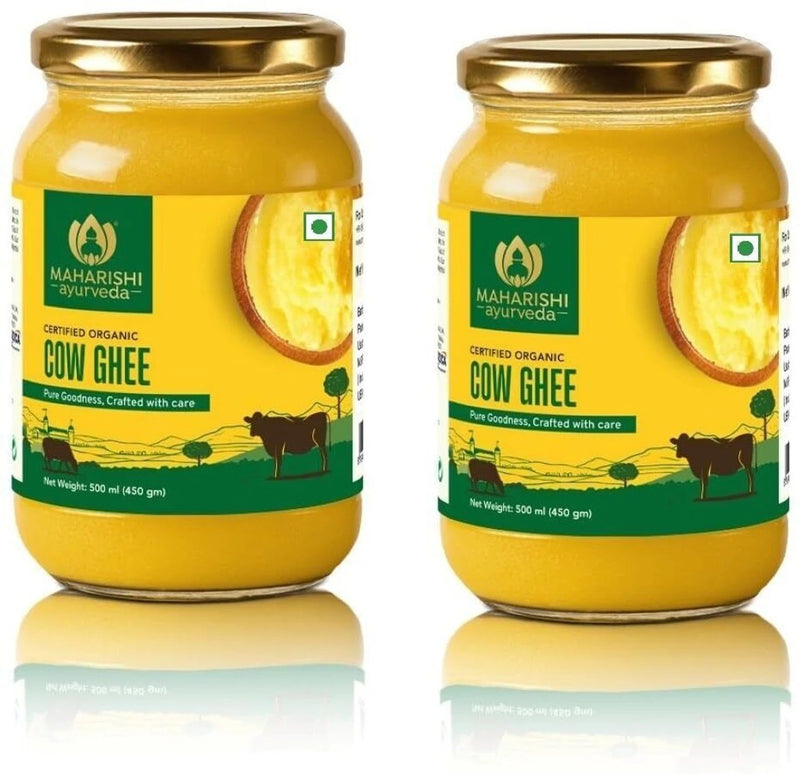
How Can You Identify Authentic A2 Cow Ghee?
When purchasing A2 ghee, transparent information is more useful than broad marketing promises.
Check the following:
- Clearly identified cow milk source
- Declared cattle breed, where relevant
- Ingredient list and manufacturer details
- Batch number and best-before date
- Available information about preparation and quality testing
Remember that colour, fragrance and grainy texture cannot independently establish A2 authenticity.
A2 sourcing is best supported through appropriate source-milk records and traceability.
How Should You Store A2 Cow Ghee?
- Keep ghee in a tightly closed container away from heat, moisture and direct sunlight.
- Always use a clean, dry spoon.
- Follow the storage and best-before instructions printed on the packaging.
- Avoid repeatedly exposing the product to excessive heat.
- Discard ghee if it develops a rancid smell, unpleasant flavour or visible contamination.
Conclusion
A2 cow ghee is a traditional dairy fat distinguished by the beta-casein characteristics of its source milk.
It offers the familiar aroma, flavour and versatility of clarified butter and remains an important ingredient in Indian culinary traditions.
However, A2, organic and Bilona describe different product characteristics, and none independently guarantees superior medical benefits.
For consumers interested in traditional preparation, Maharishi Ayurveda A2 Gir Cow Bilona Ghee offers a Gir cow milk-based option prepared using the Bilona method.
Those prioritising organically fed cow milk sourcing can also explore Maharishi Ayurveda Organic Cow Ghee.
Choose according to product transparency, flavour preference and individual dietary requirements, and enjoy ghee in moderation.
Popular Posts

A2 Cow Ghee and Cholesterol: What Does Scientific Research Say?
20 Nov, 2026A2 cow ghee contains substantial saturated fat and dietary cholesterol, much like other traditio...
Read more
A2 Cow Ghee Nutrition: Calories, Fat Composition and Daily Serving Sizes
20 Nov, 2026A2 cow ghee is a concentrated dairy fat that provides approximately 45 calories in a five gram s...
Read more
Is Cow Ghee Easier to Digest? Understanding Lactose, Casein and Dairy Sensitivity
20 Nov, 2026Cow ghee may be easier to tolerate than milk for some people with lactose intolerance because ma...
Read more