FILTERS
Organic Cow Ghee vs Regular Ghee: Which One Truly Nourishes You?

Introduction
In Ayurveda, ghee (Ghrita) is more than a cooking fat; it’s a therapeutic elixir that nourishes the body, mind, and spirit.
For centuries, it has held a sacred place in Indian households, used in rituals, healing, and daily meals.
However, not all ghee is created equal. With the rise of organic cow ghee, made from organically fed cows without hormones or chemicals, health-conscious individuals are rediscovering its Ayurvedic power.
So, what truly sets organic cow ghee apart from regular commercial ghee? Let’s explore the Ayurvedic, nutritional, and ethical differences.
TL;DR – Organic Cow Ghee vs Regular Ghee: 5 Key Points
- Purity & Source: Organic ghee is made from organically raised, grass-fed cows without hormones or pesticides; regular ghee often comes from hybrid cows and industrial dairies.
- Preparation Method: Organic ghee is curd-churned and slow-heated, retaining enzymes and aroma. Regular ghee is cream-based, machine-processed, and nutrient-depleted.
- Nutritional Superiority: Organic ghee is richer in CLA, omega-3s, butyric acid, and vitamins A, D, E, K₂ supporting digestion, heart, and immunity.
- Ayurvedic Benefits: Organic cow ghee is tridoshahara (balances all doshas), enhances Agni, builds Ojas, nourishes brain, skin, and joints a true Rasayana.
- Ethical & Spiritual Value: Organic ghee is sattvic pure, life-enhancing, and made sustainably, aligning with Ayurveda’s principles of dharma and mindful living.
What Is Organic Cow Ghee?
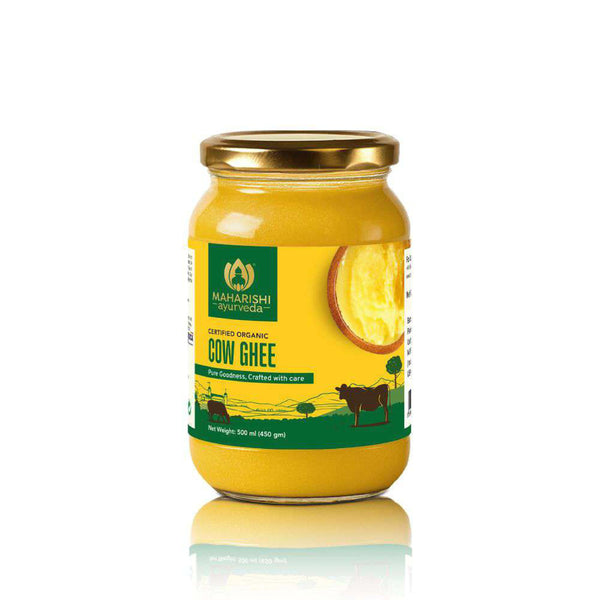
Organic cow ghee is prepared from the milk of cows raised on organic farms, where they are fed natural, pesticide-free fodder and treated with care and respect.
The process involves:
-
Setting boiled milk into curd using a natural culture (jaaman)
-
Churning the curd to separate butter (makkhan) from buttermilk
-
Slowly heating the butter to yield golden, aromatic ghee
This gentle process preserves essential nutrients like omega-3 fatty acids, vitamins, and enzymes, making the ghee light, digestible, and tridosha-balancing.
When cows are organically raised and the ghee is made without preservatives or chemicals, it becomes a truly Ayurvedic superfood that supports digestion, immunity, and vitality.
Read the complete Guide to Organic Cow Ghee–>
What Is Regular (Commercial) Ghee?
Regular or commercial ghee is typically made from the milk of non-organic or hybrid cows such as Jersey or Holstein.
Their milk may contain residues from chemical feed or hormones, and the ghee is often made through industrial high-heat processing.
Regular ghee is commonly:
-
Made from cream or malai, not curd (non-cultured method)
-
Processed in bulk with high heat and machinery
-
May contain preservatives or additives to enhance shelf life
As a result, regular ghee often loses its enzymes, aroma, and sattvic (pure) essence, making it less nourishing and more of a neutral fat source.
Key Differences Between Organic Cow Ghee and Regular Ghee
|
Feature |
Organic Cow Ghee |
Regular Ghee |
|
Source |
Organically fed Indian cow milk |
Non-organic or hybrid cow milk |
|
Milk Protein Type |
Naturally digestible, free from synthetic residues |
May contain hormone or antibiotic traces |
|
Method |
Traditional curd-churned, slow heating |
Cream-based, machine-processed |
|
Feed & Environment |
Organic, chemical-free, natural grazing |
Non-organic feed, commercial dairy setup |
|
Ayurvedic Quality |
Sattvic, tridosha-balancing |
Heavier may aggravate Kapha |
|
Digestibility |
Light and easy to digest |
Denser and harder to digest |
|
Nutrient Retention |
High in CLA, Omega-3, Vitamins A, D, E, K |
Nutrients are often degraded under heat |
|
Taste & Aroma |
Rich, nutty, and naturally aromatic |
Neutral or processed flavor |
|
Therapeutic Use |
Ideal for Ayurvedic diet and rituals |
Mostly used for cooking only |
|
Energy & Ojas |
Builds Ojas (vital essence), enhances Agni |
Less effective in nourishing Ojas |
Ayurvedic Benefits of Organic Cow Ghee
Ayurveda calls Organic cow ghee “tridoshahara.” It balances all three doshas (Vata, Pitta, Kapha) when consumed mindfully.
1. Improves Digestion (Deepana-Pachana)
Organic cow ghee kindles Agni (digestive fire) and supports nutrient absorption.
It also removes Ama (toxins), keeping metabolism efficient and balanced.
2. Enhances Ojas (Vital Energy)
Regular consumption builds Ojas, the essence of vitality, immunity, and emotional stability.
3. Nourishes Brain and Nervous System (Medhya Rasayana)
Acts as a natural brain tonic, improving focus, memory, and calmness.
4. Strengthens Joints & Skin
Lubricates tissues, relieves dryness, and promotes radiant, soft skin.
5. Supports Immunity and Longevity
Rich in antioxidants and fat-soluble vitamins, it boosts immune strength and supports graceful aging.
Nutritional Content: Organic Cow Ghee vs Regular Ghee
|
Nutrient (per tbsp ~14g) |
Organic Cow Ghee |
Regular Ghee |
|
Calories |
~120 kcal |
~120 kcal |
|
Fat |
13–14 g (healthy fats) |
13–14 g |
|
Saturated Fat |
8–9 g |
9–10 g |
|
Omega-3 Fatty Acids |
Present |
Minimal |
|
Conjugated Linoleic Acid (CLA) |
Rich |
Trace |
|
Butyric Acid |
High (gut-healing) |
Low |
|
Vitamins A, D, E, K |
Naturally abundant |
Reduced by high-heat processing |
|
Protein |
Trace |
Trace |
While both are sources of good fats, organic cow ghee retains more bioactive compounds and fat-soluble vitamins that contribute to its Ayurvedic and nutritional superiority.
Ayurvedic Perspective: Why Choose Organic Cow Ghee
Ayurveda describes cow ghee as “sattvic,” pure, calm, and life-enhancing. Regular ghee, especially from non-organic or hybrid cows, is considered heavier (guru) and less sattvic in nature.
Organic cow ghee:
-
Enhances Agni (digestive fire) without aggravating Pitta
-
Cleanses micro-channels (srotas shodhana) and removes toxins
-
Nourishes brain tissue, eyes, skin, and joints
-
Acts as Yogavahi, carrying the benefits of herbs deeper into tissues
-
Strengthens Ojas, the root of immunity and longevity
Ancient Ayurvedic texts like the Charaka Samhita praise ghee as “the best among all fats.” When derived from pure, well-nourished cows, it becomes a medicine as well as food.
Conclusion
While both Organic Cow and regular ghee provide healthy fats, organic cow ghee is superior in purity, nutrition, and spiritual value. It is light, sattvic, and rich in nourishing compounds that enhance digestion, immunity, and overall wellness.
Regular ghee may serve basic culinary needs, but Maharishi Ayurveda Organic Cow Ghee is a complete Ayurvedic nourishment, a golden elixir for mind, body, and soul.
Choose consciously. Eat mindfully. Live sattvically.
Popular Posts

Varicose Veins Symptoms: Causes, Early Signs and Ayurvedic Management
05 Oct, 2026Varicose veins are enlarged, twisted veins that commonly appear on the legs, feet, and ankles, o...
Read more
Himalayan Pink Salt Benefits: Uses, Nutrition and What to Know
29 Sep, 2026A pinch of salt seems simple, yet Ayurveda has always looked closely at simple things: their tas...
Read more
Plaque vs Tartar: What Is the Difference and How Does Ayurveda Approach Them?
28 Sep, 2026Plaque is a soft, sticky film of bacteria that forms on teeth, while tartar is hardened or calci...
Read more