FILTERS
Can Coconut Oil Be Used on the Face?
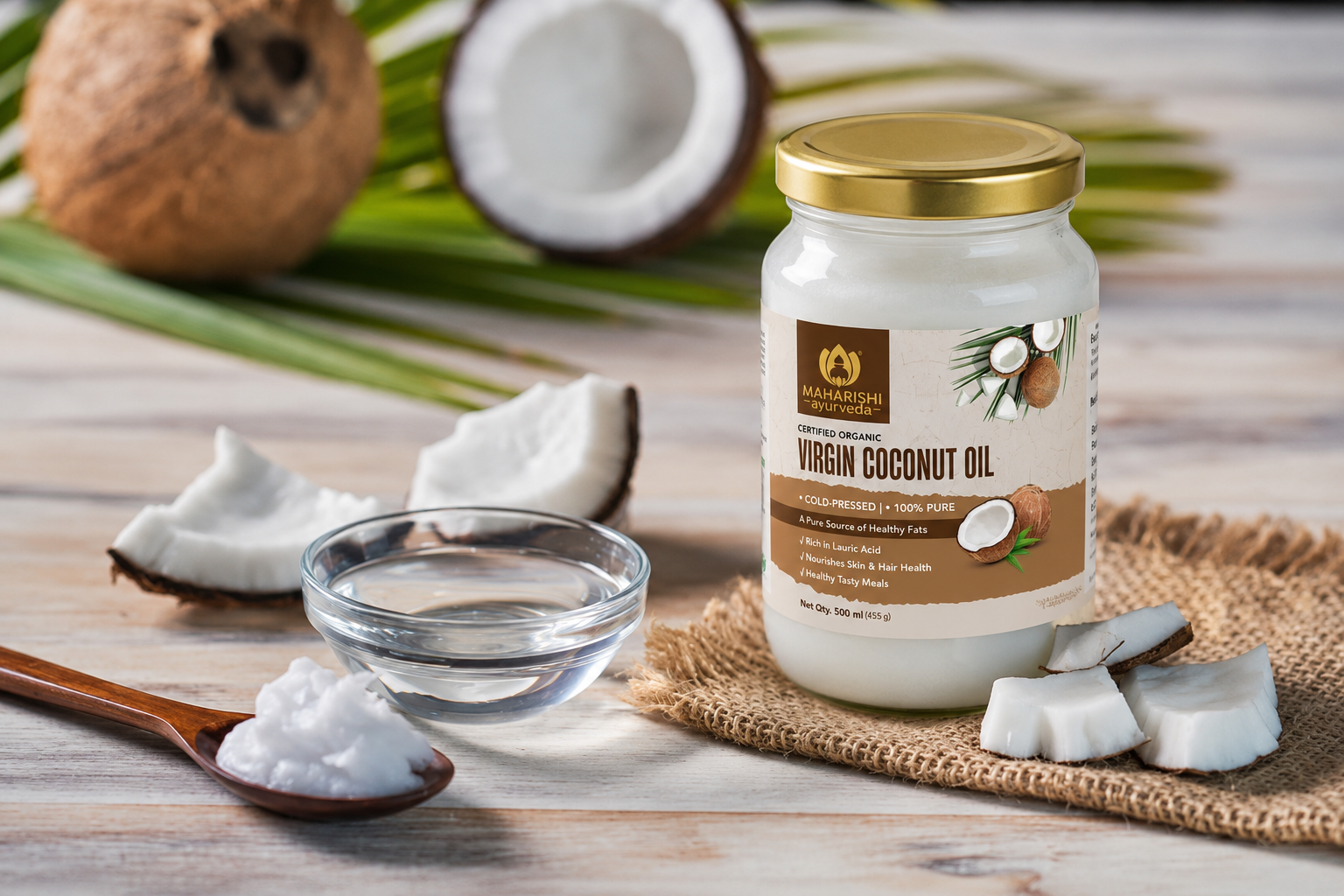
Yes, coconut oil can be used on the face, mainly for dry, rough, or heat-prone skin. However, it may not suit oily, acne-prone, or congested skin because it can clog pores in some people. In Ayurveda, coconut oil is considered cooling, nourishing, and more suitable for Pitta-type skin.
TL;DR – Coconut Oil for Face, Skin Type & Ayurveda
- Coconut Oil Can Suit Dry Skin: It may help soften dry, rough, flaky, or heat-prone skin by supporting moisture retention and skin barrier nourishment.
- Not Ideal for Acne-Prone Skin: Oily, congested, blackhead-prone, whitehead-prone, or active acne skin should avoid coconut oil because it may clog pores.
- Ayurveda Sees It as Cooling: Coconut oil is considered Sheeta, Snigdha, and nourishing, making it more suitable for Pitta-type skin and hot weather.
- Use Only a Small Amount: Apply a pea-sized amount or less after cleansing, preferably at night, and avoid the eye area or active breakout zones.
- Patch Test First: Stop using it if you notice itching, redness, burning, bumps, blackheads, whiteheads, or new breakouts.
What Is Coconut Oil?
Coconut oil is a natural oil extracted from the kernel or meat of mature coconuts. It is used in cooking, skincare, hair care, massage, and Ayurvedic self-care. Virgin coconut oil is less processed, while refined coconut oil goes through more processing.
Coconut oil is an edible, plant-based oil made mostly of fat. It contains medium-chain triglycerides, also called MCTs. One of its main fatty acids is lauric acid, also known as C12.
Because of its fat composition, coconut oil stays solid below 25°C and turns into a clear liquid when warmed.
In Ayurveda, coconut oil is considered snigdha, or unctuous, and brihana, or nourishing. It is traditionally valued for its cooling and soothing nature.
Is Coconut Oil Good for Your Face?
Coconut oil can be good for your face if your skin is dry, rough, or needs extra nourishment. It may not be good for oily or acne-prone skin because it can feel heavy and may clog pores.
Coconut oil helps reduce water loss by creating a protective layer on the skin. This can make dry skin feel softer and more hydrated.
It also contains lauric acid, which is known for antimicrobial properties. This is one reason coconut oil is traditionally used in skin and scalp care.
Who Can Use Coconut Oil on the Face?
Coconut oil may suit:
- Dry skin
- Rough skin
- Flaky skin
- Heat-prone skin
- Skin that feels tight after cleansing
- Mild dryness in cold or dry weather
- Pitta-type skin with heat and dryness
Who Should Avoid Coconut Oil on the Face?
Coconut oil may not suit:
- Oily skin
- Acne-prone skin
- Congested skin
- Active breakouts
- Blackheads or whiteheads
- Fungal acne-like bumps
- Very sensitive or irritated skin
If you already have acne, blackheads, or whiteheads, avoid using coconut oil on the face or patch test first.
What Are the Benefits of Applying Coconut Oil on Your Face?
The main benefits of applying coconut oil on the face are moisture support, skin barrier nourishment, softness, and relief from mild dryness. It may also offer antioxidant support when used in small amounts and only if it suits your skin type.
Does Coconut Oil Help Lock in Moisture?
Yes, coconut oil helps lock in moisture by forming a nourishing layer on the skin. This can reduce water loss and keep dry skin feeling soft.
It works best for dry or normal-to-dry skin, especially when used after cleansing or as the final step in a nighttime routine.
Can Coconut Oil Support the Skin Barrier?
Yes, coconut oil contains nourishing fatty acids that may help support the skin barrier. A healthy skin barrier helps retain moisture and protects the skin from dryness, friction, and environmental stress.
Does Coconut Oil Soften Dry Skin?
Yes, coconut oil can soften dry patches and rough texture. Its emollient nature makes it useful for dry or flaky skin when applied lightly.
Does Coconut Oil Provide Antioxidant Support?
Virgin coconut oil contains natural antioxidants and polyphenols that may help support the skin against environmental stress. However, coconut oil is not a replacement for sunscreen.
Can Coconut Oil Soothe Mild Dryness?
Yes, coconut oil may help soothe mild dryness, especially when used at night or after cleansing. If dryness is linked with eczema, infection, allergy, or active inflammation, consult a dermatologist before using it.
Explore: Cold-Pressed Virgin Coconut Oil vs Regular Coconut Oil: What’s the Difference? –>
Can You Leave Coconut Oil on Your Face Overnight?
You can leave coconut oil on your face overnight if your skin is dry and tolerates it well. Avoid overnight use if you have oily, acne-prone, sensitive, or congested skin. Start with a small amount and wash it off if irritation occurs.
Overnight coconut oil use may suit dry or normal-to-dry skin. It can help reduce moisture loss while you sleep.
However, coconut oil is comedogenic for some people, which means it can clog pores. If left overnight on oily or acne-prone skin, it may cause blackheads, whiteheads, pimples, or closed comedones.
Use coconut oil overnight only if:
- Your skin is dry
- Your skin is not acne-prone
- You have patch tested it
- You use a very small amount
- Your skin does not feel greasy or congested after use
If your skin is oily, apply coconut oil for 5 to 10 minutes and wash it off with lukewarm water instead of leaving it overnight.
How Should You Use Coconut Oil on Your Face Safely?
To use coconut oil on the face safely, cleanse your skin, take a very small amount, massage gently, avoid the eye area, and use it as the final step in your night routine. Stop using it if you notice breakouts, itching, redness, or irritation.
Follow these steps:
- Cleanse your face with a mild cleanser.
- Pat the skin dry.
- Take a pea-sized amount or less.
- Warm the oil between your fingers.
- Apply gently only on dry areas.
- Avoid the eye area.
- Use it as the final step in your nighttime routine.
- Wash it off if irritation occurs.
Do not apply too much coconut oil. A small amount spreads easily and is enough for the face.
Who Should Avoid Coconut Oil on the Face?
People with oily skin, acne-prone skin, clogged pores, sensitive skin, active breakouts, or fungal acne-like concerns should avoid or be very careful with coconut oil on the face. Always patch test before applying it fully.
Avoid coconut oil on the face if you have:
- Oily skin
- Acne-prone skin
- Active pimples
- Blackheads
- Whiteheads
- Clogged pores
- Fungal acne-like bumps
- Irritated skin
- Very sensitive skin
Signs that coconut oil is not suiting your face include:
- New breakouts
- Small bumps
- More blackheads
- More whiteheads
- Redness
- Itching
- Burning
- Excess oiliness
Do a patch test first. Apply a small amount near the jawline or behind the ear and wait 24 hours. If there is no reaction, try a small amount on the face.
What Does Ayurveda Say About Coconut Oil for Facial Care?
In Ayurveda, coconut oil is considered cooling, nourishing, and soothing. It is traditionally used to calm heat, support dry skin, and nourish the skin. Because of its cooling nature, it is often considered more suitable for Pitta-type skin than Kapha-type oily skin.
According to Ayurveda, coconut oil has:
- Madhura rasa, or sweet taste
- Sheeta virya, or cooling potency
- Snigdha guna, or unctuous quality
- Brihana quality, or nourishing effect
- Soothing and softening properties
These qualities make coconut oil useful for dryness, heat-related skin discomfort, and skin that feels depleted or rough.
Why Is Coconut Oil Considered Cooling in Ayurveda?
Coconut oil is considered cooling because it has sheeta virya, or cooling potency. This means it is traditionally used to calm excess heat and soothe the skin.
This makes coconut oil more suitable for Pitta-type concerns such as:
- Heat-prone skin
- Redness
- Sensitivity
- Burning sensation
- Skin dryness caused by heat
- Skin exposed to sun or heat
Cooling does not mean coconut oil suits every skin type. If your skin is oily or congested, coconut oil may still feel too heavy.
Can Coconut Oil Be Used in Mukhabhyanga?
Yes, coconut oil may be used for gentle facial massage, or Mukhabhyanga, if it suits your skin type. It should be used lightly and should not be forced on acne-prone or oily skin.
For Mukhabhyanga, use a very small amount and apply with gentle strokes. Do not pull, drag, or rub the skin harshly.
Coconut oil facial massage may suit dry or Pitta-type skin, especially in hot weather. For oily or Kapha-type skin, lighter oils or non-comedogenic options may be better.
Can Coconut Oil Be Part of Daily Dinacharya?
Coconut oil can be part of daily self-care for some people, especially when dryness or heat is present. It may be used for body massage, hair oiling, or limited facial use depending on skin type.
For body Abhyanga, coconut oil may be useful during summer or in hot climates. For the face, daily use should be decided carefully. If coconut oil causes breakouts or heaviness, it should not be used daily.
Is Coconut Oil Suitable for Your Dosha?
Coconut oil is generally more suitable for Pitta and dry Vata-type skin, but it should be used cautiously for Kapha-type oily or congestion-prone skin. Ayurveda recommends choosing oils based on dosha, season, skin type, and current imbalance.
|
Dosha |
Coconut Oil Suitability |
|
Vata |
May help with dryness, roughness, especially in hot weather |
|
Pitta |
Often suitable because it is cooling and soothing |
|
Kapha |
Use cautiously because it may feel heavy or clog pores |
Is Coconut Oil Good for Vata Skin?
Coconut oil may help Vata skin when there is dryness, roughness. However, sesame oil is more classically warming and grounding for Vata.
Is Coconut Oil Good for Pitta Skin?
Yes, coconut oil is often suitable for Pitta skin because it is cooling and soothing. It may help when the skin feels heated, sensitive, red, or irritated.
Is Coconut Oil Good for Kapha Skin?
Kapha skin is often oily, thick, and congestion-prone. Coconut oil should be used carefully on Kapha skin because it may feel too heavy and may clog pores.
When Should You Use Coconut Oil Seasonally?
Coconut oil is generally better in hot weather than cold weather because of its cooling nature. In colder climates, some people may prefer sesame oil or Mustard Oil oils for body massage.
|
Season or Climate |
Coconut Oil Suitability |
|
More suitable because of its cooling nature |
|
|
Winter |
Can be used for dryness, but after some time your skin starts feeling dry again |
|
Humid climate |
Use cautiously if skin is oily |
|
Hot climate |
Useful for Pitta-type heat |
|
Cold climate |
May be less ideal than sesame or mustard oil |
Is Coconut Oil Better Than Mustard Oil for Face and Skin?
Coconut oil is usually better than mustard oil for facial use because it is cooling and gentler. Mustard oil is warming, sharp, stimulating, and heating, making it more suitable for body massage than facial application, especially for people with sensitive or Pitta-prone skin.
|
Feature |
Coconut Oil |
Mustard Oil |
|
Ayurvedic nature |
Cooling |
Warming |
|
Best for face |
Dry, Pitta-type, heat-prone skin |
Usually not preferred for face |
|
Best for body massage |
Good in summer or for Pitta |
Good in winter and Vata-Kapha stiffness |
|
Skin feel |
Rich but soothing |
Sharp and stimulating |
|
Sensitive skin |
Safe for sensitive skin |
Use more cautiously |
|
Best season |
Summer and hot weather |
Winter and colder weather |
Mustard oil may suit body massage in cold weather, but it is usually not the first choice for facial skin.
What Is the Final Takeaway on Using Coconut Oil on Face?
Coconut oil can be used on the face, but only if it suits your skin type. It is more suitable for dry, rough, heat-prone, or Pitta-type skin. It is not ideal for oily, acne-prone, congested, or breakout-prone skin.
In Ayurveda, coconut oil is valued for its cooling, nourishing, and soothing qualities. It can support skin softness, moisture retention, and mild dryness when used carefully.
The safest way to use coconut oil on the face is simple: choose good-quality virgin coconut oil, use a very small amount, patch test first, avoid active acne areas, and stop if your skin reacts badly.
Coconut oil is useful, but it is not a universal face oil. Your skin type decides whether it helps or harms.
Discover Maharishi Ayurveda Virgin Coconut Oil, a premium cold-pressed oil for everyday cooking, hair care, skin care, and traditional Ayurvedic self-care.
Popular Posts

Types of Headaches: Types, Causes, Symptoms and Relief Options
22 Oct, 2026You might consider a headache at the end of a long day when fatigue is felt. However, if pain com...
Read more
Home Remedies for Migraine: Simple Remedies and When to See a Doctor
16 Oct, 2026Migraine is more than an ordinary headache that strikes at the worst time. People are eager to fi...
Read more
What Is Metabolic Health and Why Does It Matter for Weight Management?
15 Oct, 2026Metabolic health refers to how effectively the body manages blood sugar, blood pressure, blood fa...
Read more