FILTERS
Should You Brush Your Teeth Immediately After Eating? What Dentists Recommend

You should generally avoid brushing immediately after acidic foods or drinks because acids can temporarily soften tooth enamel, making it more vulnerable to wear. Dentists often recommend waiting 30–60 minutes after acidic intake. Meanwhile, rinse your mouth with plain water. For everyday oral health, brush twice daily using a soft toothbrush and suitable toothpaste.
Brushing your teeth after eating might seem like the best way to keep your mouth clean. After all, removing food particles and maintaining fresh breath are important parts of good oral hygiene. However, brushing immediately after every meal may not always be the right approach.
Certain foods and drinks contain acids that temporarily affect the tooth surface. Brushing too soon after consuming them may increase the risk of enamel wear, particularly when excessive pressure is used.
So, should you brush your teeth immediately after eating, or is it better to wait?
The answer depends largely on what you have consumed. Understanding how food acidity, saliva and brushing techniques affect your teeth can help you build a more enamel-conscious oral hygiene routine.
TL;DR – Should You Brush Your Teeth Immediately After Eating?
- Wait After Acidic Foods and Drinks: Avoid brushing immediately after consuming citrus fruits, soft drinks, juices or vinegar-rich foods. Wait approximately 30–60 minutes to allow saliva to help neutralise acids.
- Rinse Your Mouth With Water: Swish plain water after meals to help remove loose food particles and dilute residual acids while you wait to brush.
- Protect Your Tooth Enamel: Acid exposure can temporarily soften the enamel surface, making it more vulnerable to wear from aggressive brushing. Saliva helps neutralise acids and supports remineralisation.
- Follow Proper Brushing Habits: Brush twice daily for two minutes using a soft-bristle toothbrush, gentle movements and suitable toothpaste. Clean between your teeth daily.
- Choose Toothpaste Carefully: Fluoride toothpaste has strong scientific evidence for cavity prevention. Ayurvedic options such as Maharishi Ayurveda Ayurdent Classic are fluoride-free, so consider your individual dental needs before replacing fluoride toothpaste.
- Maintain Consistent Oral Hygiene: Limit frequent exposure to sugary and acidic drinks, consider sugar-free gum after meals and consult a dentist about persistent sensitivity, enamel wear or other concerns.
Should You Brush Your Teeth Right After Eating?
Not always. The appropriate timing depends mainly on whether your meal or drink was acidic.
After Acidic Foods and Drinks
If you consume citrus fruits, soft drinks, acidic juices or vinegar-rich foods, waiting before brushing is generally recommended.
A waiting period of approximately 30–60 minutes allows saliva to help neutralise acids. Waiting around an hour is a cautious approach, particularly after strongly acidic drinks.
After Non-Acidic Meals
Brushing shortly after a low-acid meal is generally less concerning. However, brushing immediately is not essential if you already maintain a consistent twice-daily routine. Rinsing with water can help clear loose food particles in the meantime.
After Sugary Foods
Sugar contributes to tooth decay because oral bacteria convert it into acids. Rinse with water after sugary foods and maintain regular brushing with appropriate toothpaste.
Frequent sugar exposure throughout the day matters more than whether you brush immediately after every snack.
Why Can Brushing Immediately After Eating Damage Enamel?
Tooth enamel is the hard outer protective layer of your teeth. Although enamel is highly mineralised, acids can gradually weaken its surface.
What Happens When You Eat Acidic Foods?
Acidic foods lower the pH around your teeth. When the environment becomes sufficiently acidic, minerals may begin dissolving from the enamel surface. Repeated acid exposure can contribute to dental erosion.
Why Does Brushing Timing Matter?
Acid exposure can temporarily make the enamel surface more vulnerable to mechanical wear.
Brushing immediately afterward, particularly with excessive force or abrasive products, may increase surface damage.
Can Enamel Repair Itself?
Saliva helps neutralise acids and provides minerals involved in remineralisation. However, enamel that has been permanently lost through erosion does not grow back. Prevention is therefore especially important.
How Long Should You Wait Before Brushing After Eating?
A practical recommendation is to wait approximately 30–60 minutes following acidic foods or drinks.
The exact recovery time varies with saliva flow, oral health and the type and frequency of acid exposure.
Brushing Time After Different Foods
|
Food or drink |
Practical brushing guidance |
|
Orange, lemon or citrus juice |
Rinse and wait about 30–60 minutes |
|
Soft drinks and cola |
Rinse and consider waiting around 60 minutes |
|
Vinegar-based foods |
Rinse and wait approximately 30–60 minutes |
|
Plain tea or coffee |
Rinse; a long delay is not always necessary |
|
Low-acid meals |
Brush when convenient, using gentle technique |
|
Sugary snacks |
Rinse and maintain regular brushing; consider acidity |
These timings are general guidance rather than a guarantee of enamel recovery.
What Should You Do Immediately After Eating?
You do not need to brush straight away to take care of your mouth. Several simple actions can help maintain oral cleanliness.
1. Rinse With Plain Water
Swish plain water gently around your mouth after eating. This helps remove loose food particles and dilute residual acids. Water is especially useful after acidic or sugary drinks.
2. Support Natural Saliva Production
Saliva helps wash away food debris and neutralise acids. Drinking water regularly can support normal oral comfort. People with persistent dry mouth may require personalised dental guidance.
3. Chew Sugar-Free Gum
Chewing sugar-free gum after meals stimulates saliva flow. This can help the mouth recover from acid exposure. However, gum does not replace brushing or interdental cleaning.
4. Avoid Repeated Acid Exposure
Constantly sipping acidic beverages can prolong the period during which teeth are exposed to low pH. Try to consume acidic drinks with meals rather than repeatedly throughout the day.
Is It Better to Brush Before or After Breakfast?
Both routines can work, depending on your breakfast choices.
Brushing Before Breakfast
Brushing before breakfast removes plaque accumulated overnight. It also allows you to complete your morning oral hygiene routine before consuming potentially acidic foods. This approach can be convenient for people who regularly drink citrus juice with breakfast.
Brushing After Breakfast
If you prefer brushing afterward, consider what you ate. Following an acidic breakfast, wait before brushing.
For non-acidic meals, brushing afterward is generally less concerning. The most important habit is maintaining effective brushing twice daily.
How Does Saliva Protect Tooth Enamel?
Saliva plays an important role in maintaining a healthy oral environment.
Neutralising Acids
Saliva contains buffering substances that help bring oral pH back toward normal. This helps limit the duration of acidic conditions.
Supporting Remineralisation
Saliva supplies calcium and phosphate ions involved in enamel remineralisation. Fluoride can further support the remineralisation process.
Washing Away Food Debris
Normal saliva flow helps clear loose particles and sugars. People experiencing persistent dry mouth may be at greater risk of tooth decay and dental erosion. Consult a dentist if dryness becomes frequent or uncomfortable.
What Is the Correct Way to Brush Your Teeth?
Brushing technique matters as much as timing. A gentle, thorough approach is preferable to aggressive scrubbing.
Choose a Soft-Bristle Toothbrush
Use a toothbrush with soft bristles and a comfortable head size. Hard brushing may contribute to gum recession and tooth wear.
Replace your toothbrush approximately every three to four months, or sooner if the bristles become frayed.
Brush for Two Minutes
Brush the outer, inner and chewing surfaces of your teeth. Tilt the brush slightly toward the gumline and use small, gentle movements. Avoid applying excessive pressure.
Clean Between Your Teeth
Floss or use suitable interdental brushes daily. These tools help clean areas that toothbrush bristles cannot easily reach.
Clean Your Tongue Gently
Tongue cleaning can remove surface debris and contribute to breath freshness. Avoid scraping aggressively or causing irritation.
Read more : How to Brush Your Teeth Properly →
What Type of Toothpaste Should You Use After Eating?
Choose toothpaste based on your oral health needs, ingredients and professional dental recommendations.
Why Is Fluoride Important?
Fluoride has strong scientific evidence supporting its role in preventing tooth decay. It helps strengthen enamel against acid attacks and supports remineralisation. Dental authorities generally recommend brushing twice daily with fluoride toothpaste.
Does Toothpaste Abrasivity Matter?
Yes. Highly abrasive products combined with aggressive brushing may contribute to tooth wear. Choose products appropriate for daily use and avoid excessive brushing pressure.
Can You Use Ayurvedic Toothpaste?
Ayurvedic toothpaste offers an alternative oral-care formulation containing traditional botanical ingredients.
However, herbal ingredients do not automatically provide the same clinically established cavity-prevention effects as fluoride.
Consumers should check whether a product contains fluoride and discuss individual cavity risks with their dentist.
What Is Ayurdent Classic Toothpaste?
Maharishi Ayurveda Ayurdent Classic Toothpaste is a botanical oral-care formulation inspired by Ayurvedic traditions.
The manufacturer describes it as a toothpaste designed for everyday oral hygiene, with ingredients selected from traditional herbal care practices.
What Are Its Key Features?
According to Maharishi Ayurveda India, Ayurdent Classic offers:
- An Ayurvedic formulation featuring 20 herbs and ingredients
- An SLS-free formulation
- A fluoride-free formulation
- A non-foaming brushing experience
- Botanical ingredients traditionally associated with oral hygiene
These are manufacturer-described product characteristics and should not be interpreted as proof that the toothpaste prevents cavities as effectively as fluoride toothpaste.
Which Ayurvedic Ingredients Does It Contain?
The product highlights several familiar botanicals:
Neem: Traditionally valued in Indian oral-care practices.
Meswak: A botanical ingredient associated with traditional dental cleaning.
Triphala: A classical Ayurvedic combination of Amalaki, Bibhitaki and Haritaki.
Ginger: Included in traditional herbal preparations.
Mulethi: Also known as licorice, used in various Ayurvedic formulations.
Peppermint oil: Contributes a refreshing flavour and aroma.
How Can Ayurdent Classic Fit Into Your Oral Care Routine?
For people interested in Ayurvedic personal-care products, Ayurdent Classic offers a botanical toothpaste option.
It can be incorporated into a mindful brushing routine using a soft toothbrush and gentle technique.
Use It at an Appropriate Time
Avoid brushing immediately after strongly acidic foods or drinks. Rinse with water and wait before using your chosen toothpaste.
Brush Gently and Thoroughly
Use the toothpaste according to the manufacturer's directions. Brush all tooth surfaces without applying excessive pressure.
Consider Your Fluoride Requirements
Ayurdent Classic is fluoride-free. Because fluoride toothpaste remains the evidence-based standard for cavity prevention, particularly for people with higher decay risk, consult your dentist before replacing fluoride toothpaste entirely.
Explore Maharishi Ayurveda Ayurdent Classic
If you prefer an Ayurvedic herbal toothpaste and want to learn more about its traditional ingredients, visit the official product page.
Discover Maharishi Ayurveda Ayurdent Classic Toothpaste to explore its formulation, product details and available packs.
Ayurdent Classic: Ayurvedic Herbal Toothpaste for Daily Oral Care
A traditional Ayurvedic toothpaste formulated with herbal ingredients for your everyday oral care routine.
Buy Now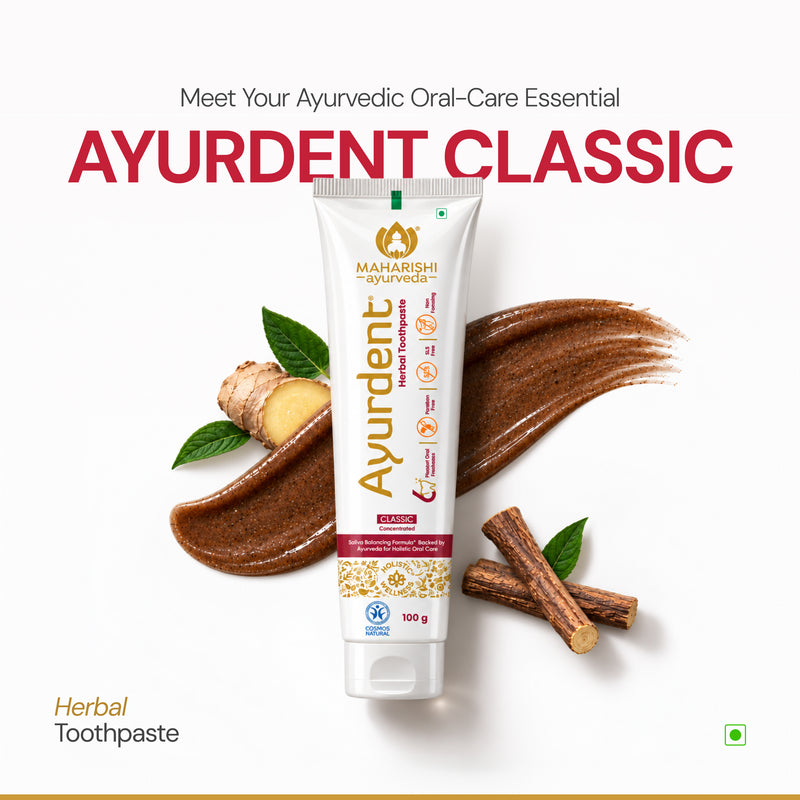
What Does Ayurveda Say About Oral Hygiene?
Ayurveda has a long tradition of daily personal-care practices, including oral cleansing. These practices form part of Dinacharya, the Ayurvedic concept of daily routine.
Traditional Herbal Oral Care
Classical Ayurvedic practices have included the use of selected plant materials for cleaning the mouth. Modern Ayurvedic toothpastes draw inspiration from this botanical heritage.
Tongue Cleaning in Ayurveda
Tongue cleaning is another familiar practice within traditional oral hygiene. It may complement brushing by removing accumulated surface debris. However, it does not replace plaque removal from teeth or cleaning between them.
Combining Tradition With Modern Dental Care
Ayurvedic oral-care preferences can coexist with evidence-based dental advice.
Brushing technique, fluoride exposure, reducing sugar frequency and regular dental appointments remain important.
Common Mistakes to Avoid After Eating
Some everyday habits can increase unnecessary enamel wear or compromise oral hygiene.
- Brushing forcefully immediately after acidic drinks
- Using a hard-bristle toothbrush
- Frequently sipping sugary or acidic beverages
- Assuming rinsing alone replaces regular brushing
- Using overly abrasive cleaning products
- Ignoring recurring tooth sensitivity
- Skipping daily interdental cleaning
Small, consistent changes are generally more useful than brushing repeatedly throughout the day.
When Should You Consult a Dentist?
Seek professional advice if you experience persistent tooth sensitivity, visible enamel wear, frequent cavities or gum bleeding. A dentist can assess whether symptoms relate to erosion, decay, gum disease or another cause.
People with acid reflux, frequent vomiting or chronic dry mouth may need additional enamel-protection strategies. Do not attempt to manage these issues using toothpaste changes alone.
Conclusion
Brushing your teeth immediately after eating is not always necessary, particularly when your meal includes acidic foods or drinks.
Allowing time before brushing gives saliva an opportunity to neutralise acids and helps avoid unnecessary mechanical wear on the enamel surface.
For everyday oral health, focus on brushing twice daily, using a soft toothbrush, cleaning between teeth and following evidence-based fluoride guidance.
For those interested in traditional botanical oral care, Maharishi Ayurveda Ayurdent Classic Toothpaste offers an Ayurvedic formulation featuring familiar herbs such as Neem, Meswak and Triphala.
Choose your oral-care products according to personal preferences and dental needs, and remember that gentle technique and consistent habits matter more than brushing immediately after every meal.
Popular Posts

How to Identify Authentic A2 Cow Ghee: Labels, Quality and Common Misconceptions
23 Nov, 2026To identify authentic A2 cow ghee, check the source of the milk, declared cattle breed, ingredie...
Read more
Can You Cook With A2 Cow Ghee Every Day? Smoke Point, Heating and Cooking Tips
23 Nov, 2026Yes, A2 cow ghee can be used for everyday cooking in moderate quantities. It is suitable for com...
Read more
Moong Dal Khichdi With Ghee: A Simple Indian Comfort Food Recipe
23 Nov, 2026Moong dal khichdi with ghee is a traditional Indian one-pot dish prepared using split yellow moo...
Read moreRecommended Products


Helps maintain strong teeth and healthy gums, Fights bacteria, controls plaque, and tartar, 100% Natural, SLS -Free, Fluoride Free