FILTERS
What Is Kachi Ghani Mustard Oil? Meaning, Benefits, Uses & Ayurvedic Perspective

For generations, mustard oil has held a familiar place in Indian kitchens and traditional wellness routines. But not every mustard oil is processed in the same way. Kachi Ghani Mustard Oil, also known as cold-pressed mustard oil, is produced using a slower, low-temperature extraction process designed to retain the seed’s natural flavour, aroma and nutrients.
“Kachi Ghani or cold-pressed mustard oil is a traditional, nutrient-rich and Ayurvedically beneficial oil ideal for cooking, massage and overall health.”
TL;DR – Kachi Ghani Mustard Oil Benefits & Uses
- Kachi Ghani Means Cold-Pressed: This mustard oil is extracted at low temperatures without high-heat refining, helping retain its natural aroma, flavour, fatty acids, and antioxidants.
- Ayurveda Sees It as Warming: Mustard oil is considered Ushna, traditionally used to stimulate Agni, reduce Kapha, and support Vata-Kapha balance.
- Useful for Cooking and Massage: It can be used for Indian cooking, tadka, pickles, stir-frying, Abhyanga, scalp massage, and warming body rubs.
- Supports Skin and Hair Carefully: It may help nourish dry skin and scalp, but sensitive skin, Pitta-type skin, or facial use needs caution and patch testing.
- Use in Moderation: Since mustard oil is calorie-dense and heating, use small amounts and seek guidance during pregnancy, cardiovascular conditions, or therapeutic use.
What Is Kachi Ghani Mustard Oil?
Kachi Ghani mustard oil is extracted from mustard seeds through a traditional wooden, stone or mechanical press at low temperatures, without chemical solvents or high-heat refining. This method helps preserve the oil’s characteristic pungent aroma, flavour, essential fatty acids, antioxidants and other naturally occurring nutrients.
What Does “Kachi Ghani” Mean?
Kachi means raw, while Ghani refers to the traditional press used to crush the seeds. The oil is generally extracted at temperatures below about 40–50°C, helping protect heat-sensitive constituents.
Why Is It Called Cold-Pressed Mustard Oil?
The term cold-pressed refers to mechanical extraction carried out without applying high external heat. This traditional oil extraction method helps retain flavour, aroma and naturally occurring nutrients that may otherwise be affected by intensive processing.
How Is It Different From Regular Refined Mustard Oil?
Cold-pressed mustard oil retains a stronger aroma and taste along with more of its naturally occurring phytonutrients and antioxidants. Refined mustard oil is processed at higher temperatures and may undergo bleaching and deodorising, giving it a milder flavour, higher smoke point and longer shelf life, but fewer bioactive compounds.
Mustard Oil: Traditional Support for Digestion, Hair & Skin
Traditionally valued to support digestion, promote stronger hair, and nourish healthier-looking skin, its deep-reaching properties also work wonderfully for massage
Buy Now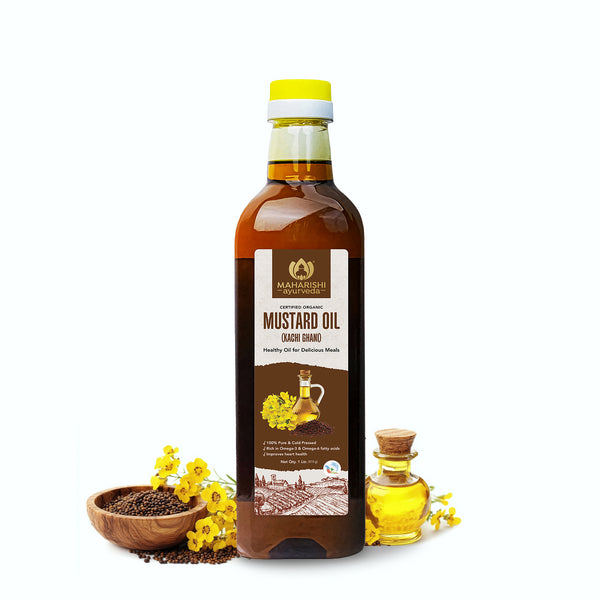
How Is Kachi Ghani Mustard Oil Made?
The traditional process is simple in principle and careful in execution:
- Mustard seeds are selected for pressing.
- The seeds are slowly crushed in a wooden, stone, steel or screw press.
- Mechanical pressure releases the oil at a relatively low temperature.
- No external high heat, bleaching or deodorising is applied.
- The extracted oil is filtered before use.
This low-temperature cold-pressed extraction matters because excessive heat and chemical processing can reduce volatile compounds, delicate fatty acids and antioxidants. Cold pressing therefore helps maintain the oil’s natural pungency, aroma and nutritional character.
What Is the Nutritional Value of Kachi Ghani Mustard Oil?
Like other edible oils, mustard oil is energy-dense. According to the Vaidya guidance, one tablespoon provides approximately 120 kcal, although exact values can vary according to seed variety and processing.
|
Nutritional Component |
Key Characteristics |
|
Fats |
Predominantly mono- and polyunsaturated fats |
|
MUFAs |
Mainly oleic acid |
|
PUFAs |
Include omega-3 ALA and omega-6 linoleic acid |
|
Antioxidants |
Tocopherols and other naturally occurring antioxidants |
|
Plant compounds |
Plant sterols and other phytonutrients |
|
Energy |
Approximately 120 kcal per tablespoon |
This combination of healthy fats, omega-3 fatty acids, omega-6 fatty acids, tocopherols and plant sterols contributes to the nutritional profile of this minimally processed oil.
What Are the Benefits of Kachi Ghani Mustard Oil?

Supports Heart-Friendly Fat Choices
Mustard oil is rich in MUFAs. When unsaturated fats replace saturated or trans fats within an overall balanced diet, they can form part of a heart-conscious eating pattern.
Supports Digestive Wellness
From an Ayurvedic perspective, mustard oil is warming and is traditionally used to stimulate agni, or digestive fire. Its pungent, warming nature makes it particularly relevant in Kapha-oriented dietary traditions.
Provides Antioxidant Support
Cold pressing helps retain tocopherols, plant sterols and other phytonutrients. These naturally occurring compounds contribute to the oil’s nutritional value and stability.
Traditionally Supports Circulation and Comfort
Mustard oil is traditionally used externally in abhyanga, massage and warming rubs. Its warming quality is associated with improving local circulation and helping relieve stiffness, especially in colder conditions or Kapha-dominant situations.
What Does Ayurveda Say About Kachi Ghani Mustard Oil?
In Ayurveda, mustard oil is regarded as ushna, or warming. This warming nature is understood to stimulate agni and help reduce Kapha. It is also traditionally used externally as an Ayurvedic massage oil to support circulation.
The supplied Vaidya guidance identifies it as better suited to Vata and Kapha, while people with a Pitta-dominant constitution or imbalance should use it more moderately because of its heating quality.
|
Ayurvedic Consideration |
Supplied Guidance |
|
Virya |
Ushna, or warming |
|
Agni |
Traditionally supports digestive fire |
|
Vata |
Generally suitable |
|
Kapha |
Particularly useful due to its warming quality |
|
Pitta |
Use moderately because heating qualities may aggravate Pitta |
|
External use |
Abhyanga, warming massage and rubs |
Can Kachi Ghani Mustard Oil Be Used for Cooking?
Yes. Being a distinctive flavor, it's a perfect addition to many Indian dishes, such as tadka, pickles, stirs or light frying. The smoke point of cold-pressed mustard oil is moderate to relatively high, with a range of values.
As for general intake, the Vaidya recommendation is to take the oil in moderation, about 1-2 tablespoons a day depending on overall energy requirements and health.
If someone selects Maharishi Ayurveda Kachi Ghani Mustard Oil to use regularly, its traditional cold pressed nature makes it not only an Indian cooking oil, but also link to a more holistic Ayurvedic lifestyle focusing on mindful and constitution-aware use.
Is Kachi Ghani Mustard Oil Good for Hair?
Mustard oil is well known for its scalp massage and hair nourishing properties. The fatty acids promote conditioning of the hair and its heat enhancing property aids local circulation.
Additionally, the traditional application of mustard oil for hair is connected with the protection from dandruff and invigorating the hair shaft. Vaidya points out that there is not much scientific proof for hair growth and dandruff benefits, beyond anecdotal and small studies.
Warm it gently and massage into the scalp for about 5-10 minutes, allow it to sit in the scalp for 30 minutes or overnight, then shampoo. Usually, 1 or 2 applications per week will be enough for most people. Scalps that are oily might not need to be shampooed as often.
Check on What Are the Different Kinds of Ayurvedic Oils?-->
Is Kachi Ghani Mustard Oil Good for Skin?
Mustard oil is an emollient, retaining moisture and smoothing rough or dry skin. It's recognized in traditional Ayurvedic massage for its warming properties and its ability to promote blood flow and alleviate stiffness.
Mustard oil for skin may be harsh on sensitive skin, so it is best to perform a patch test before using it on larger areas. Vaidya cautions when applying on the face. Small amounts are also recommended to be used with cooling agents, like rose or sandalwood, for skin type Pitta.
Kachi Ghani Mustard Oil vs Other Cooking Oils
Understanding cold-pressed vs refined oil can help you choose according to your cooking style and personal needs.
|
Oil |
Key Characteristics |
|
Cold-pressed mustard oil |
Strong aroma, MUFAs, some omega-3 ALA, retained antioxidants and distinctive pungent compounds |
|
Refined mustard oil |
Milder taste, higher smoke point and longer shelf life, but fewer retained phytonutrients |
|
Sunflower oil |
Typically higher in omega-6 linoleic acid |
|
Extra virgin olive oil |
High in MUFA and polyphenols; particularly suitable for raw dressings |
For Indian cooking traditions, mustard oil stands out for its characteristic flavour and compatibility with tempering, pickling and stir-frying.
Are There Any Side Effects of Kachi Ghani Mustard Oil?
Moderation remains important. Excess intake of any oil increases calorie consumption, and mustard varieties can differ in their erucic acid content.
For topical use, some people may experience irritation or contact dermatitis. A patch test is therefore recommended. The oil should be only gently warmed, not made very hot, and it should not be applied to broken open wounds unless advised.
People with cardiovascular conditions, those who are pregnant, or anyone considering therapeutic internal use should seek professional guidance.
Explore More : Mustard Oil vs Coconut Oil: Which Should You Use?-->
How Can You Include Kachi Ghani Mustard Oil in Your Daily Routine?
It can become part of everyday Indian cooking, weekly scalp oiling, warming body massage or seasonal wellness routines, particularly when a warming oil suits your prakriti and current balance.
When choosing a product, look for labels such as cold-pressed, Kachi Ghani, stone-pressed or first cold press, along with a short ingredient list, ideally 100% mustard oil. A strong pungent aroma and golden-brown colour are useful sensory indicators, while a trusted producer and clear batch and expiry information also matter.
Conclusion: A Traditional Oil for Kitchen and Ayurvedic Wellness
Kachi Ghani mustard oil brings together traditional extraction, distinctive flavour and multiple everyday uses. Cold pressing helps retain naturally occurring fatty acids, antioxidants, tocopherols and plant sterols, while Ayurveda values mustard oil for its ushna quality and traditional role in supporting agni, circulation and Kapha balance.
Whether used for tadka, pickles, hair oiling or abhyanga, the principle remains the same: choose a good-quality cold-pressed oil and use it in moderation. For those following an Ayurvedic lifestyle, Maharishi Ayurveda Kachi Ghani Mustard Oil can offer a practical bridge between the kitchen and daily self-care, rooted in the traditional understanding of food, warmth and individual constitution.
Mustard Oil: Traditional Support for Digestion, Hair & Skin
Traditionally valued to support digestion, promote stronger hair, and nourish healthier-looking skin, its deep-reaching properties also work wonderfully for massage
Buy Now
Popular Posts

Types of Headaches: Types, Causes, Symptoms and Relief Options
22 Oct, 2026You might consider a headache at the end of a long day when fatigue is felt. However, if pain com...
Read more
Home Remedies for Migraine: Simple Remedies and When to See a Doctor
16 Oct, 2026Migraine is more than an ordinary headache that strikes at the worst time. People are eager to fi...
Read more
What Is Metabolic Health and Why Does It Matter for Weight Management?
15 Oct, 2026Metabolic health refers to how effectively the body manages blood sugar, blood pressure, blood fa...
Read more