FILTERS
Mustard Oil vs Coconut Oil: Which Should You Use?

Mustard oil and coconut oil are both traditional oils, but they work differently. Mustard oil is warming, sharp, and stimulating, making it more suitable for cold weather, body massage, stiffness, and Kapha-Vata concerns. Coconut oil is cooling, soothing, and nourishing, making it more suitable for summer, Pitta-type skin, dry skin, and hair conditioning.
Choosing between mustard oil and coconut oil depends on your body type, skin type, season, and purpose. Ayurveda does not treat all oils as interchangeable. It looks at the oil’s qualities, such as heating or cooling, heavy or light, sharp or soothing, and matches them with your current need.
If you feel cold, stiff, heavy, or sluggish, mustard oil may be more suitable. If your skin or scalp feels heated, dry, sensitive, or irritated, coconut oil may be a better choice.
Mustard Oil vs Coconut Oil at a Glance
Mustard oil is warming and stimulating, while coconut oil is cooling and nourishing. Mustard oil is often used for body massage in winter and Kapha-Vata conditions. Coconut oil is commonly used for skin, hair, and massage in summer or for Pitta-type concerns.
|
Feature |
Mustard Oil |
Coconut Oil |
|
Common name |
Sarson ka tel |
Nariyal ka tel |
|
Ayurvedic nature |
Heating and stimulating |
Cooling and nourishing |
|
Taste |
Pungent and bitter |
Sweet and mild |
|
Texture |
Thick, sharp, penetrating |
Smooth, rich, soothing |
|
Best for skin |
Body massage, cold weather, stiffness |
Dry skin, heat-prone skin, soothing care |
|
Best for hair |
Dry scalp, cold-type scalp, scalp massage |
Hair conditioning, dryness, heat-prone scalp |
|
Best season |
Winter and cold climates |
Summer and hot climates |
|
Pacifies Vata and Kapha, may aggravate Pitta |
Pacifies Pitta and Vata, may increase Kapha |
|
|
Best use |
Massage, scalp oiling, traditional cooking |
Skin care, hair care, massage, cooking |
|
Caution |
Can irritate sensitive or Pitta skin |
Can clog pores on acne-prone skin |
Both oils can be useful, but they should be used differently.
What Are the Benefits of Mustard Oil?
Mustard oil is traditionally valued for its warming, stimulating, and penetrating qualities. It may support body massage, scalp nourishment, circulation, dryness relief, and cold-weather self-care. In Ayurveda, mustard oil is generally considered more suitable for Vata and Kapha concerns.
Mustard oil is strong in aroma and sharp in action. It is not a neutral oil. This is why it can feel very useful in some cases and too intense in others.
What Are the Benefits of Mustard Oil for Cooking?
Mustard oil is widely used in Indian cooking, especially in regional cuisines from North India, Bengal, Assam, Odisha, and parts of Rajasthan. It has a strong pungent flavour and is often used for tempering, pickles, curries, and traditional dishes.
Its sharp taste makes it useful when a dish needs depth, aroma, and heat. However, like all cooking oils, it should be used in moderation.
Choose food-grade mustard oil for cooking and avoid reusing overheated oil repeatedly.
What Are the Benefits of Mustard Oil for Skin?
Mustard oil is traditionally used externally for body massage, especially in colder climates. Its warming nature may help reduce the feeling of coldness, stiffness, and heaviness.
For skin, mustard oil may help:
- Warm the body during cold weather
- Support massage and circulation
- Nourish dry body skin
- Reduce the feeling of stiffness
- Support traditional Abhyanga routines
- Provide a strong, stimulating massage effect
However, mustard oil is not usually the best first choice for facial skin. It can feel too sharp or irritating for sensitive, acne-prone, inflamed, or Pitta-type skin.
What Are the Benefits of Mustard Oil for Body Massage?
Mustard oil is often used for body massage because it is warming and penetrating. In Ayurveda, it is traditionally chosen when the body feels cold, stiff, heavy, or sluggish.
- Mustard oil massage may be useful for:
- Cold weather body massage
- Stiff joints and muscles
- Dryness related to Vata
- Kapha-type heaviness
- Winter self-care
- Pre-bath massage
It is especially popular in winter because the oil produces a warming sensation on the skin. For daily massage in sensitive people, sesame oil may be a more balanced option.
What Are the Benefits of Mustard Oil for Hair?
Mustard oil is traditionally used for scalp massage and hair oiling. Its warming nature may support scalp circulation through massage, reduce dryness, and help nourish the roots.
Mustard oil may help with:
- Dry scalp
- Rough hair
- Frizz
- Scalp massage
- Hair breakage due to dryness
- Cold-type scalp conditions
It may also help reduce mild flaking caused by dryness. But it should not be treated as a guaranteed cure for dandruff or hair fall. Hair growth depends on nutrition, sleep, hormones, stress, genetics, scalp health, and medical conditions.
If mustard oil causes itching, burning, redness, or scalp irritation, wash it off and stop using it.
What Are the Traditional Ayurvedic Uses of Mustard Oil?
In Ayurveda, mustard oil is known for its heating, sharp, and stimulating nature. It is traditionally associated with Kapha and Vata balance, especially where there is coldness, stiffness, heaviness, or sluggishness.
Ayurvedic qualities of mustard oil include:
- Heating potency
- Pungent nature
- Sharp and penetrating quality
- Kapha-reducing action
- Vata-pacifying action when used appropriately
- Pitta-aggravating tendency if overused
Because of its intensity, mustard oil should be used carefully by people with heat, burning, rashes, acne, inflammation, or sensitive skin.
Mustard Oil: Traditional Support for Digestion, Hair & Skin
Traditionally valued to support digestion, promote stronger hair, and nourish healthier-looking skin, its deep-reaching properties also work wonderfully for massage
Buy Now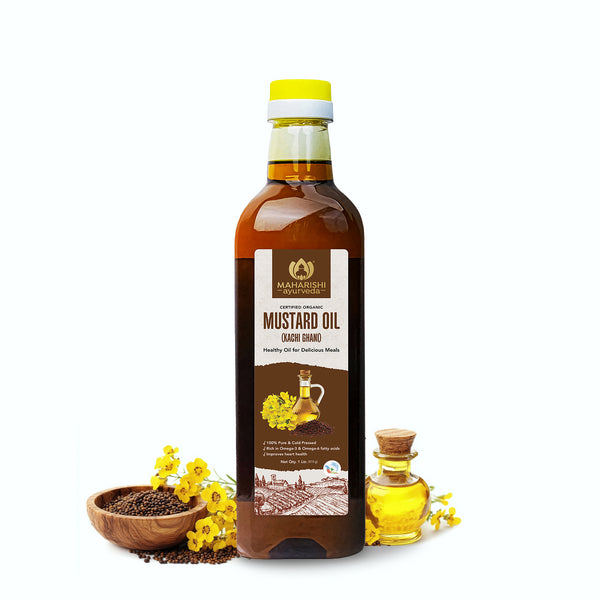
What Are the Benefits of Coconut Oil?
Coconut oil is traditionally valued for its cooling, nourishing, and soothing qualities. It is commonly used for dry skin, hair conditioning, scalp nourishment, summer massage, and Pitta-type concerns. In Ayurveda, coconut oil is considered more suitable when there is heat, dryness, or sensitivity.
Coconut oil is lighter in aroma than mustard oil and usually feels gentler on the body. It is especially popular in hot climates and coastal regions.
What Are the Benefits of Coconut Oil for Cooking?
Coconut oil is used in cooking, especially in South Indian and coastal cuisines. It has a distinct coconut aroma and is commonly used in curries, stir-fries, chutneys, and traditional recipes.
In cooking, coconut oil provides richness and flavour. It should still be used in moderation as part of a balanced diet because it is calorie-dense and rich in fat.
What Are the Benefits of Coconut Oil for Skin?
Coconut oil is widely used as a natural moisturiser. It helps reduce water loss from the skin and can soften dry, rough, or flaky areas.
Coconut oil may help:
- Moisturise dry skin
- Soften rough patches
- Support skin barrier comfort
- Soothe heat-prone skin
- Nourish body skin after bathing
- Support summer Abhyanga
- Reduce dryness in hot climates
However, coconut oil can clog pores for some people. It is not ideal for oily, acne-prone, or congested facial skin.
What Are the Benefits of Coconut Oil for Hair?
Coconut oil is one of the most popular oils for hair care in India. It is used to condition the hair, nourish the scalp, reduce dryness, and support smoother hair texture.
Coconut oil may help with:
- Dry hair
- Rough hair
- Frizz
- Scalp nourishment
- Hair conditioning
- Heat-prone scalp
- Summer hair care
In Ayurveda, coconut oil is considered keshya, meaning supportive for hair. Its cooling nature makes it especially useful for Pitta-type scalp concerns, such as heat, sensitivity, or dryness after sun exposure.
What Are the Traditional Ayurvedic Uses of Coconut Oil?
In Ayurveda, coconut oil is known as Narikela Taila. It is considered cooling, nourishing, and soothing.
Ayurvedic qualities of coconut oil include:
- Cooling potency
- Sweet post-digestive effect
- Unctuous quality
- Nourishing action
- Pitta-pacifying effect
- Vata-pacifying effect in dryness
- Kapha-increasing tendency if overused
Coconut oil is commonly used in summer, hot climates, scalp care, body massage, and skin nourishment.
Virgin Coconut Oil: Traditional Support for Hair, Skin & Wellness
A pure, nourishing oil traditionally used to support healthy-looking skin, stronger hair, and everyday wellness routines
Buy Now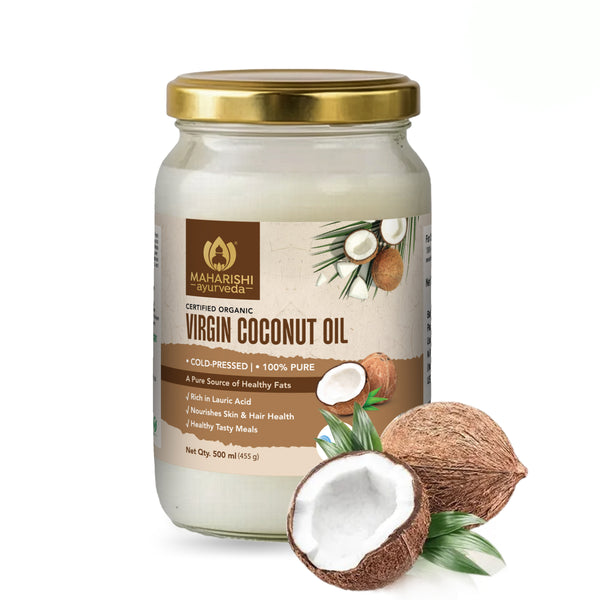
Mustard Oil vs Coconut Oil for Skin: Which Is Better?
Coconut oil is usually better for dry, heat-prone, or sensitive skin, while mustard oil is better for body massage in cold weather or when the body feels stiff and sluggish. For facial skin, coconut oil is usually gentler, but it can clog pores. Mustard oil is usually too sharp for the face.
Both oils have value for skin, but they are not suited for the same skin type.
Which Oil Is Better for Dry Skin?
Coconut oil is usually better for dry skin that feels rough, flaky, or heat-prone. It helps seal moisture and soften the skin.
Mustard oil may help dry body skin in winter, especially when dryness is combined with coldness or stiffness. But it can feel too heating for sensitive or inflamed skin.
Which Oil Is Better for Sensitive Skin?
Coconut oil is usually the safer choice for sensitive skin, especially if there is heat or irritation. Still, it should be patch tested because it may clog pores on some skin types.
Mustard oil can sting or irritate sensitive skin because of its sharp and heating nature. It should be avoided on active rashes, burning skin, broken skin, or inflamed areas.
Which Oil Is Better for the Face?
Coconut oil is generally better than mustard oil for the face because it is cooling and gentler. However, coconut oil is not ideal for oily or acne-prone skin because it can clog pores.
Mustard oil is usually not recommended as a default facial oil because it is sharp, pungent, and heating.
If your face is acne-prone, oily, or congested, neither oil may be ideal for regular facial application.
Which Oil Is Better for Body Massage?
Mustard oil is better for body massage in winter, cold climates, or Vata-Kapha conditions. Coconut oil is better for body massage in summer, hot climates, or Pitta-type conditions.
|
Concern |
Better Choice |
|
Dry body skin in summer |
Coconut oil |
|
Dry body skin in winter |
Mustard oil or sesame oil |
|
Sensitive skin |
Coconut oil, with patch test |
|
Face application |
Coconut oil, only if non-acne-prone |
|
Body stiffness |
Mustard oil |
|
Heat-prone skin |
Coconut oil |
|
Coldness and heaviness |
Mustard oil |
|
Oily or acne-prone face |
Avoid both or use cautiously |
Explore : What Are the Different Kinds of Ayurvedic Oils? –>
Mustard Oil vs Coconut Oil for Hair: Which Is Better?
Coconut oil is usually better for conditioning dry hair, reducing roughness, and cooling the scalp. Mustard oil may be better for dry, cold-type scalp conditions and stimulating scalp massage. The better choice depends on scalp type, season, and sensitivity.
Which Oil Is Better for Dry Hair?
Coconut oil is usually better for dry hair because it coats the hair shaft and helps reduce roughness. It is commonly used as a pre-wash oil, conditioner, and scalp oil.
Mustard oil may also help dry hair, but it has a stronger smell and warming effect due to its pitta aggravating nature, it may not suit people with Pittaprakriti or aggravated pitta.
Which Oil Is Better for Dandruff?
If flaking is due to dryness, both oils may help by nourishing the scalp. Coconut oil may be gentler, while mustard oil may be too heating for some people.
If dandruff is severe, oily, itchy, fungal, or recurring, do not depend only on oiling. Consult a dermatologist or Ayurvedic physician.
Which Oil Is Better for Hair Growth?
Neither coconut oil nor mustard oil should be presented as a guaranteed hair growth cure. Both may support scalp health and reduce dryness-related breakage, but hair growth depends on many factors.
Hair growth is affected by:
Oil massage may support healthy scalp circulation and reduce dryness, but it cannot replace a complete hair care and health routine.
Mustard Oil vs Coconut Oil for Hair at a Glance
|
Feature |
Mustard Oil |
Coconut Oil |
|
Nature |
Warming |
Cooling |
|
Best for |
Dry, cold-type scalp |
Dry, heat-prone scalp |
|
Smell |
Strong and pungent |
Mild coconut aroma |
|
Texture |
Rich and penetrating |
Smooth and conditioning |
|
Scalp sensitivity |
Can irritate some people |
Usually gentler |
|
Season |
Winter |
Summer |
|
Hair benefit |
Scalp massage and dryness support |
Conditioning and softness |
|
Caution |
Avoid if burning or itching occurs |
Avoid if scalp feels oily or clogged |
Which Oil Is Better for Massage?
Mustard oil is usually better for winter massage, stiffness, and cold-type Vata-Kapha concerns. Coconut oil is usually better for summer massage, heat-prone skin, and Pitta-type concerns. For daily Abhyanga, sesame oil is also commonly used in Ayurveda.
Which Oil Is Better for Adult Body Massage?
For adult body massage, choose the oil based on season and body type.
Use mustard oil when:
- Weather is cold
- Body feels stiff
- Skin feels cold and dry
- There is Kapha heaviness
- You want a warming massage
Use coconut oil when:
- Weather is hot
- Skin feels heated
- Skin is dry but sensitive
- There is Pitta aggravation
- You want a cooling massage
Which Oil Is Better for Baby Massage?
Both coconut oil and mustard oil are traditionally used for baby massage in different regions, but baby skin is delicate. Coconut oil is usually preferred in warmer climates, while mustard oil is used in colder climates in some traditions.
For baby massage:
- Patch test first
- Use only high-quality oil
- Avoid strong rubbing
- Avoid if there is rash or irritation
- Ask a paediatrician if the baby has sensitive skin, eczema, or allergies
Do not use mustard oil on a baby’s skin if it causes redness, heat, or irritation.
Which Oil Is Better for Sports Recovery and Muscle Relaxation?
Mustard oil may feel useful for muscle relaxation in cold weather because of its warming quality. However, sesame oil is often a more classical Ayurvedic choice for deeper Vata-related body massage.
Coconut oil may be better after heat exposure or in hot climates when the body needs cooling.
Which Oil Is Better According to Season?
|
Season |
Better Choice |
Reason |
|
Summer |
Coconut oil |
Cooling and soothing |
|
Winter |
Mustard oil |
Warming and stimulating |
|
Monsoon |
Sesame oil often preferred |
Vata is dominant and digestion/body balance may be unstable |
|
Hot climate |
Coconut oil |
Helps calm heat |
|
Cold climate |
Mustard oil |
Helps warm the body |
What Does Ayurveda Say About Mustard Oil and Coconut Oil?
Ayurveda chooses oils based on their qualities, such as heating or cooling, heavy or light, sharp or soothing, and their effect on doshas. Mustard oil is heating and Kapha-Vata pacifying, while coconut oil is cooling and Pitta-Vata pacifying.
What Are the Ayurvedic Properties of Mustard Oil?
Mustard oil, or Sarshapa Taila, is considered strong, heating, and penetrating.
|
Ayurvedic Property |
Mustard Oil |
|
Rasa, or taste |
Pungent and bitter |
|
Guna, or qualities |
Light, penetrating, sharp, unctuous |
|
Virya, or potency |
Heating |
|
Vipaka, or post-digestive effect |
Pungent |
|
Dosha effect |
Pacifies Kapha and Vata, may aggravate Pitta |
|
Best use |
Coldness, stiffness, sluggishness, winter massage |
Mustard oil is traditionally used when the body needs warmth, stimulation, and movement. It is not ideal when there is excess heat, burning, redness, or inflammation.
What Are the Ayurvedic Properties of Coconut Oil?
Coconut oil, or Narikela Taila, is considered cooling, nourishing, and soothing.
|
Ayurvedic Property |
Coconut Oil |
|
Rasa, or taste |
Sweet and mild |
|
Guna, or qualities |
Unctuous, nourishing, strengthening |
|
Virya, or potency |
Cooling |
|
Vipaka, or post-digestive effect |
Sweet |
|
Dosha effect |
Pacifies Pitta and Vata, may increase Kapha |
|
Best use |
Heat, dryness, Pitta skin, summer massage |
Coconut oil is traditionally used when the body needs cooling, softness, and nourishment.
What Are the Side Effects and Precautions?
Mustard oil may irritate sensitive skin because it is heating and sharp. Coconut oil may clog pores on oily or acne-prone skin because it can be comedogenic. Always patch test before using either oil on the face, scalp, body, or baby’s skin.
When Should You Avoid Mustard Oil?
Avoid or use mustard oil carefully if you have:
- Sensitive skin
- Burning sensation
- Rashes
- Inflammation
- Acne-prone facial skin
- Pitta aggravation
- Very hot body type
- Skin allergy
- Open wounds
- Baby skin sensitivity
If mustard oil stings, burns, or causes redness, wash it off.
When Should You Avoid Coconut Oil?
Avoid or use coconut oil carefully if you have:
- Oily skin
- Acne-prone skin
- Blackheads
- Whiteheads
- Clogged pores
- Fungal acne-like bumps
- Very greasy scalp
- Coconut sensitivity
- Skin irritation after use
If coconut oil causes breakouts, stop using it on the face.
How Should You Patch Test an Oil?
To patch test:
- Apply a small amount of oil behind the ear or on the inner arm.
- Wait 24 hours.
- Check for redness, itching, burning, bumps, or swelling.
- If there is no reaction, try a small amount on the intended area.
- Stop use if irritation appears later.
Which Oil Is Best for Your Dosha?
Coconut oil is usually better for Pitta because it is cooling. Mustard oil may suit Kapha because it is warming and stimulating. Vata types often benefit from sesame oil classically, though mustard oil may help in cold climates and coconut oil may help when dryness is combined with heat.
|
Dosha |
Recommended Oil |
Why |
|
Vata |
Sesame oil classically, mustard in cold climates, coconut in hot weather |
Depends on dryness, coldness, season, and sensitivity |
|
Pitta |
Coconut oil |
Cooling and soothing |
|
Kapha |
Mustard oil in moderation |
Warming and stimulating |
Ayurveda does not recommend one oil forever. The right oil can change with season, climate, body part, and current imbalance.
What Is the Final Takeaway on Mustard Oil vs Coconut Oil?
Mustard oil and coconut oil are both useful, but they are not the same. Mustard oil is warming, sharp, and stimulating, while coconut oil is cooling, soothing, and nourishing.
Choose mustard oil if you need warmth, body massage in winter, support for stiffness, or Kapha-Vata balance. Choose coconut oil if you need cooling, dry skin support, summer massage, Pitta balance, or hair conditioning.
For the face, coconut oil is usually gentler than mustard oil, but it may clog pores in acne-prone skin. For body massage, mustard oil may be better in winter, while coconut oil may be better in summer.
The best Ayurvedic choice is not about one oil being superior. It is about using the right oil for the right person, season, body part, and purpose.
Popular Posts

Types of Headaches: Types, Causes, Symptoms and Relief Options
22 Oct, 2026You might consider a headache at the end of a long day when fatigue is felt. However, if pain com...
Read more
Home Remedies for Migraine: Simple Remedies and When to See a Doctor
16 Oct, 2026Migraine is more than an ordinary headache that strikes at the worst time. People are eager to fi...
Read more
What Is Metabolic Health and Why Does It Matter for Weight Management?
15 Oct, 2026Metabolic health refers to how effectively the body manages blood sugar, blood pressure, blood fa...
Read more