FILTERS
Why Is Ghee Used in Chyawanprash? Understanding Its Role in Preparation

Ghee is traditionally used in Chyawanprash as a nourishing ingredient and a medium for combining herbal preparations. During preparation, it helps blend the Amla pulp with other ingredients and contributes to the formulation's rich texture. In Ayurveda, ghee is also valued as Sneha, a traditional fatty medium used in nourishing Rasayana preparations.
Chyawanprash is one of Ayurveda's most recognised traditional preparations. Made with Amla, various herbs, and other nourishing ingredients, it has been part of Indian wellness practices for generations.
Among its ingredients, ghee plays a distinctive role. Although it is commonly associated with Indian cooking, its inclusion in Chyawanprash has a deeper connection to traditional Ayurvedic formulation methods.
Ghee contributes to the preparation's texture, consistency, and characteristic richness. It also serves as a fatty medium during the preparation of the herbal mixture.
Understanding why ghee is used in Chyawanprash helps explain the importance of traditional ingredients and how they work together within a classical formulation.
TL;DR – Why Is Ghee Used in Chyawanprash?
- Ghee Supports Traditional Preparation: Ghee is used to process Amla pulp and combine ingredients in traditional Chyawanprash preparation.
- Acts as a Herbal Carrier: As a fatty medium or Sneha, ghee helps dissolve or disperse certain fat-soluble plant compounds.
- Improves Texture and Consistency: Ghee adds richness, smoothness, and the characteristic paste-like texture of Chyawanprash.
- Has Traditional Ayurvedic Importance: Ghee is valued for its nourishing qualities and is commonly used in Ayurvedic Rasayana preparations.
- Ghee-Free Formulations Are Different: Removing ghee can change the formulation's taste, texture, and fat content, although modern alternatives are available.
- Choose Quality and Follow Proper Dosage: Check ingredients, allergens, and product instructions. Maharishi Ayurveda Authentic Chyavanprash recommends 1–2 teaspoons with lukewarm milk for adults.
What Is the Role of Ghee in Chyawanprash?
Ghee, also known as clarified butter, is traditionally included in Chyawanprash during the preparation of its Amla-based herbal mixture.
Its primary roles involve supporting the preparation process, contributing fats, and helping create the desired consistency.
Why Is Ghee Added During Preparation?
Traditional Chyawanprash preparation involves several stages, including preparing herbal decoctions, processing Amla, and combining ingredients.
In classical preparation methods, the cooked Amla pulp is processed with ghee and sometimes sesame oil before being mixed with the remaining ingredients.
This stage helps create a smooth, cohesive base for the finished preparation.
How Does Ghee Work as a Herbal Carrier?
In Ayurveda, ghee is commonly used as a Sneha, or fatty medium, in herbal preparations.
Some plant constituents are fat-soluble, meaning they dissolve or disperse more readily in fats than in water.
Including ghee may help incorporate certain constituents into the formulation.
However, this does not automatically mean that every compound becomes more bioavailable or that ghee increases the clinical effectiveness of Chyawanprash.
Does Ghee Affect the Texture of Chyawanprash?
Yes. Ghee contributes richness, smoothness, and a characteristic mouthfeel.
Combined with Amla pulp, sweetening ingredients, and herbal powders, it helps produce the dense, paste-like consistency associated with traditional Chyawanprash.
The final texture also depends on the ingredient proportions and cooking process.
Why Is Ghee Important in Ayurveda?
Ghee holds an established place in traditional Ayurvedic food preparation and herbal formulations.
It is valued for its nourishing qualities and compatibility with various classical preparation methods.
Organic Ghee: Traditional Nourishment for Everyday Wellness
Experience the richness of traditional ghee, valued in Ayurveda for its nourishing qualities and versatile everyday use.
Buy Now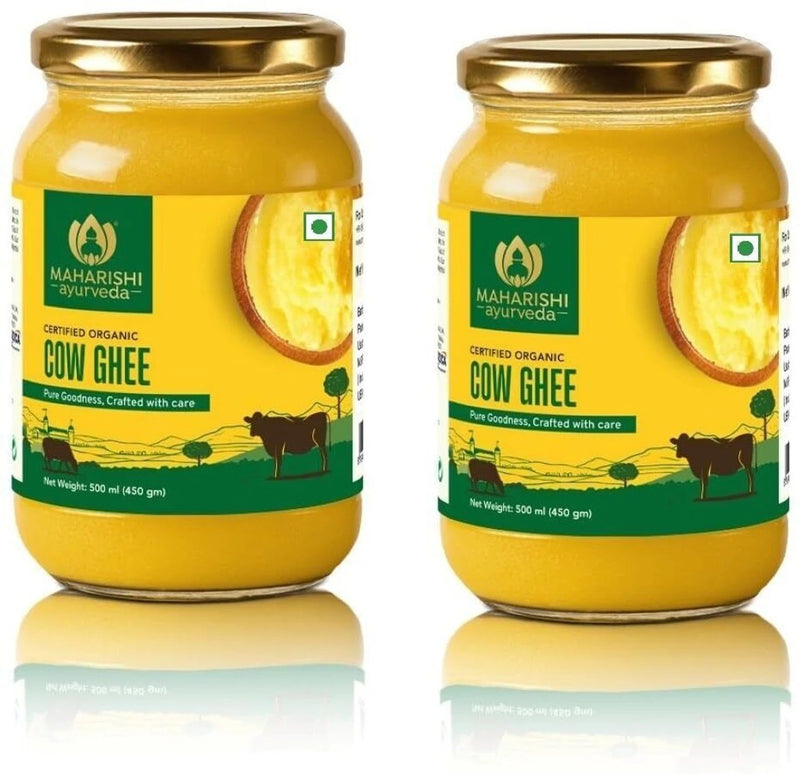
What Is the Ayurvedic Concept of Sneha?
Sneha is an Ayurvedic term associated with unctuous or oily substances.
Traditional Ayurvedic preparations use different fatty media, including ghee and specific oils, depending on the formulation.
Ghee is traditionally associated with nourishment and softness, while its practical role as a cooking fat also contributes to the final preparation.
What Is Rasayana in Ayurveda?
Rasayana refers to an Ayurvedic approach traditionally associated with rejuvenation, nourishment, and long-term wellbeing.
Classical Rasayana practices include dietary recommendations, daily routines, and specific herbal preparations.
Chyawanprash is traditionally classified as a Rasayana because of its place in Ayurvedic wellness practices.
These traditional descriptions should not be interpreted as clinical proof that Chyawanprash prevents ageing or treats medical conditions.
Why Are Nourishing Ingredients Used in Rasayana Preparations?
Classical formulations often combine different ingredients to achieve their intended characteristics.
In Chyawanprash, Amla provides the principal fruit base, herbs contribute to the traditional composition, and ingredients such as ghee and honey influence texture and taste.
The complete preparation is valued in Ayurveda rather than any single ingredient acting independently.
How Is Ghee Used During Traditional Chyawanprash Preparation?
Traditional Chyawanprash preparation follows a multistage process described in Ayurvedic literature.
Although recipes vary, several key stages are commonly recognised.
Preparing the Herbal Decoction
Selected herbs are boiled in water to prepare a decoction.
Amla is often cooked with this herbal liquid before the pulp is separated from the seeds and fibrous material.
Processing Amla With Ghee
The prepared Amla pulp is traditionally cooked with ghee and, in some formulations, sesame oil.
This stage changes the pulp's consistency and incorporates the fatty ingredients into the mixture.
The exact quantity and sequence depend on the classical reference and manufacturing method.
Combining the Remaining Ingredients
The processed pulp is combined with the herbal decoction and sweetening ingredients to develop the characteristic thick consistency.
Aromatic herbal powders and honey are typically added during later preparation stages.
The result is a traditional herbal preserve with a distinctive sweet, sour, and mildly spicy taste.
Does Ghee Help With the Absorption of Herbal Ingredients?
Ghee is traditionally described as a carrier in Ayurvedic preparations, but its role should be understood carefully.
Can Ghee Dissolve Fat-Soluble Compounds?
Yes. As a fat, ghee can help dissolve or disperse certain fat-soluble substances.
This is one reason fatty ingredients are useful in different food and herbal preparation processes.
However, the extent to which this changes absorption depends on the particular ingredient and the finished formulation.
Does Ghee Make Chyawanprash More Effective?
There is insufficient direct clinical evidence demonstrating that adding ghee independently makes Chyawanprash more effective than a comparable ghee-free preparation.
Its inclusion is supported by traditional formulation practices and its practical properties.
Effectiveness cannot be established from the presence of one ingredient alone.
Does Ghee Make Chyawanprash Heavy to Digest?
Ghee contributes fat and calories to Chyawanprash, giving it a richer consistency.
However, individual digestive comfort depends on the serving size, overall formulation, and personal tolerance.
Can Chyawanprash Affect Appetite?
Because Chyawanprash is a concentrated preparation containing fats and sweetening ingredients, large servings may contribute to fullness.
This does not mean that recommended servings necessarily interfere with appetite.
If you regularly experience discomfort or reduced interest in meals after consuming Chyawanprash, discuss its suitability with a healthcare professional.
Should You Take Chyawanprash Before or After Food?
Traditional practices vary, and different manufacturers may provide different recommendations.
Some people prefer consuming Chyawanprash in the morning as part of their daily routine.
Follow the directions provided with your particular product rather than assuming one timing is suitable for everyone.
Should Chyawanprash Be Taken With Milk or Water?
Chyawanprash is traditionally consumed directly or paired with a suitable beverage.
Why Is Warm Milk Commonly Recommended?
Warm milk is a familiar accompaniment in Ayurvedic Rasayana routines.
Its taste and texture complement the rich consistency of Chyawanprash.
However, milk does not guarantee additional therapeutic benefits.
Can Chyawanprash Be Taken With Warm Water?
Some formulations may be consumed with warm water according to their instructions.
This may appeal to people who prefer a lighter beverage or do not consume milk.
Always check the manufacturer's directions and individual dietary requirements.
Is Chyawanprash Without Ghee Different?
Some modern Chyawanprash products may use alternative formulations to accommodate dietary preferences or manufacturing requirements.
Why Do Some Products Omit Ghee?
Possible reasons include developing dairy-free products, creating vegan alternatives, or changing the product's texture.
These are potential formulation choices rather than proof that all ghee-free products use the same manufacturing approach.
Does Removing Ghee Change the Formulation?
Yes. Removing ghee changes the ingredient composition and may alter taste, texture, and fat content.
It also changes an element commonly included in classical preparation methods.
Whether a modified product is suitable depends on its complete ingredient list and intended use.
Is Ghee Necessary for Authentic Chyawanprash?
Ghee is an important ingredient in many traditional Chyawanprash recipes.
Consumers interested in classical formulations can look for products that clearly disclose ghee and explain their preparation approach.
However, authenticity should be evaluated through the overall formulation, manufacturing quality, and product information rather than one ingredient alone.
Read more : The Many Benefits of Taking Medicated Ghee →
What Makes Maharishi Ayurveda Authentic Chyavanprash Special?
Maharishi Ayurveda Authentic Chyavanprash is a traditional Ayurvedic Rasayana preparation available from Maharishi Ayurveda India.
According to the manufacturer, the formulation contains 45 herbs and ingredients and is prepared using a process inspired by the Charak Samhita.
It includes Amla, honey, jaggery, ghee, and pure Vanshlochan.
Why Does Maharishi Ayurveda Include Ghee?
Ghee forms part of the product's traditional ingredient composition.
Its inclusion reflects the classical preparation approach in which nourishing fatty ingredients are combined with Amla and selected herbs.
It also contributes to the preparation's characteristic richness.
Which Other Ingredients Are Highlighted?
Maharishi Ayurveda highlights several ingredients in its Authentic Chyavanprash:
- Amla: The principal fruit ingredient in traditional Chyawanprash.
- Honey: Contributes sweetness and characteristic flavour.
- Jaggery: A traditional sweetening ingredient.
- Ghee: A nourishing fat used in the preparation.
- Pure Vanshlochan: A traditional ingredient included in the formulation.
Together, these ingredients reflect the product's Ayurvedic formulation heritage.
Why Choose Maharishi Ayurveda Authentic Chyavanprash?
The product may appeal to individuals interested in classical Ayurvedic preparations containing traditional ingredients.
Maharishi Ayurveda India positions Authentic Chyavanprash for daily nourishment, vitality, and general wellness.
These are traditional and manufacturer-described uses. The product should not be considered a proven treatment or preventive measure for respiratory infections, digestive disorders, or other medical conditions.
Explore Maharishi Ayurveda Authentic Chyavanprash to learn more about its ingredients, formulation, and recommended use.
Authentic Chyawanprash: Traditional Ayurvedic Rasayana
A traditional Ayurvedic formulation featuring Amla, 45 herbs and ingredients, ghee, honey, and jaggery for everyday wellness.
Buy Now
How Should You Consume Maharishi Ayurveda Authentic Chyavanprash?
According to the official Maharishi Ayurveda India product page, the recommended adult serving is 1–2 teaspoons with lukewarm milk.
Follow the current packaging instructions and obtain personalised advice when necessary.
Can You Include It in a Daily Routine?
Adults interested in traditional Ayurvedic wellness may include Chyavanprash as an optional part of their routine.
It should complement balanced meals, adequate sleep, regular physical activity, and appropriate healthcare rather than replace them.
Who Should Take Additional Precautions?
People managing diabetes or other metabolic conditions should consider the product's sweetening ingredients and seek medical advice.
Those with milk allergies should avoid products containing ghee.
Pregnant or breastfeeding individuals, children, and people taking regular medication should consult a qualified healthcare professional before use.
How Can You Identify a Quality Chyawanprash Product?
Choosing a clearly labelled product helps consumers understand its composition and use.
Check the Ingredient List
Look for ingredients such as Amla, ghee, honey, and other herbs included in the particular formulation.
Check for allergens and dietary restrictions.
Review Manufacturing Information
The packaging should clearly display the manufacturer, batch number, expiry date, and relevant regulatory details.
Follow the Recommended Serving
Avoid assuming that taking larger quantities provides greater benefits.
Use the serving specified on the product label and seek professional advice when appropriate.
Read more : Chyawanprash Benefits – Immunity, Energy & Respiratory Wellness →
Conclusion
Ghee is used in Chyawanprash for its traditional importance and practical role in herbal preparation.
It contributes to the processing of Amla pulp, helps incorporate ingredients, and gives the finished formulation its characteristic richness.
In Ayurveda, ghee is also associated with the concept of Sneha, while Chyawanprash is traditionally recognised as a nourishing Rasayana.
For individuals interested in classical Ayurvedic preparations, Maharishi Ayurveda Authentic Chyavanprash offers a formulation containing Amla, honey, jaggery, ghee, Vanshlochan, and other traditional ingredients.
Understanding these ingredients helps you make informed decisions while appreciating the preparation methods that have shaped Chyawanprash over generations.
Popular Posts

Can You Use Kumkumadi Oil With Retinol? Skincare Layering and Precautions
18 Nov, 2026Yes, Kumkumadi oil and retinol can be included in the same skincare routine, but using them on a...
Read more
Skin Barrier vs Skin Hydration: What's the Difference?
18 Nov, 2026Skin hydration refers to the water content in the outer layers of your skin, while the skin barr...
Read more
Why Does Your Face Feel Tight After Washing? Understanding the Skin Barrier
18 Nov, 2026Your face may feel tight after washing because cleansing removes some of the skin's natural oils...
Read moreRecommended Products