FILTERS
Ayurvedic Benefits of Herbal Tea: Digestive, Calming & Balancing

Your cup of calm! Herbal teas are infused with the goodness of herbs, flowers, roots and spices. Naturally free of caffeine content, the beverages are aromatic and found by many to be healing. Read on to explore what Ayurveda has to say.
TL;DR – Herbal Tea Benefits in Ayurveda
- Caffeine-Free & Gentle: Herbal teas are naturally caffeine-free infusions that support calmness, digestion, and daily balance without overstimulating the system.
- Supports Digestion & Detox: Teas like CCF, ginger, and fennel kindle agni, reduce bloating, and help the body eliminate toxins gently.
- Dosha-Balancing Wellness: Cooling teas pacify Pitta, warming teas support Vata, and light stimulating blends help balance Kapha.
- Boosts Immunity & Reduces Stress: Herbs such as tulsi, turmeric, chamomile, brahmi, and ashwagandha strengthen immunity and calm the mind.
- Ideal for Daily Rituals: Sipped in the morning, after meals, or in the evening, herbal teas promote hydration, relaxation, and overall wellbeing.
What Makes Herbal Tea Different from Regular Tea?
What is Herbal Tea?
Herbal teas or ‘tisanes’ are caffeine-free infusions of dried fruits, flowers, spices or herbs steeped in water.
How is Regular Tea Different?
Regular tea, on the other hand, is made from the leaves of the Camellia sinensis plant and contains caffeine. The small-leaved China plant (C. sinensis var. sinensis) and the large-leaved Assam plant (C. sinensis var. assamica) are common varieties.
Here is a breakdown of some tea facts:
• Green and black teas come from the same plant, Camellia sinensis, but are prepared using different methods—green tea leaves are steamed, pan-fried, and dried without fermentation, while black tea is fermented.
• Some studies indicate that green tea may be associated with benefits such as better cardiovascular health.
Why This Difference Matters for Daily Balance
While regular tea is naturally rich in powerful antioxidants, the addition of milk alters its nature. The casein in the milk binds with the antioxidants in tea, reducing their protective effects. Also, when tea is boiled for several minutes instead of being brewed*, it releases relatively more tannins, causing heartburn, acidity and inflammation.
Brewing: A process where tea leaves or herbs are steeped in hot water for a few minutes. The water is not boiled with tea.
Try replacing milk tea or coffee with green tea or your preferred blend of herbal tea. This helps revitalise the system with natural healing.
In some studies, the antioxidants in green tea – polyphenols primarily - have been found to be anti-inflammatory and immunity-boosting.
(A typical cup of green tea usually contains 250–350 mg tea solids, of which 30–42% are catechins (a beneficial plant compound) and only 3–6% caffeine.)
Ayurvedic Green Tea & Herbal Blends
A study published in the medical journal, BMJ Open Diabetes Research & Care (Oct 20, 2020), observed that regular consumption of coffee and green tea was associated with a significantly lower risk of premature death among people with diabetes. Individuals who consumed either two cups of coffee or four cups of green tea daily showed close to 40% lower risk, while those consuming both had up to a 63% reduced risk of early mortality.
Herbal Tea Benefits for Everyday Wellnes
• Helps in detoxification: Herbal teas such as CCF tea (made of cumin, coriander, and fennel) gently kindle agni and support detoxification.
• Supports digestion: Herbs such as mint, ginger, and ajwain in herbal teas stimulate agni and help reduce bloating.
• Enhances metabolism: Herbal teas like cinnamon tea contain compounds that may boost metabolism and support fat burning.
• Boosts immunity: Some studies suggest that Tulsi herbal tea helps strengthen immunity.
• Reduces stress: Chamomile, ashwagandha, and brahmi are known for their calming and stress-reducing properties.
• Promotes hormonal balance: Infusions of shatavari, Ashoka, and liquorice root are traditionally used to support hormonal balance.
• Supports cardiovascular health: Research reviews indicate that consuming hibiscus tea may help lower LDL (“bad”) cholesterol and triglycerides.
• Reduces burning sensations: Coriander and fennel infusions help soothe burning sensations and calm excess Pitta.
Herbal Teas for Digestion & Gut Comfort
Certain herbal teas are supportive of digestive health. These include the following:
Ginger tea
Sliced ginger, brewed in water, sipped between meals, works well.
Lemon-ginger tea
Sipped before meals, on an empty stomach, this infusion ignites agni. In Ayurveda, lemon is termed as rochan – that which helps develop taste and promote the secretion of digestive juices.
Tulsi Green Tea Lemon Ginger: Stress Relief & Immunity
A zesty Ayurvedic blend that boosts immunity, relieves stress, and supports digestion.
Buy Now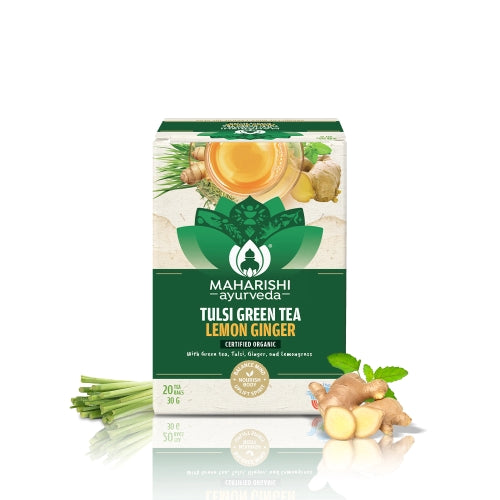
Herbal Teas That Support Immunity
Tulsi tea
A powerful adaptogenic herb, tulsi, is known for its immune-boosting, anti-viral, and stress-reducing properties. Warm Tulsi herbal tea helps protect against seasonal infections while supporting respiratory health.
Tulsi Green Tea Premium: Refreshing Immunity & Detox Blend
Additional 2% Off on Prepaid Order
Buy Now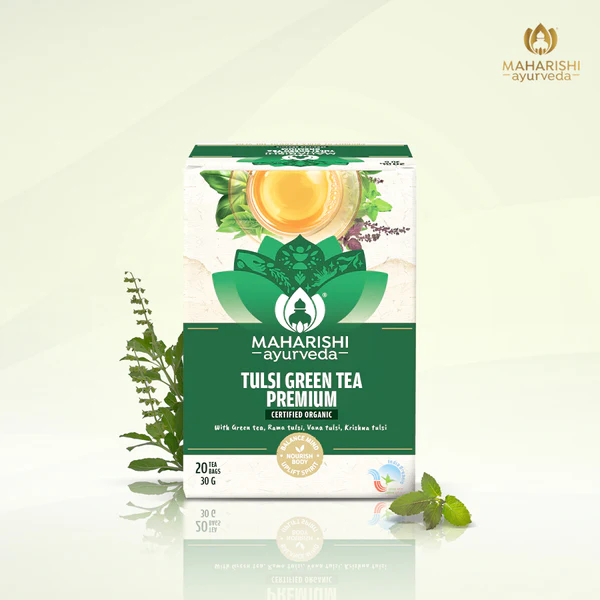
Turmeric and ginger tea
Turmeric and ginger are both strong natural antioxidants.
Turmeric Ginger Tea: Warming Blend for Immunity & Digestion
A healing Ayurvedic infusion that strengthens immunity, eases inflammation, and supports gut health.
Buy Now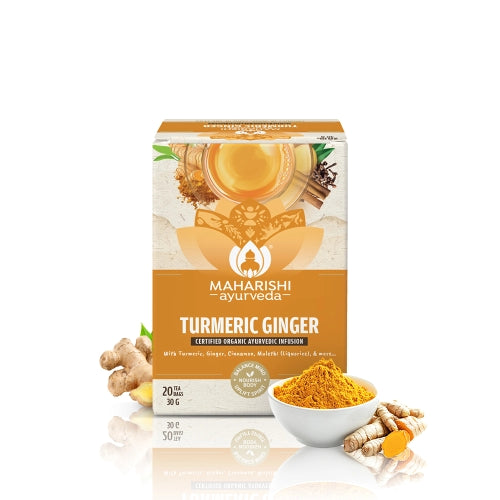
Rose-hibiscus tea
This tea is rich in antioxidants that help fight free radicals and boost immunity. It also supports skin health and heart health, and promotes gentle detoxification by removing excess heat from the body.
Herbal Teas for Stress Relief & Calm
Chamomile tea
One of the most popular calming teas, the benefits of chamomile tea are widely known. It has anti-inflammatory and anti-anxiety properties that promote sleep. Blends such as honey-chamomile, or chamomile-honey-brahmi are also sought after as stress-relief teas. Research further indicates that the tea may support heart health.
How to Choose the Right Herbal Tea for Your Body Type
Ayurveda recommends choosing herbal teas based on individual dosha inclinations.
Cooling teas (Pitta tea)
Cooling herbs such as fennel, rose, coriander, and chamomile help calm excess heat and inflammation.
Warming teas (Vata support)
Warming herbs such as ginger, cumin, cinnamon, and liquorice support digestion and reduce dryness.
Light teas (Kapha balance)
Warm and stimulating herbs like cinnamon and ginger help balance Kapha.
Evening Herbal Tea Rituals
Creating an evening tea ritual in line with Ayurvedic principles can support restful sleep and emotional calm. Each dosha—Vata, Pitta, and Kapha—benefits uniquely from personalised tea blends and mindful evening practices.
Here are dosha-specific herbal teas from Maharishi Ayurveda:
• Herbal Kapha Balance Tea: Infused with ginger, cinnamon, and holy basil, this herbal tea helps release heaviness and stimulate warmth.
• Herbal Pitta Balance Tea: Contains cardamom, rose petals, and liquorice — all naturally cooling.
• Herbal Vata Balance Tea: Liquorice, ginger, cardamom, and cinnamon help keep Vata in balance while promoting mental calm and digestion.
Herbal Detox Teas & Daily Cleansing
Teas for digestion include green tea, ginger tea and CCF teas.
Gentle Detox vs Strong Cleanses
Gentle detox supports the body’s cleansing mechanisms through warm herbal teas and light meals. It strengthens agni so toxins (ama) can be processed and eliminated naturally, without stressing the body.
Strong cleanses, on the other hand, involve intense interventions such as prolonged fasting, purgation, or deep Panchakarma procedures. While effective when properly conducted, they demand strong agni, good vitality, and expert supervision.
Read the complete guide to Ayurvedic detox benefits—>
When to Drink Herbal Tea for Best Results
Morning
For immunity and calm. Drinking herbal tea in the morning stimulates agni.
After meals
Sipping herbal tea after meals helps support digestion.
Evening
Herbal teas at the end of the day help wind down and calm the mind and promote peaceful sleep.
Popular Posts

Types of Headaches: Types, Causes, Symptoms and Relief Options
22 Oct, 2026You might consider a headache at the end of a long day when fatigue is felt. However, if pain com...
Read more
Home Remedies for Migraine: Simple Remedies and When to See a Doctor
16 Oct, 2026Migraine is more than an ordinary headache that strikes at the worst time. People are eager to fi...
Read more
What Is Metabolic Health and Why Does It Matter for Weight Management?
15 Oct, 2026Metabolic health refers to how effectively the body manages blood sugar, blood pressure, blood fa...
Read more