FILTERS
Ayurvedic Rasayana Therapy vs Modern Allopathy Solutions

Ayurveda and modern allopathy are two scientifically established healthcare systems that share a common goal: restoring health. However, their philosophies and approaches differ significantly. Ayurveda emphasises balance, prevention, and longevity, teaching individuals how to live in a way that sustains health naturally. Its foundation lies in samanya-viśeṣa siddhānta, which guides how diet, lifestyle, and medicines maintain dosha balance and overall vitality.
A significant branch of Ayurveda is the group of rejuvenative or Rasayana therapies, which nourishes all seven dhatus (fundamental body tissues), enhancing immunity (ojas), boosting memory, energy, and complexion while supporting healthy ageing. These therapies also help prevent disease, delay cell degeneration, and support long-term wellness.
Modern-day allopathy, on the other hand, primarily targets symptoms and diseases with the use of pharmaceuticals, quick-acting interventions, and advanced technologies. In emergencies and life-threatening situations, modern medicine is highly effective and recommended. Also, for surgeries, modern medicine is the way to go.
TL;DR – Rasayana vs Allopathy
- Different Health Philosophies: Rasayana emphasises prevention, balance, and healthy ageing, while allopathy focuses on diagnosing and treating existing disease.
- Root-Cause vs Symptom Relief: Rasayana works by strengthening digestion, nourishing tissues, and balancing doshas; allopathy targets symptoms and disease mechanisms.
- Long-Term Wellness vs Rapid Results: Rasayana supports sustained vitality, immunity, and resilience over time, whereas allopathy provides quick relief in acute and emergency situations.
- Personalised vs Standardised Care: Rasayana therapies are tailored to individual constitution, season, and lifestyle; allopathy follows standardised clinical protocols.
- Complementary Strengths: Rasayana supports lifelong health and rejuvenation, while allopathy is essential for infections, surgeries, and life-threatening conditions.
What Does ‘Rasayana’ Mean in Ayurveda?
‘Rasa’ refers to the nutrient-rich essence of the food we eat, and ‘ayana’ means its movement through the body’s tiny channels, microchannels. Together, ‘rasayana’ means helping the body absorb and use nutrients better to build ojas, the core of immunity, vitality, and longevity. Rasayana therapy strengthens the body’s natural defense mechanisms while supporting holistic rejuvenation of body and mind.
Main benefits of Rasayana therapy:
-
Promotes youthfulness, strength, memory, and mental clarity.
-
Enhances digestion, stability, and overall resilience.
-
Balances doshas and nourishes all tissues (dhatus).
-
Helps prevent the recurrence of disease by restoring internal equilibrium.
-
Improves complexion, voice, and energy levels.
What does ‘Allopathy’ Mean in Modern Terminology?
The word ‘allopathy’ comes from the Greek words ‘allos’ (other/opposite) and ‘pathos’ (suffering), meaning it treats illness with remedies that create effects opposite to the symptoms.
Key aspects of allopathy:
-
Treatments are based on measurable results from clinical trials and peer-reviewed studies.
-
Includes the use of prescription drugs, radiation, and surgical interventions.
-
Allopathy tends to focus on specific diseases and generally aims to alleviate symptoms.
-
Certified professionals such as doctors, nurses, and pharmacists are trained in this system.
-
The development, approval, and use of allopathic medicines are regulated by international and local agencies to ensure safety and quality.
Key Differences: Rasayana vs Allopathy
Core approach:
- Rasayana focuses on prevention, rejuvenation, youthfulness, and strengthening immunity.
- Allopathy is primarily curative and focuses on managing existing diseases.
Focus of treatment:
- Allopathy targets disease symptoms and specific pathological changes.
- Rasayana addresses holistic health of the mind, body, and spirit to prevent disease from arising.
Philosophy of care:
- Ayurveda (Rasayana) emphasises diet, lifestyle, and natural formulations to achieve Dhatu Samya—a state of internal balance and homeostasis.
- Allopathy concentrates on disease control rather than long-term systemic balance.
Treatment goals:
- Rasayana enhances immunity, vitality, longevity, and overall wellness, building long-term resilience.
- Allopathy provides fast, targeted relief and is highly effective in acute, emergency, and infectious conditions.
Root-cause management:
- Rasayana works by balancing doshas, strengthening digestion (Agni), nourishing tissues (Dhatus), and building Ojas, the essence of vitality and immunity.
- Allopathy primarily works through symptom suppression and control of disease mechanisms such as inflammation, infection, and pain.
Nature of therapies:
- Rasayana uses powerful herbs and herbal formulations to restore internal balance.
- Allopathy relies on chemical-based drugs, diagnostics, medical procedures, and surgery.
Duration and results:
- Rasayana promotes gradual, long-term transformation with sustained benefits.
- Allopathy ensures quick relief but may not always address underlying imbalances.
Personalisation:
- Rasayana treatments are highly individualised based on constitution, dosha imbalance, age, season, digestive strength, and lifestyle.
- Allopathy follows standardised treatment protocols with limited individualisation.
Safety and side effects:
- Rasayana, when administered under expert guidance, works in harmony with the body and is generally free from side effects.
- Allopathy may involve side effects due to drug potency and chemical formulations that may not suit every individual.
Benefits of Rasayana Therapy
Enhances immunity & digestion by strengthening ojas, or the essence of vitality responsible for immunity. Rasayana is naturally supportive of healthy agni or digestive fire that ensures better absorption and tissue nourishment. These therapies also reduce vulnerability to seasonal illnesses.
Slows ageing & cellular degeneration. Rich in antioxidants, Rasayana therapies help combat free-radical damage and maintain youthful skin, joint mobility, stamina, and cognition.
Supports regeneration of damaged cells and speeds up recovery from illness, stress, and medical treatments.
Strengthens organ systems and body channels (srotas) by clearing blockages and improving the circulation of nutrients.
The adaptogenic action of Rasayana therapies reduces stress, anxiety, and fatigue while enhancing focus, memory, and sleep quality.
Rasayana therapies support chronic lifestyle conditions such as diabetes, arthritis, metabolic disorders, and autoimmune conditions; prevent complications by improving resilience and inner strength; complement modern treatment for a better quality of life.
These therapies are natural & gentle with no side effects when administered under qualified experts, as they work in harmony with the body’s natural functions
Powerful classical Rasayana herbs include the following:
Amalaki – antioxidant, digestive & immune benefits
Ashwagandha – stress relief, strength & nerve support
Guduchi – immunomodulator & detoxifier
Shilajit – energy, metabolism & anti-ageing support.
Shilajeet Resin: Ayurvedic Strength, Stamina & Vitality Support
Additional 2% Off on Prepaid Order
Buy Now
When Is Allopathy Better than Ayurvedic Rasayana?
It is not about one being better than the other. Rather, it is about Ayurveda and Rasayana used in combination with Allopathy that brings about the best possible outcomes.
However, while Rasayana supports long-term health and reduces disease risk, certain situations demand immediate and targeted intervention, where Allopathy is the go-to option. Here are some such examples:
Heart attack, stroke, shock, accidents, severe bleeding, and other medical emergencies can be fatal and need quick hospital care.
Antibiotics/antivirals provide rapid control for acute and life-threatening infections; Rasayana supports faster recovery afterward.
In cases of organ failures that may require dialysis, ICU care, or advanced monitoring, Allopathy is a must.
Allopathy excels in orthopaedic and surgical corrections – and is imperative for fractures or complex surgeries.
Strong analgesics provide fast relief in sudden, severe pain episodes; Rasayana works gradually to assuage chronic complaints.
Severe asthma attacks, high fever, acute inflammation, and other such high-intensity symptoms need immediate stabilisation and call for Allopathic intervention.
Real-World Example: Arthritis Treatment in Ayurveda vs Allopathy
Arthritis is one of the best examples to understand how differently Ayurveda and Allopathy approach the same condition.
Allopathic Approach
-
Focuses on reducing pain, inflammation, and stiffness through NSAIDs, steroids, and disease-modifying drugs (DMARDs).
-
Provides quick relief, especially during flare-ups.
-
In advanced cases, joint injections or surgical replacements may be recommended.
-
However, it often manages symptoms rather than correcting the underlying imbalance, and long-term drug use may have side effects.
Ayurveda (Rasayana-based) Approach
Ayurveda believes arthritis (including types such as Sandhivata and Amavata) arises from dosha imbalance, weak digestion (Agni), and accumulation of toxins (Ama).
The Ayurvedic approach focuses on addressing the root cause by:
-
Removing Ama using Deepana–Pachana herbs
-
Reducing inflammation and pain with herbs such as Ashwagandha, Shallaki, and Guggulu
-
Using Panchakarma therapies when required, including Basti and Abhyanga for osteoarthritis and Rooksha Swedana for rheumatoid arthritis
-
Correcting diet and lifestyle according to the individual’s condition
-
Strengthening joints and immunity with Rasayana herbs and formulations
Does Rasayana Really Work? What Science Says
Modern research suggests Rasayana works through three key mechanisms:
Antioxidant action: Reduces oxidative stress and slows cellular ageing.
Immunomodulatory and anti-inflammatory effects: Strengthens immunity and supports chronic disease management.
Neuroprotective and adaptogenic effects: Improves stress response, cognition, and overall vitality.
Clinical Evidence Highlights
Randomised controlled trial in breast cancer patients (IJMPO):
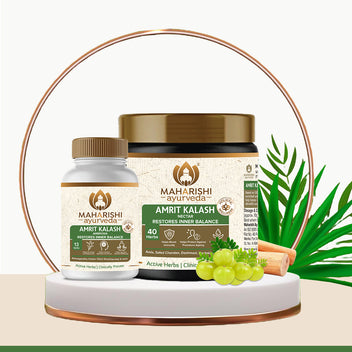
Rasayana Maharishi Amrit Kalash reduced chemotherapy-related toxicity and improved well-being scores.
2024 Systematic Review (Frontiers in Medicine):
Multiple RCTs show Rasayana formulations help reduce side effects and improve alertness and recovery in adults.
Myths vs Facts About Rasayana
|
Myth |
Fact |
|
Rasayana works only for old age. |
Works across ages; there are different Rasayanas for children, adults, elderly. |
|
It’s just a placebo. |
Biological actions documented: antioxidant, anti-inflammatory, adaptogenic, and neuroprotective effects noted. |
|
It has no scientific validation. |
Supported by an increasing number of clinical and pharmacological studies. |
|
It works too slowly. |
Builds deep healing, slow and steady health restoration, and prevents chronic disease. |
Popular Posts

Types of Headaches: Types, Causes, Symptoms and Relief Options
22 Oct, 2026You might consider a headache at the end of a long day when fatigue is felt. However, if pain com...
Read more
Home Remedies for Migraine: Simple Remedies and When to See a Doctor
16 Oct, 2026Migraine is more than an ordinary headache that strikes at the worst time. People are eager to fi...
Read more
What Is Metabolic Health and Why Does It Matter for Weight Management?
15 Oct, 2026Metabolic health refers to how effectively the body manages blood sugar, blood pressure, blood fa...
Read more